Biostimulators
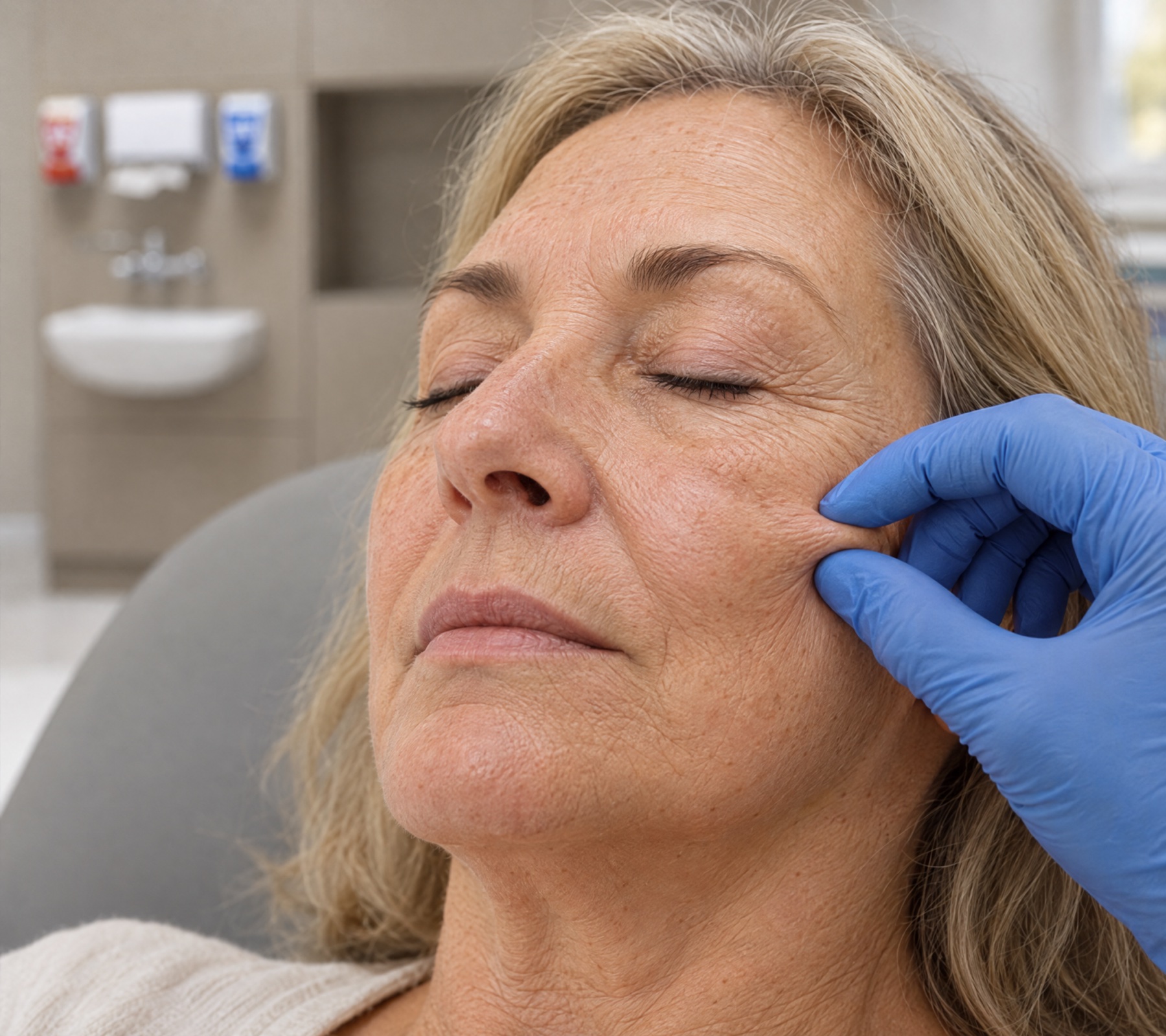
Injectable biostimulators prompt your own skin to make collagen, so firmness and skin quality improve gradually over months rather than instantly. They suit people who want a gradual improvement in skin quality without added volume.
- Areas treated
- Face
- Sessions
- Tailored to you and agreed at consultation
- Downtime
- Mild swelling, redness or bruising for a few days
- Your practitioner

Contents
Juläine
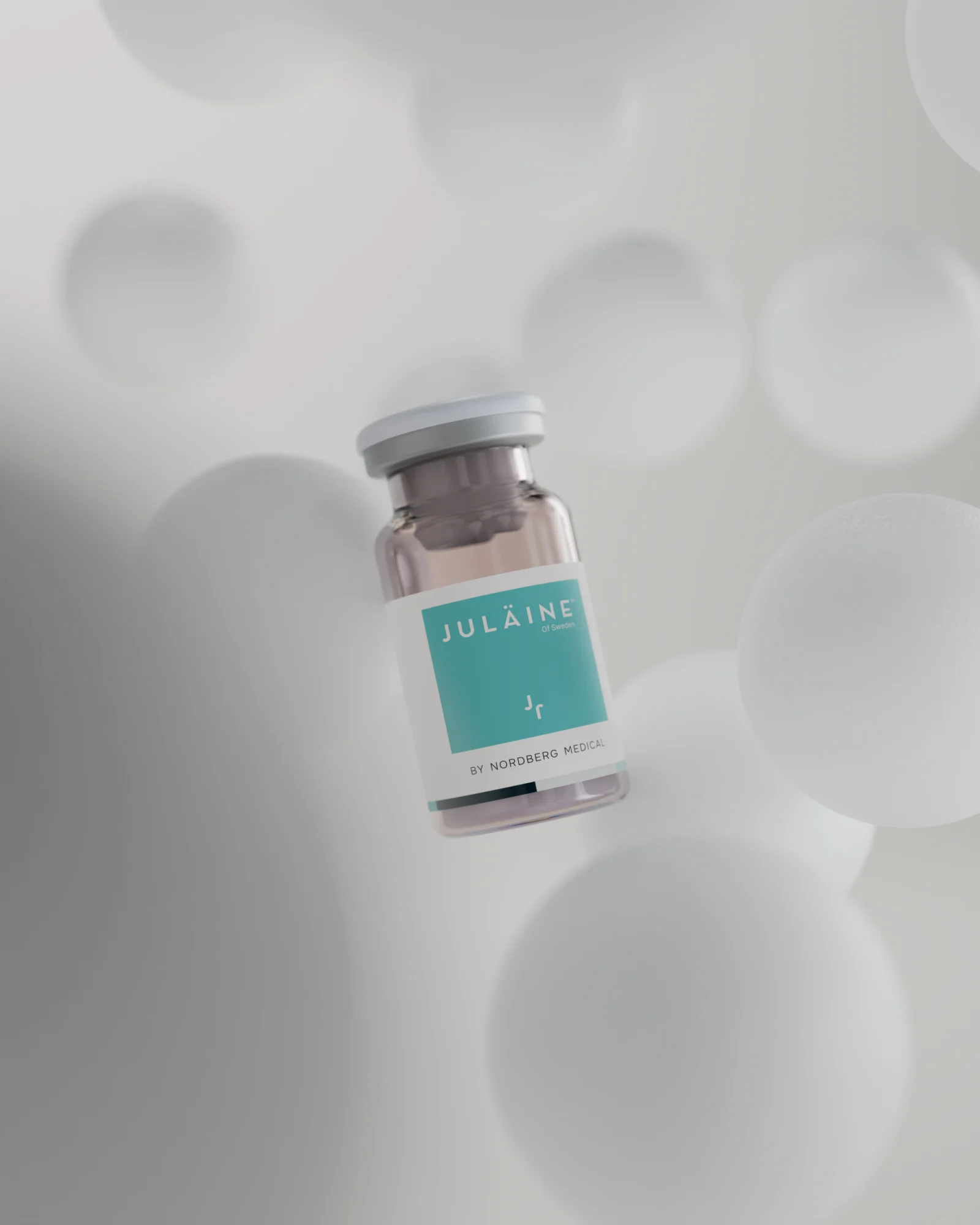
Juläine® is an injectable treatment designed to improve skin quality when injected into the deeper layers of the skin, where it encourages your body to produce more collagen.
Collagen is a natural protein that keeps the skin firm, smooth, and youthful. As we age, collagen levels decline, leading to:
- Fine lines and wrinkles
- Loss of firmness
- Thinning skin
Juläine® prompts the skin to make new collagen, which can improve firmness and thickness over time.
It is made from a biocompatible substance called poly-L-Lactic acid (PLLA) that is naturally broken down by the body over time.
As with any injectable treatment, there are small risks, which will be discussed during your consultation.
What the procedure involves
- Consultation: Your skin and facial structure are assessed, with an honest discussion of what biostimulation can and cannot achieve for you.
- Preparation: The skin is cleansed and anaesthetic is used for comfort.
- Treatment: The product is injected into the deeper layers of the skin in the planned areas.
- Afterwards: You can usually return to normal activities the same day. Results develop gradually as new collagen forms.
What biostimulators can and can’t do
A biostimulator asks your skin to make its own collagen. The change is slow and modest, it is not a filler, and it cannot be dissolved.
It can
- Improve skin firmness and thickness gradually, as collagen builds over two to three months.
- Suit people who want change that develops slowly rather than something visible on the day.
- Treat areas of the face where the skin has thinned or loosened.
- Give a result that outlasts the product, because the collagen it prompts remains after the poly-L-lactic acid has broken down.
It can’t
- Add volume or lift. A biostimulator is not a filler. If you want fuller cheeks or lips on the day, dermal filler is the treatment.
- Work quickly. There is nothing to see for the first few weeks, the result builds over months, and most people need a course of sessions.
- Treat lines caused by movement. Frown and forehead lines need anti-wrinkle injections.
- Be dissolved. Unlike hyaluronic acid, poly-L-lactic acid cannot be reversed with an enzyme. Lumps are managed differently and can take months to settle.
- Be promised for two years. Long-term data for Juläine are still being collected, and how long collagen holds varies with age, sun exposure and smoking.
Your practitioner will tell you at your consultation which of these apply to you.
Ideal candidates
- Adults with age-related loss of skin firmness: Particularly those who prefer gradual change to an immediate one.
- Those not seeking instant volume: Biostimulators are not a substitute for dermal filler where immediate volume is the aim.
- Not suitable: During pregnancy or breastfeeding, or with an active skin infection at the treatment site.
Risks, and how often they happen
Every treatment carries risk. Here they are in three groups, with how often they happen where the evidence allows. Your practitioner will go through them with you, and they are in your written consent.
Expected Almost everyone, and they settle
-
Swelling for a few days, sometimes up to a week.
-
Bruising at the injection points, fading over one to two weeks.
-
Tenderness and redness at the sites for a few days.
-
A wait for the result, which builds over weeks to months rather than appearing on the day.
Uncommon Some patients, and some need further treatment
-
Small bumps (papules) or firmer lumps (nodules) under the skin, which you can usually feel more than see. Most settle with massage and time; some need injections or, rarely, removal.About 1 in 10US approval study of a similar PLLA product; lower with more dilution and massage
-
Swelling or redness that lasts more than a week after a session.Uncommon
-
Asymmetry, one side responding more than the other, adjusted at the next session.Uncommon
Rare but serious
-
Inflamed nodules or granulomas appearing months or years later, which can need steroid injections or removal.Rare
-
Infection at an injection site.Rare
-
A blocked blood vessel, a risk shared by all injectables, which cannot be reversed with an enzyme for this product.Very rare
-
Allergic reaction to the product or the anaesthetic.Very rare
For the long term
-
The result builds over three to six months and, for a similar PLLA product, was still measurable about two years after a course.
-
Maintenance is a session every year or two. If you stop, the skin slowly returns to its natural ageing path; nothing is left behind once the collagen response fades.
-
Any new lump months later should be checked, because late reactions, although rare, are treatable.
-
Skin quality treatments that work differently are on our skin boosters and Sunekos pages.
Where these figures come from
- Sculptra Aesthetic US labelling, reproduced on RxList. For: Papules and nodules; Swelling, tenderness, redness, bruising after a session.
- Lorenc ZP, Greene T, Gottschalk RW, Injectable poly-L-lactic acid: understanding its use in the current era, J Drugs Dermatol 2016;15(6). For: Nodules historically.
- Urdiales-Gálvez F, Benítez PA, Díaz I, Facial rejuvenation with an innovative poly-L-lactic acid (Juläine) for nasolabial folds: interim data, J Cosmet Dermatol 2025;24(4):e70137. For: Juläine-specific adverse events.
- Serrano-Coronado M et al., Clinical perspectives on the safety profile of poly-L-lactic acid (Juläine): results from a national survey, J Cosmet Dermatol 2025;24(9):e70439. For: Vascular occlusion with Juläine.
- RxList Sculptra labelling; ClinicalTrials.gov NCT06471933 (Nordberg Medical). For: Duration.
Figures are drawn from product approval data and published studies, and your own risk may be higher or lower. More from the NHS on before you have a cosmetic procedure.
Aftercare and recovery
Mild swelling, redness or bruising is normal and settles over a few days. Avoid make-up for 24 hours and strenuous exercise for 48 hours.
You will be given specific aftercare instructions at your appointment, and you can contact the hospital at any point if you have concerns.
Our aesthetic practitioner
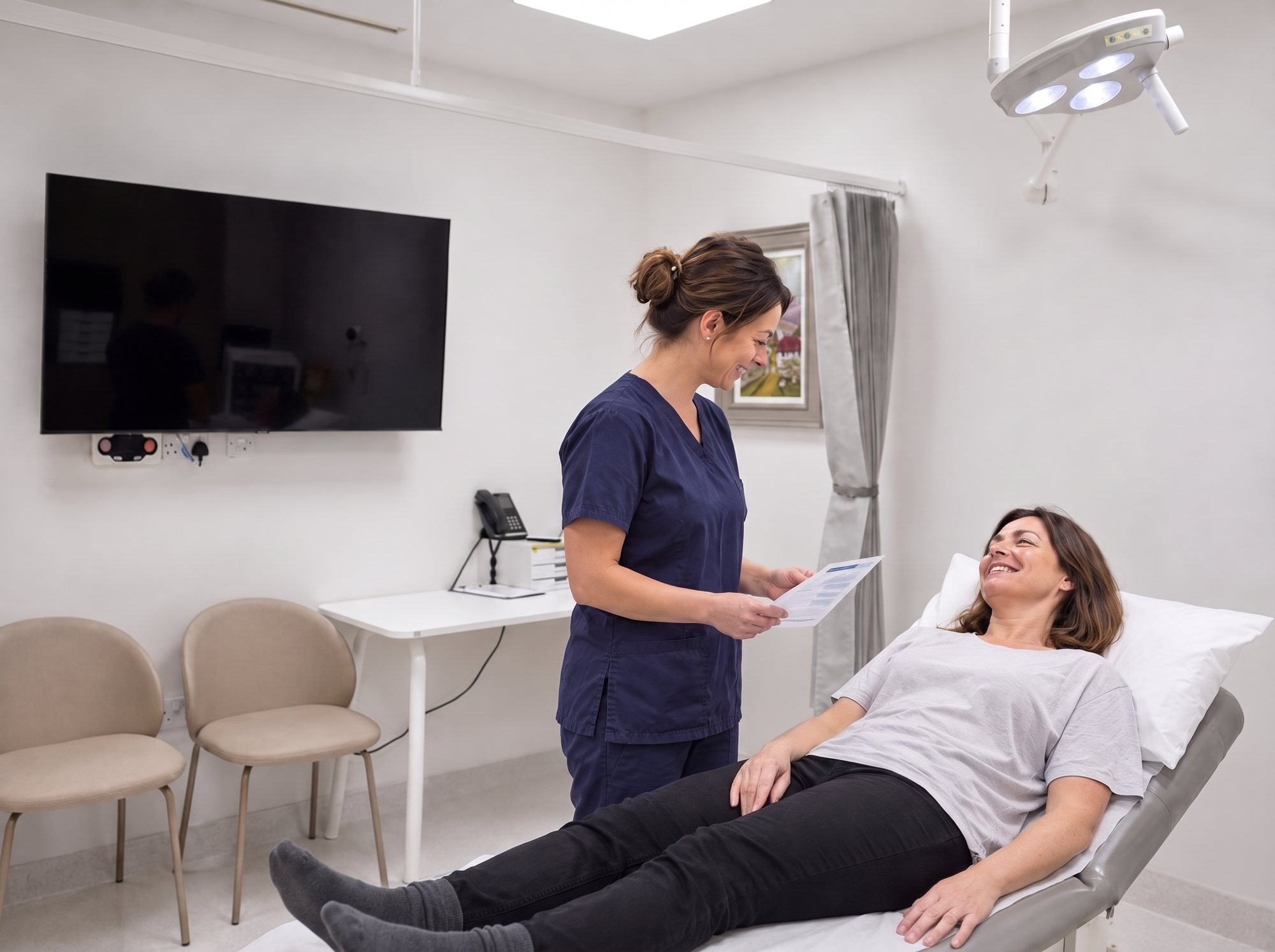
This treatment is planned and carried out by our aesthetic practitioner and dentist, Dr Katy Nassar.

Frequently asked questions about biostimulators
What is a biostimulator?
What is Juläine?
When will I see results?
How long do results last?
How many sessions will I need?
Is it safe?
Written by

Dr. Katy Nassar, BDS, GDC 80528, is an Aesthetic Practitioner at Waterfront Private Hospital in Edinburgh. She graduated from the University of Glasgow Dental School in 2002 and worked in general dental practice for fifteen years before moving into facial aesthetics. In 2022, she completed a Master’s degree in Skin Ageing & Aesthetic Medicine at Manchester University, which she was awarded with distinction. Katy is dedicated to expanding the range of non-surgical procedures offered at Waterfront Private Hospital.
