Chin Enhancement in Edinburgh
A more defined chin can change the balance of the whole face. At Waterfront, chin enhancement is offered two ways — non-surgical with dermal fillers, or surgical with a chin implant — and the consultant who assesses you will be honest about which one suits your face, including whether either is the right answer at all.
- Anaesthetic
- Local or General
- Surgery time
- 1 hour
- Hospital stay
- Day case/ Outpatient
- Recovery
- Few days off work, 6 weeks before strenuous exercise
- Guide price
- From £4,950

Contents
What the procedure involves
Chin enhancement at Waterfront is offered as either a non-surgical or surgical procedure. Your consultant will discuss which suits your case at the consultation.
Non-surgical chin enhancement (dermal fillers)
- Injectable fillers: dermal fillers are injected into specific points along the chin to add volume and contour. The procedure takes around 30 minutes and is performed as an outpatient treatment with no recovery downtime.
- Reversible: if the result is not what you wanted, hyaluronic-acid-based fillers can be dissolved. The effect lasts six to eighteen months, depending on the filler used.
Surgical chin augmentation (silicone implant)
- Preparation: the chin area is prepared and sterilised; the procedure can be performed under either local or general anaesthesia.
- Implant insertion: a small incision is made inside the mouth (so no external scar). A pre-shaped, biocompatible silicone implant is placed along the chin bone and secured in position.
- Closure: the incision is closed with dissolvable sutures.
- Permanent: implants are designed to be permanent, but can be removed or exchanged if needed.
Benefits and expected outcomes
Chin enhancement can address:
- A recessed or weak chin that affects the balance of the face in profile
- Asymmetry between the lower face and the rest of the features
- A jawline that lacks definition because of how the chin sits
Non-surgical vs surgical — what each does best:
- Non-surgical (fillers): best for mild to moderate enhancement, for patients who want to try the look before committing to surgery, and for those who prefer no incisions and no downtime. The result is immediate, reversible, and lasts six to eighteen months.
- Surgical (implant): best for more significant enhancement, for patients who want a permanent change without repeat treatments, and for cases where fillers would not give enough projection or definition. The result is long-lasting but requires a short recovery.
What chin enhancement does not address: the underlying jaw structure itself. If you have a significant skeletal issue with the jaw or bite, an orthognathic (jaw) surgery referral is the more appropriate route — your consultant will be honest about that at consultation if relevant.
Who is an Ideal Candidate?
Ideal candidates for chin enhancement are individuals who:
- Are in good overall health
- Have a recessed or weak chin and want to improve facial balance
- Have realistic expectations about what either fillers or a chin implant can achieve
- Prefer non-surgical options for a reversible, lower-commitment enhancement, or are comfortable with surgery for a permanent result
A consultation is a conversation, not a commitment to surgery or any procedure. If we feel a chin enhancement is not the right answer for you — or that fillers are a better starting point than surgery in your case — we will say so honestly.
Risks and Considerations
Non-surgical chin enhancement risks
- Bruising and swelling: common after injection and usually settle within a few days.
- Asymmetry: a small risk of uneven filler distribution. Hyaluronic acid fillers can be dissolved if needed.
- Infection: rare; proper aftercare reduces the risk at injection sites.
- Allergic reaction: rare but possible.
Surgical chin augmentation risks
- Infection: despite sterile techniques, there is a small risk of infection, slightly more common than with non-surgical options.
- Nerve disturbance: a small risk of temporary or, rarely, permanent changes in sensation around the chin and lower lip.
- Implant displacement: on rare occasions, the implant can shift, requiring a follow-up procedure to reposition or replace it.
- Anaesthesia risks: general anaesthesia carries inherent risks; all anaesthetists involved in surgery at Waterfront are consultants in their own right.
Further reading: BAAPS — Reshaping chin and cheeks
Aftercare and recovery
Your recovery is led by the consultant who performed your surgery. A nurse reviews you at one week, and your consultant sees you again once everything has settled. Between appointments, our team are available whenever you have a concern — you do not need to wait for a scheduled review. Practical guidance on dressings, activity and returning to work is in our aftercare guide.

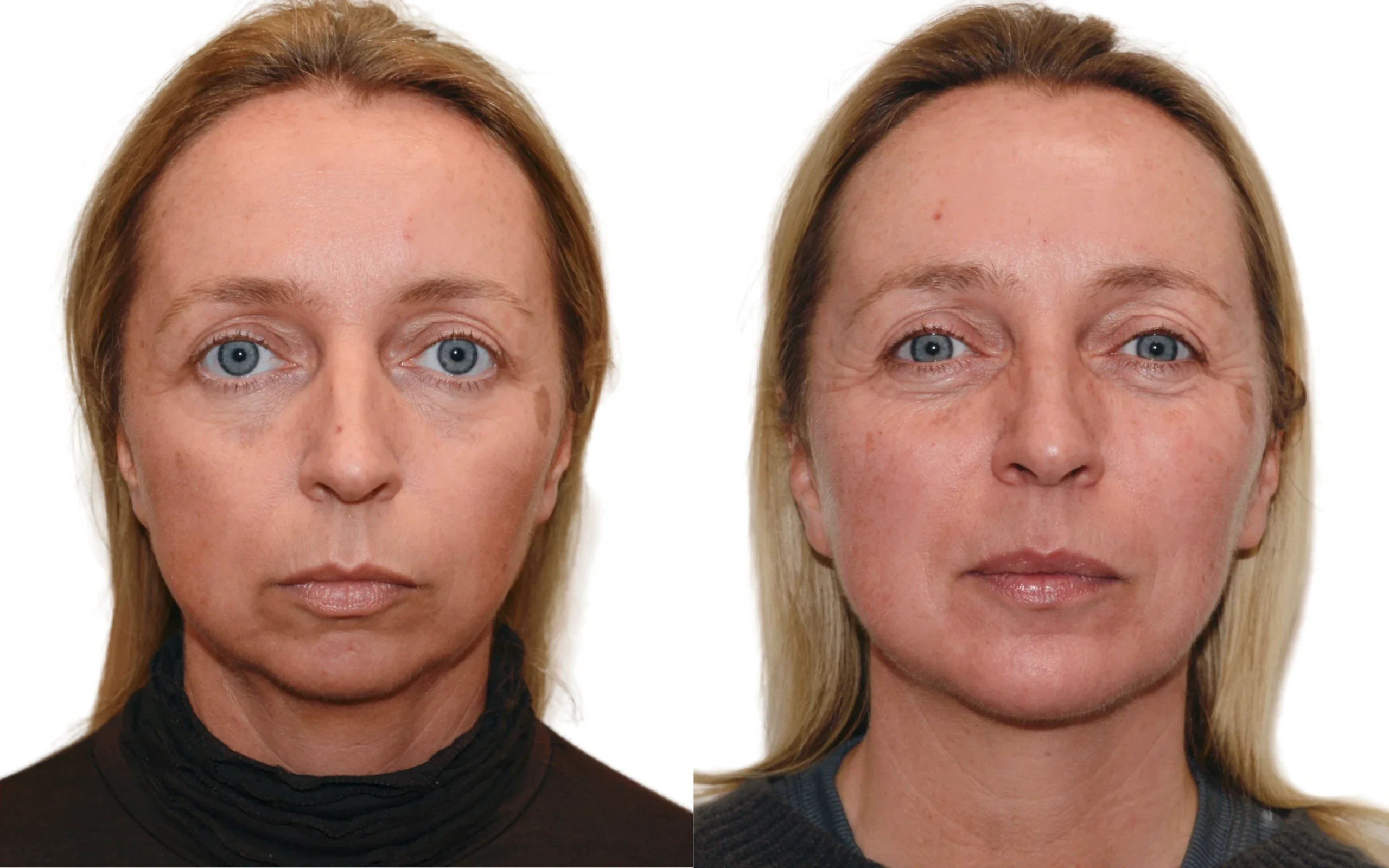
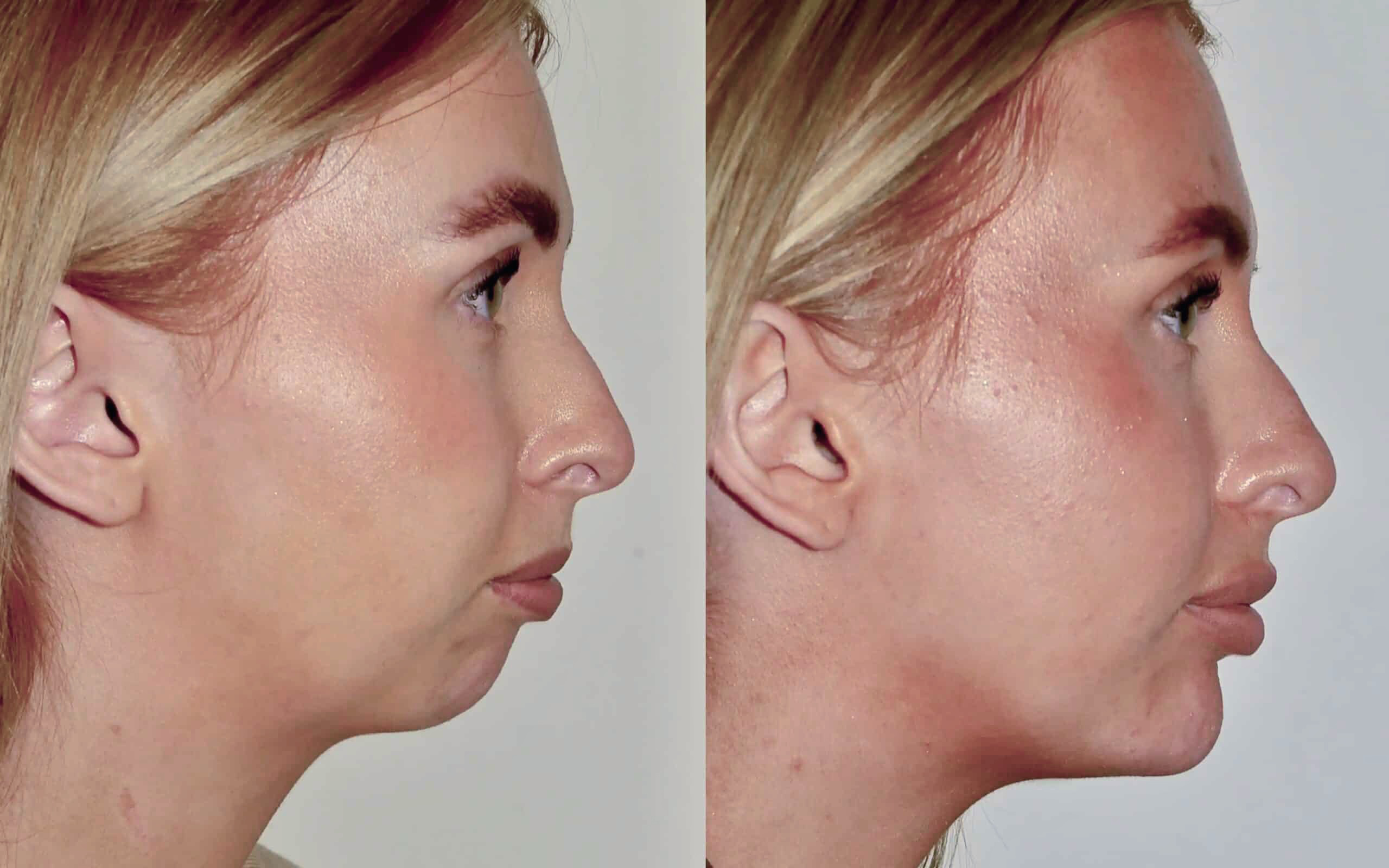
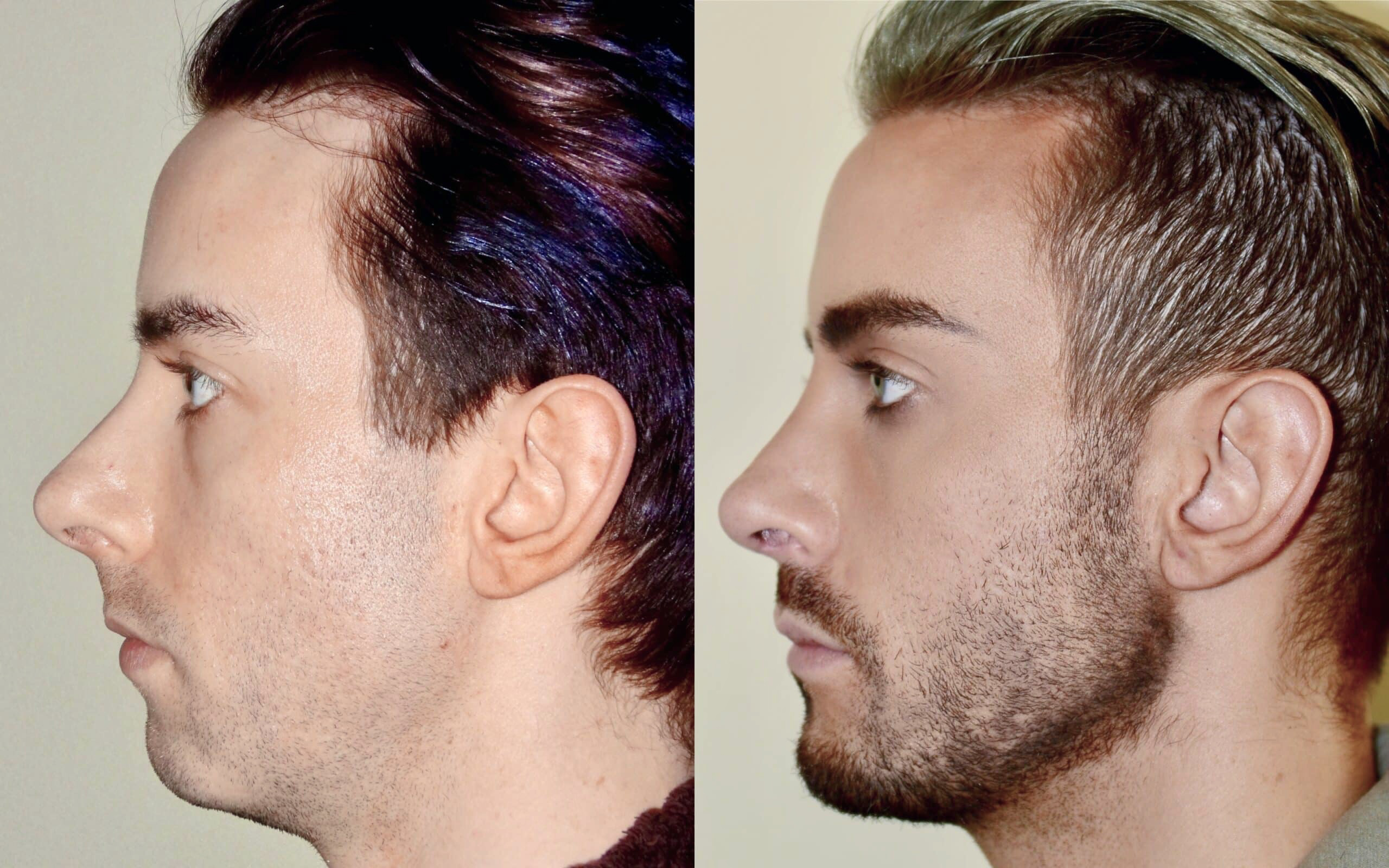
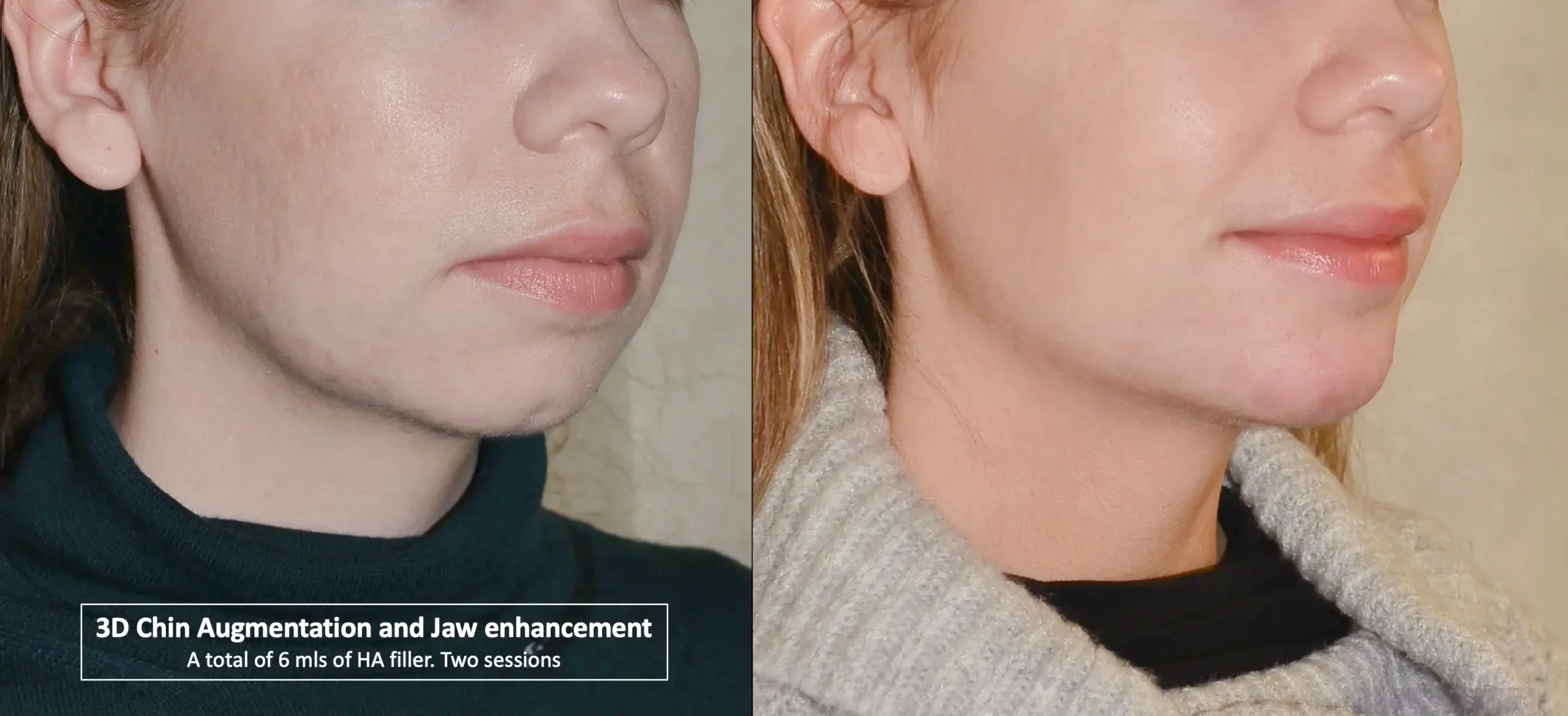
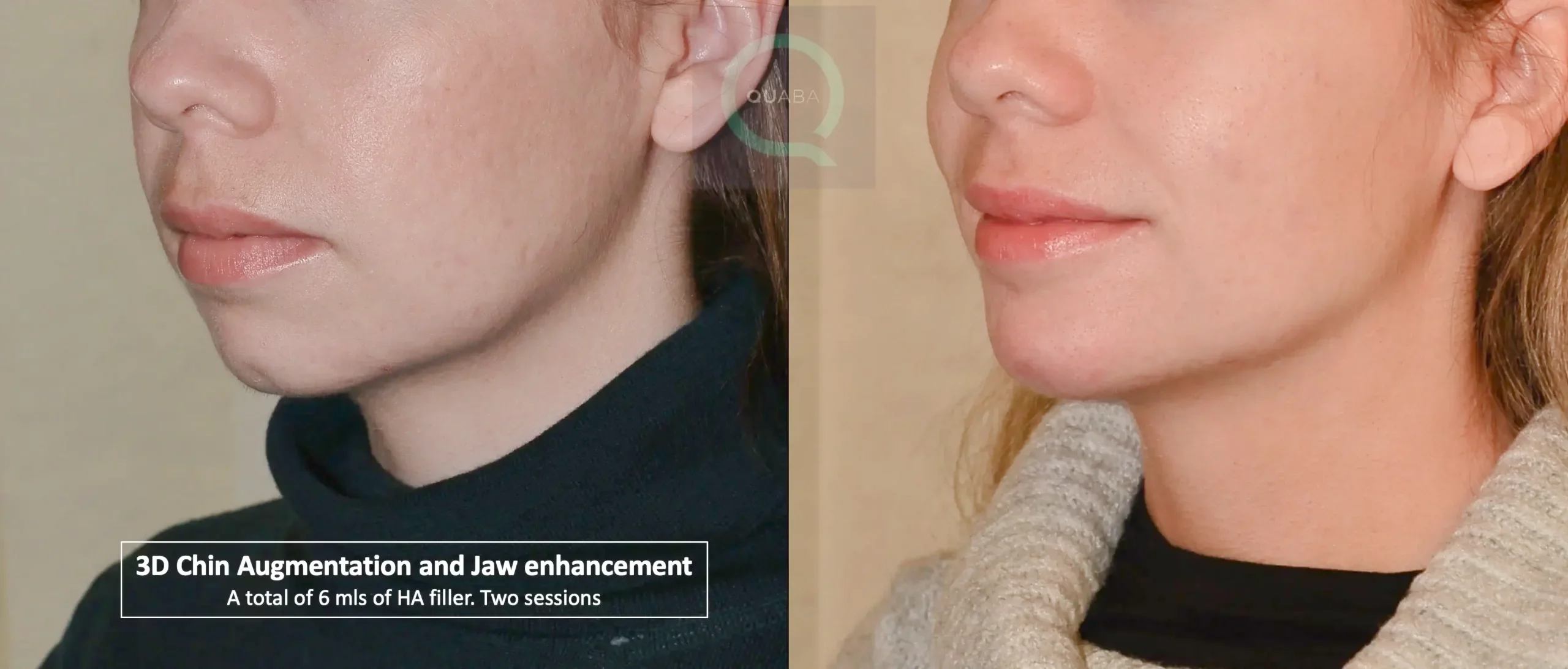
Before and after photos
Chin enhancement
Results vary from person to person. Your consultant will show you more examples at consultation and explain what is realistic for you.







Excellent care
Everyone I met at Waterfront Private Hospital was friendly, helpful and thorough, and went the extra mile, including the whole medical and admin teams which were fantastic.
Mr Will Anderson carried out my surgery with great care and professionalism and listened carefully to, and addressed, all of my concerns. Thank you!
I’ve also had excellent communication with Debbie and Janey in emails and phone calls, sometimes over weekends/on days off.
The standard of care has been superb and I would return without hesitation.
My thanks to the whole team.
Mary
Dec 2023
What is the cost of chin enhancement?
Guide prices at Waterfront Private Hospital:
- Chin implants under local anaesthesia: from £4,950
- Chin implants under general anaesthesia: from £5,700
- Non-surgical chin enhancement (dermal fillers): quoted at consultation, based on the filler used and the volume needed
Each surgical price covers the surgeon’s fee, the anaesthetist’s fee where applicable, the procedure room fee, and all post-operative reviews until you are fully discharged.
The full price for your individual case can only be confirmed after a face-to-face consultation with the consultant who will perform your treatment. Our consultation fee with a consultant plastic surgeon is £200.

Frequently asked questions
Will the same surgeon plan, perform and review my chin enhancement?
Should I have fillers or surgery for chin enhancement?
What are the chin enhancement options?
How do I know if I’m a candidate for chin enhancement?
Can chin enhancement change my facial profile?
Can I combine chin enhancement with other facial procedures?
How long do non-surgical chin enhancements last?
Are chin implants permanent?
Is the chin enhancement procedure painful?
How long is the recovery period after chin implant surgery?
Recovery depends on whether you have the non-surgical or the surgical procedure.
- Non-surgical (fillers): you can return to normal activities immediately. Some bruising or swelling may be visible for a few days but should not affect daily life.
- Surgical (implant): most patients take a few days to a week off work. Swelling settles over the first two to three weeks. Strenuous exercise should be avoided for around six weeks. You will be given specific guidance on oral hygiene and diet during the early healing period because the incision is inside the mouth.
For surgical patients, a routine post-operative review usually takes place at 1 week and again around 6 months, once any swelling has fully settled. Your consultant is available before then if anything concerns you — they will respond directly and arrange to see you as often as needed until things are settled.
Will there be scarring from chin implant surgery?
What are the risks associated with chin enhancement?
What happens if I have concerns after my surgery?
How much does chin enhancement cost?
Author

Mr Awf Quaba, MB ChB, FRCS, GMC 3034912, is a Consultant Plastic Surgeon with over 35 years of experience and a co-founder of Waterfront Private Hospital in Edinburgh. He specialises in cosmetic facial and breast surgery, has published over 60 papers in peer-reviewed journals, and is a full member of BAAPS.
