Mole and Skin Cancer Check in Edinburgh
A mole and skin cancer check at Waterfront Private Hospital is a consultant-led skin assessment in Edinburgh. Checks are performed by Mr Ben Aldridge — the UK’s only consultant dual-qualified in dermatology and plastic surgery, with a PhD in skin lesion diagnostics — or by Mr Kazem Nassar, consultant plastic and reconstructive surgeon. Both are on the GMC Specialist Register. The appointment includes a full-body dermoscopic examination and a same-appointment recommendation on any lesion of concern. If treatment is needed, it is arranged at Waterfront by the consultant who performed your check.

Contents
First class service
I would highly recommend the Waterfront Hospital. All members of staff I encountered were professional, kind and reassuring. I saw Dr Ben Aldridge and underwent a minor surgical procedure. From start to finish, the service was delivered to an extremely high standard. Many thanks.
A. Weddell
Nov 2023
Overview
- Consultation with: Mr Ben Aldridge, consultant dermatologist and plastic surgeon; or Mr Kazem Nassar, consultant plastic and reconstructive surgeon.
- Length: approximately 30 minutes.
- What’s included: full medical history, full-body skin examination, dermoscopy of any lesions of concern, and a same-appointment recommendation on biopsy or excision if needed.
- Cost: £200.
- Time from booking to appointment: typically 4 to 14 working days.

How a mole and skin cancer check at Waterfront works
The appointment is in person at Waterfront Private Hospital in Edinburgh and lasts approximately 20 minutes. Your consultant will take a full medical history relevant to skin cancer risk — family history, history of sunburns or significant sun exposure, immunosuppression, and previous skin lesions — and then perform a full-body skin examination.
The examination uses dermoscopy: a handheld magnifier with polarised light that allows the consultant to see the structures of a lesion beneath the skin’s surface. Dermoscopy is a standard part of a consultant dermatologist’s assessment and increases the accuracy of skin lesion diagnosis above visual inspection alone.
At the end of the appointment, your consultant will give you a same-appointment recommendation on any lesion of concern. Where a lesion is clearly benign, this is the end of the pathway. Where a biopsy or excision is indicated, it is arranged at Waterfront — by the consultant who performed your check — without a separate referral.
What can happen at the end of your appointment
The appointment ends with one of three outcomes.
- The skin is clear. Your consultant confirms that no lesions require investigation or removal.
- A lesion needs a biopsy. A biopsy is arranged at Waterfront. Histology results normally return within approximately two weeks of the biopsy. The result is communicated to you by the consultant who took the biopsy, usually within two weeks of the result returning.
- A lesion needs surgical removal. A wide local excision is arranged at Waterfront with Mr Aldridge or Mr Kazem Nassar. Where the lesion is on the face or another cosmetically sensitive site, reconstruction is planned by the same consultant in the same procedure.
If at any point during the pathway your consultant suspects a melanoma, the case is reviewed by the South East Scotland Melanoma Multidisciplinary Team, which Mr Aldridge chairs.
When to seek a mole or skin cancer check
Patients commonly book a check when they have noticed one of the following.
- A mole that has changed in size, shape, colour, or behaviour — itching, bleeding, or crusting.
- A new pigmented growth in an adult.
- A skin lesion that has not healed within a few weeks.
- A history of significant sun exposure, repeated sunburns, or a family history of skin cancer.
- An immunosuppressed state — organ transplant, long-term immunosuppression.
- A skin type that burns rather than tans.
Most lesions assessed at a check are benign. The purpose of the check is to confirm that, or, where a lesion is suspicious, to start the diagnostic pathway promptly.
Limits and considerations of a skin check
A skin check is a clinical examination supported by dermoscopy. It is not a histological diagnosis. Where the clinical and dermoscopic appearance of a lesion is sufficient to confirm a clearly benign diagnosis, no biopsy is needed. Where there is any doubt, a biopsy is the only way to confirm what a lesion is, and the consultant will recommend a biopsy whenever the appearance does not give a confident diagnosis.
No skin check can prevent new lesions from developing between appointments. If you notice a change in your skin between checks — a new mole, a changing lesion, a non-healing sore — you should seek an earlier appointment rather than wait for the next scheduled review.
Follow-up and ongoing surveillance
The interval to your next check is recommended at your appointment, based on your individual risk profile. Patients with low risk and no findings are commonly advised to return only if they notice a change in their skin. Patients with multiple atypical moles, a personal or family history of skin cancer, or other risk factors may be offered a regular surveillance schedule.
If a biopsy or excision is performed during the pathway, the standard Waterfront aftercare applies. A nurse reviews you at one week and more often if needed during the early healing period. Your consultant will see you again around six months after the result has settled. In the meantime, your consultant is always available — if anything concerns you, they will respond directly and arrange to see you as soon as needed.
What does a mole or skin cancer check cost?
The consultation fee is £200. This covers:
- The consultation and full medical history.
- A full-body skin examination with dermoscopy.
- A same-appointment recommendation on any lesion of concern.
- A written summary of the consultation.
If a biopsy or excision is recommended at the appointment, it is quoted separately. The full cost of any onward treatment is confirmed in writing before the procedure is booked.
Our mole check and skin cancer consultants
Mole and skin cancer checks at Waterfront are performed by Mr Ben Aldridge — the UK’s only consultant dual-qualified in dermatology and plastic surgery, with a PhD in skin lesion diagnostics, co-author of national skin cancer guidelines, and chair of the South East Scotland Melanoma Multidisciplinary Team — and by Mr Kazem Nassar, consultant plastic and reconstructive surgeon. Both consultants are on the GMC Specialist Register. Where surgical excision and reconstruction are required, treatment is delivered at Waterfront by the consultant who performed your check.
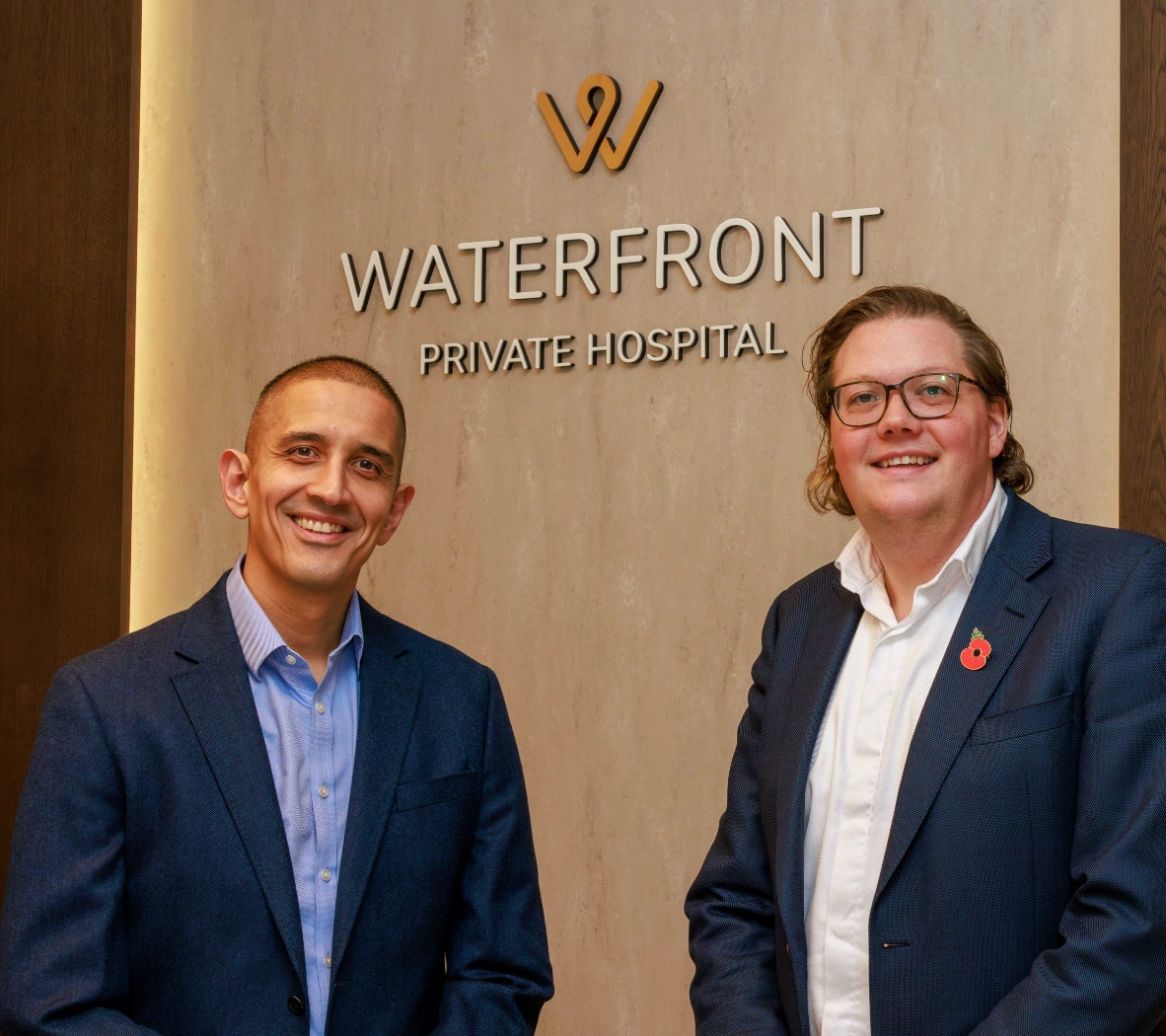
Frequently Asked Questions: Mole and Skin Cancer Checks in Edinburgh
Will the same consultant handle any onward treatment if something is found?
How long does it take to get an appointment?
How long does a biopsy result take?
What happens if a melanoma is suspected?
Do I need a GP referral?
How much does a mole or skin cancer check cost?
How often should I have a mole check?
Can a mole check definitely rule out skin cancer?
What is dermoscopy?
Which consultant will I see for my mole check?
Basal cancer cell removal
I had a surgical incision to remove a Basal Cell Carcinoma. It was a brilliant experience and result. The patient care and after surgery attention was outstanding. I am so grateful.
Sandy Alexander
Nov 2024
Page author

Mr Ben Aldridge, MB ChB, MSc, PhD, MRCP, FRCS (Plast), GMC [6049481], is a Consultant Dermatologist and Plastic Surgeon at Waterfront Private Hospital in Edinburgh. He is the UK's only consultant dual-qualified in dermatology and plastic surgery, holds a PhD in skin lesion diagnostics, is a co-author of national skin cancer guidelines, and chairs the South East Scotland Melanoma Multidisciplinary Team.
