Skin tag removal in Edinburgh
Skin tags are harmless and are removed when they catch, become sore or bother you. Each one is checked first, because what looks like a skin tag is occasionally something else, and most are removed in one visit under local anaesthetic.
- Anaesthetic
- Local anaesthetic for most procedures
- Hospital stay
- Outpatient day case
- Recovery
- Typically no time off work
- Guide price
- From £395 for the first skin tag, £100 for each additional skin tag in the same session
- First appointment
- Typically within 1 to 2 weeks
- GP referral
- Not required
- Your consultants


Contents
How removal is performed
The method is chosen at consultation, based on the size and site of the skin tag.
Surgical excision — the skin tag is removed with fine scissors or a scalpel under local anaesthetic, and the base sealed. The most common method for skin tags larger than a few millimetres.
Electrocautery (snip-and-seal) — the skin tag is snipped off and the base sealed in the same movement using a fine cautery device. Quick, with minimal bleeding, well suited to multiple small skin tags in one session.
Cryotherapy — the skin tag is frozen with liquid nitrogen and falls off over the following one to two weeks. Suitable for some small skin tags, particularly on the neck and trunk.
Most procedures take only a few minutes per skin tag. Multiple skin tags are removed in the same session, and most patients return to normal activity immediately.
When to seek removal
Patients commonly book skin tag removal when they have noticed one or more of the following:
- A skin tag that catches on clothing, jewellery, or during shaving
- A skin tag that has become tender, inflamed, or has started to bleed when knocked
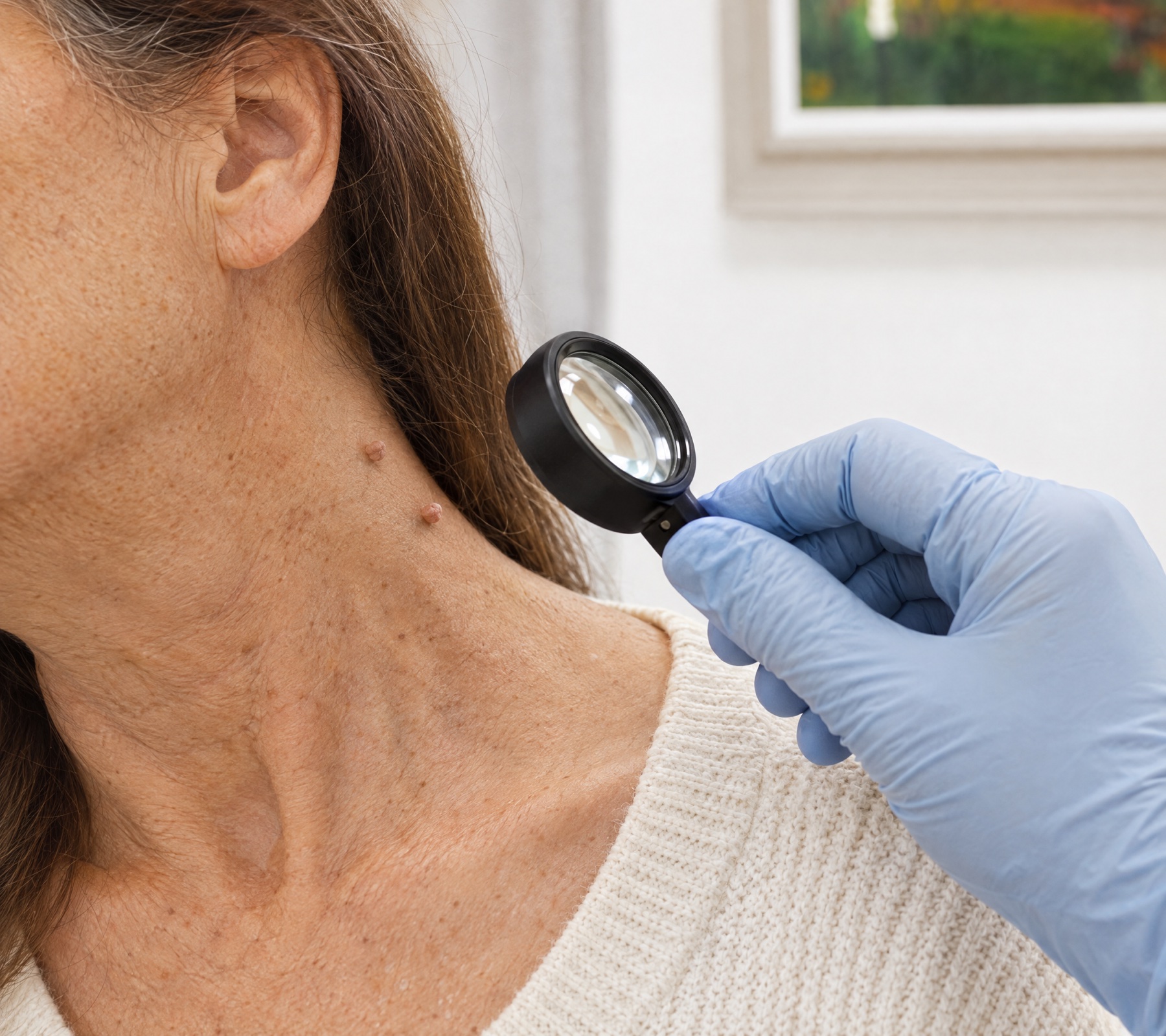
- Multiple skin tags in a visible site such as the neck or eyelid
- A skin tag that has grown larger or changed in colour
- A skin growth thought to be a skin tag that does not behave like one — bleeding repeatedly, growing quickly, or developing pigmentation
The last point is the reason consultant assessment matters: a changing growth that looks like a skin tag is worth confirming clinically before it is removed.
What skin tag removal can and can’t do
Skin tags are harmless, so removal is for comfort or appearance. It is quick and low risk, but it leaves a small mark and cannot stop new tags forming.
It can
- Remove a tag that catches, rubs or bothers you, usually in a few minutes under local anaesthetic.
- Remove several tags in one visit, including on the eyelids and in skin folds.
- Confirm first that it is a skin tag, because a small mole, wart or, rarely, an early skin cancer can look like one.
- Let you go back to normal activity the same day.
It can’t
- Be done without any mark. A small pale or darker spot usually remains where the tag was, more noticeable in darker skin.
- Stop new skin tags. They form where skin rubs on skin, and once you have had one more usually follow.
- Promise the same tag will never regrow. A tag removed at its base usually does not come back, but a stub left behind can.
- Produce histology after freezing or cautery. Anything that does not look exactly like a skin tag is excised and sent to the laboratory instead.
Your consultant will tell you at your consultation which of these apply to you.
Risks, and how often they happen
Every procedure carries risk. Here they are in three groups, with how often they happen where the evidence allows. Your consultant will go through them with you, and they are in your written consent.
Expected Almost everyone, and they settle
-
A small scab that heals within a week or two.
-
A small pale or darker spot where the tag was, which usually fades but can be lasting in darker skin.
-
Brief stinging from the anaesthetic injection, and mild soreness for a day.
Uncommon Some patients, and some need further treatment
-
Bleeding from the base after a larger tag is snipped, which settles with pressure or a touch of cautery.Uncommonno reliable figure
-
Infection at the site, more likely in skin folds, which needs antibiotics.Under 1 in 50skin surgery generally; higher in the groin
-
Pigment change that lasts, particularly after freezing on darker skin.Uncommonno reliable figure
-
Regrowth of the same tag if a stub remains.Uncommonno reliable figure
Rare but serious
-
A raised or thickened scar, more likely in darker skin and on the chest or neck.Rareno reliable figure
-
An unexpected diagnosis, if a lesion thought to be a tag turns out to be something else on histology.Rare
-
A serious reaction to the local anaesthetic.Very rare
For the long term
-
New skin tags are likely, especially in the neck, armpits and groin and where skin rubs. Each can be removed in the same way.
-
See your consultant about any growth that bleeds repeatedly, grows quickly or changes colour, because that is not typical of a skin tag.
Where these figures come from
- NHS, Skin tags (reviewed Apr 2023). For: Regrowth, marks and new tags.
- British Association of Dermatologists, Cryotherapy patient leaflet (Oct 2022). For: Pigment change and scarring after freezing.
- Dixon et al., Dermatol Surg 2006;32:819-826 (5,091 lesions, no prophylactic antibiotics). For: Infection.
- British Association of Dermatologists, Keloids patient leaflet (Apr 2021). For: Raised (hypertrophic or keloid) scars.
- NHS, Local anaesthetic (reviewed Dec 2025). For: Serious reaction to local anaesthetic.
Figures are drawn from UK national guidance and published studies, and your own risk may be higher or lower. More from the NHS on skin tags and from the British Association of Dermatologists on cryotherapy.
Aftercare
Wound care advice is provided in writing on the day of the procedure. Most skin tag removal sites heal within a few days with no special care beyond keeping the area clean. The Waterfront nursing team is available for the first week for any wound-related concerns. Your consultant remains accessible after the procedure — if anything concerns you, they will respond directly and arrange to see you as soon as needed.
- Day of surgeryHome within the hour. Most skin surgery is under local anaesthetic.
- Next dayBack to office work. Heavy, dirty or wet jobs need a few days.
- Days 7–14Stitches out at Waterfront.
- 3–4 weeksHistology results, where a sample is sent to the laboratory.
- 12 monthsNurse reviews, dressing clinics and the treatment of any complications are included.
Typical timings. Your consultant and nurse will tailor them to you.

Before and after skin tag removal
Skin tag removal
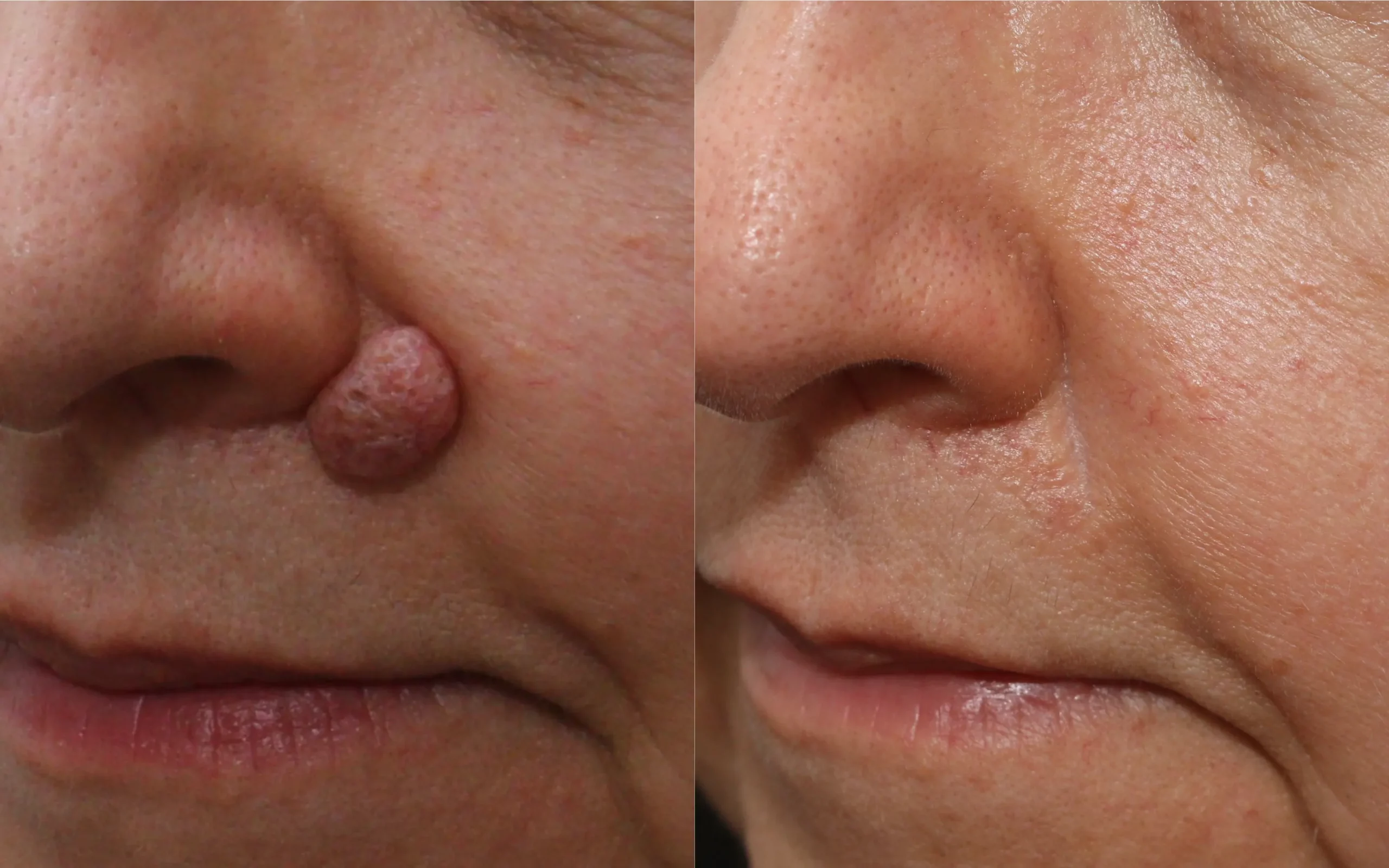
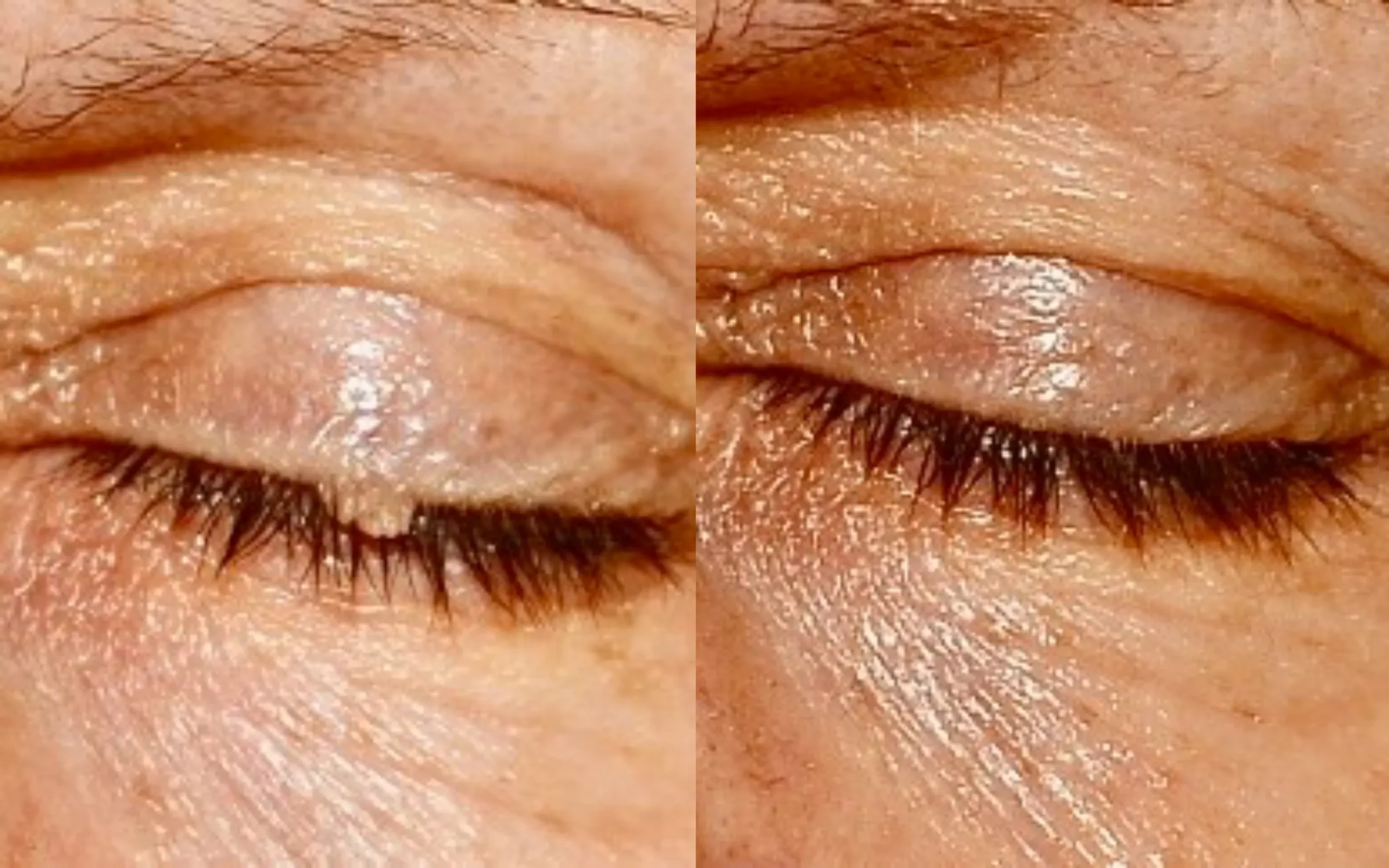
Skin tag removal
Results vary from person to person. Your consultant will show you more examples at consultation and explain what is realistic for you.
Your consultants
Skin tag removal at Waterfront is performed by Mr Ben Aldridge — the UK’s only consultant dual-qualified in dermatology and plastic surgery, with a PhD in skin lesion diagnostics — and by Mr Kazem Nassar, consultant plastic and reconstructive surgeon. Both are on the GMC Specialist Register. The consultant who assesses you at the consultation is the consultant who performs the removal.
You meet your consultant at your first appointment. The same consultant plans your treatment, carries it out and sees you afterwards.


What skin tag removal costs
- Consultation
- £200, with a consultant. It includes a dermoscopic examination and a same-appointment recommendation.
- Your quotation
- Confirmed in writing after your consultation, once the consultant has assessed the lesion.
- Paying
- Interest-free finance over 6 or 10 months is available for most skin procedures at Waterfront.
Guide prices at Waterfront Private Hospital:
- Consultation — £200
- Skin tag removal — from £395 for the first skin tag
- Additional skin tags in the same session — £100 each
The price covers the consultant’s fee, the hospital and theatre fees at Waterfront, and routine post-operative review. Final pricing is confirmed in writing after consultation, based on the number of skin tags to be removed and the method chosen.
Waterfront Private Hospital is self-pay.

Frequently asked questions about skin tag removal
Who performs skin tag removal at Waterfront?
Do I need a GP referral?
How quickly can I be seen?
Can multiple skin tags be removed in one session?
Does removal hurt?
Will it leave a scar?
Can a skin tag come back?
What if my consultant thinks it might not be a skin tag?
Can skin tags around the eyelid be removed?
How is treatment paid for?
Written by

Mr Kazem Nassar, MBChB, FRCS (Plast), GMC 7131999, is a Plastic and Reconstructive Surgeon Consultant with over 10 years of experience. He practices at St John’s Hospital and the Western General Hospital in Edinburgh, specialising in melanoma, skin cancer treatments, breast surgery, and post-cancer reconstructive surgery.
