Gynaecomastia Surgery in Edinburgh
Gynaecomastia is more common than most men think, but for those who decide on surgery, it is usually a decision made after years of consideration. At Waterfront, the procedure is performed discreetly by a consultant plastic surgeon, and the right approach for your case depends on whether the underlying cause is fat, gland or skin (often a combination).
Many patients travel from across Scotland for this procedure, and consultations and reviews are scheduled to make the journey straightforward.
- Anaesthetic
- General
- Surgery time
- 1-2 Hours
- Hospital stay
- Day case
- Recovery
- 1-2 weeks off work, 6 weeks before strenuous exercise
- Guide price
- From £5,800
Contents
What the procedure involves
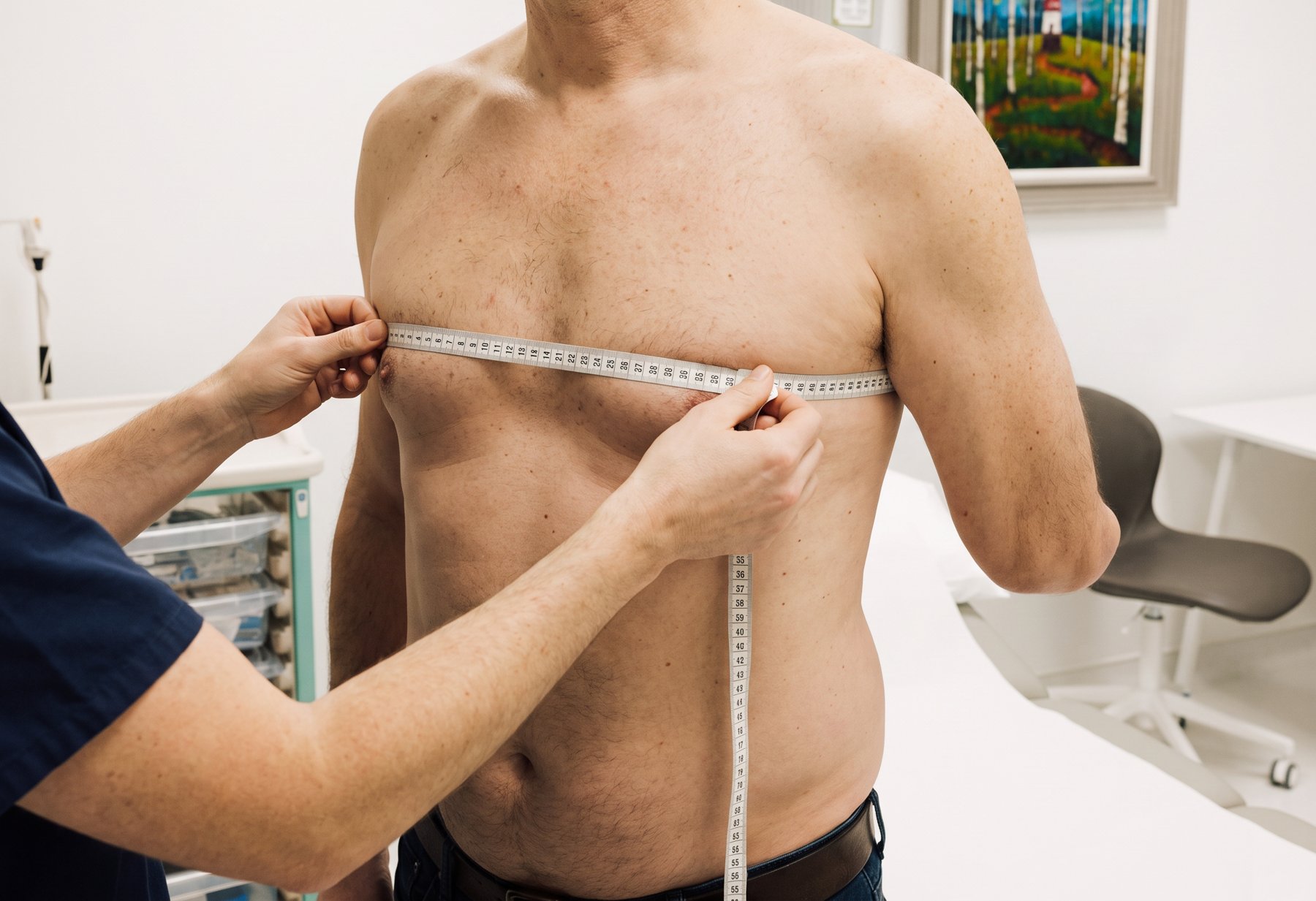
Gynaecomastia surgery at Waterfront is planned individually around the cause of the enlargement. Most cases involve one or a combination of the following:
- Initial assessment: a thorough examination at consultation to determine the underlying cause of the gynaecomastia and which surgical approach is appropriate.
- Liposuction: used where the cause is predominantly excess fatty tissue. Performed through small incisions to remove fat and recontour the chest.
- Glandular tissue excision: where the cause is excess glandular breast tissue (the firm tissue behind the nipple), this is surgically removed, usually through a small incision around the lower border of the areola.
- Skin excision: where there is significant skin laxity — often after significant weight loss or in long-standing cases — excess skin is removed to tighten and reshape the chest.
- Combined approaches: many cases need a combination of two or more of these techniques to address fat, gland and skin together.
Benefits and expected outcomes
Gynaecomastia surgery can address:
- Persistent enlargement of the male breast that does not respond to diet, exercise or weight loss
- The visible breast contour that affects what you can comfortably wear
- Physical discomfort such as chafing, irritation or sensitivity in the area
- Long-standing self-consciousness in settings where the chest is exposed — beach, gym, intimate situations
- Asymmetry between the two sides of the chest
What it does not always achieve: a completely flat, contoured chest in every case. Where the underlying cause involves a large amount of skin laxity, scarring is part of the trade-off — a flatter chest in exchange for visible scars (typically across the lower chest). Your consultant will be honest at consultation about the trade-offs of the approach that suits your case.
Results are long-lasting if you maintain a stable weight. Significant weight gain after surgery can change the appearance, and in cases where the underlying cause of the gynaecomastia is not addressed (for example, ongoing use of medications or anabolic steroids), enlargement can recur.
Who is an ideal candidate
Suitable candidates for gynaecomastia surgery:
- Are in good general health and non-smokers, or are willing to stop smoking well in advance of surgery
- Are close to their ideal weight and stable in weight — large weight changes after surgery can affect the result
- Have stable, mature breast development — surgery is most appropriate for adult men whose chest has not changed in size for at least a year
- Have realistic expectations, including an honest understanding of where scars will sit if skin excision is needed
- Are making the decision for themselves, in their own time, not under pressure from anyone else
A consultation is a conversation, not a commitment to surgery. If we feel surgery is not the right answer for you — for example, if the cause is medication-related and stopping the medication may resolve the enlargement first, or if your chest has not yet stabilised — we will say so honestly.
Risks and considerations
Gynaecomastia surgery is generally safe in experienced hands, but it carries a defined set of risks that any patient should understand before deciding to go ahead:
- Bleeding and haematoma: bleeding can occur during or after surgery, particularly after glandular tissue excision. A collection of blood beneath the skin (haematoma) may occasionally need to be drained.
- Infection: uncommon but possible, managed with antibiotics and wound care.
- Seroma: a build-up of fluid in the treated area, which may need to be drained.
- Scarring: incisions leave scars; size and position depend on the surgical technique. Where skin excision is needed, the scars are more visible.
- Under-correction or over-correction: removing too little tissue can leave a residual prominence; removing too much can create a hollow or saucer-shaped deformity behind the nipple.
- Contour irregularities: lumpiness or unevenness in the treated area can occur, particularly after liposuction.
- Incomplete skin retraction: after liposuction or gland excision, the skin may not contract back fully, particularly in long-standing cases or where elasticity is reduced.
- Changes in nipple or skin sensation: temporary or, less commonly, permanent.
- Need for revision surgery: in a small number of cases a second procedure is needed for an optimal result.
- Anaesthesia risks: all anaesthetists involved in surgery at Waterfront are consultants in their own right.
Further reading: BAAPS — Male Breast Reduction
Aftercare and recovery
Your recovery is led by the consultant who performed your surgery. A nurse reviews you at one week, and your consultant sees you again once everything has settled. Between appointments, our team are available whenever you have a concern — you do not need to wait for a scheduled review. Practical guidance on dressings, activity and returning to work is in our aftercare guide.
- Day of surgeryHome the same day with your written aftercare guide. Waterfront is a day hospital.
- Week 1Nurse review: wound checked, dressings changed, questions answered.
- Week 2Back to desk work. No driving until you are off strong painkillers.
- Week 6Chest and upper-body exercise can resume.
- 3–6 monthsFinal result as swelling settles.
- 6 monthsYour consultant reviews the settled result. Sooner if you need it.
- 12 monthsNurse reviews, dressing clinics and the treatment of any complications are included.
Typical timings. Your consultant and nurse will tailor them to you.
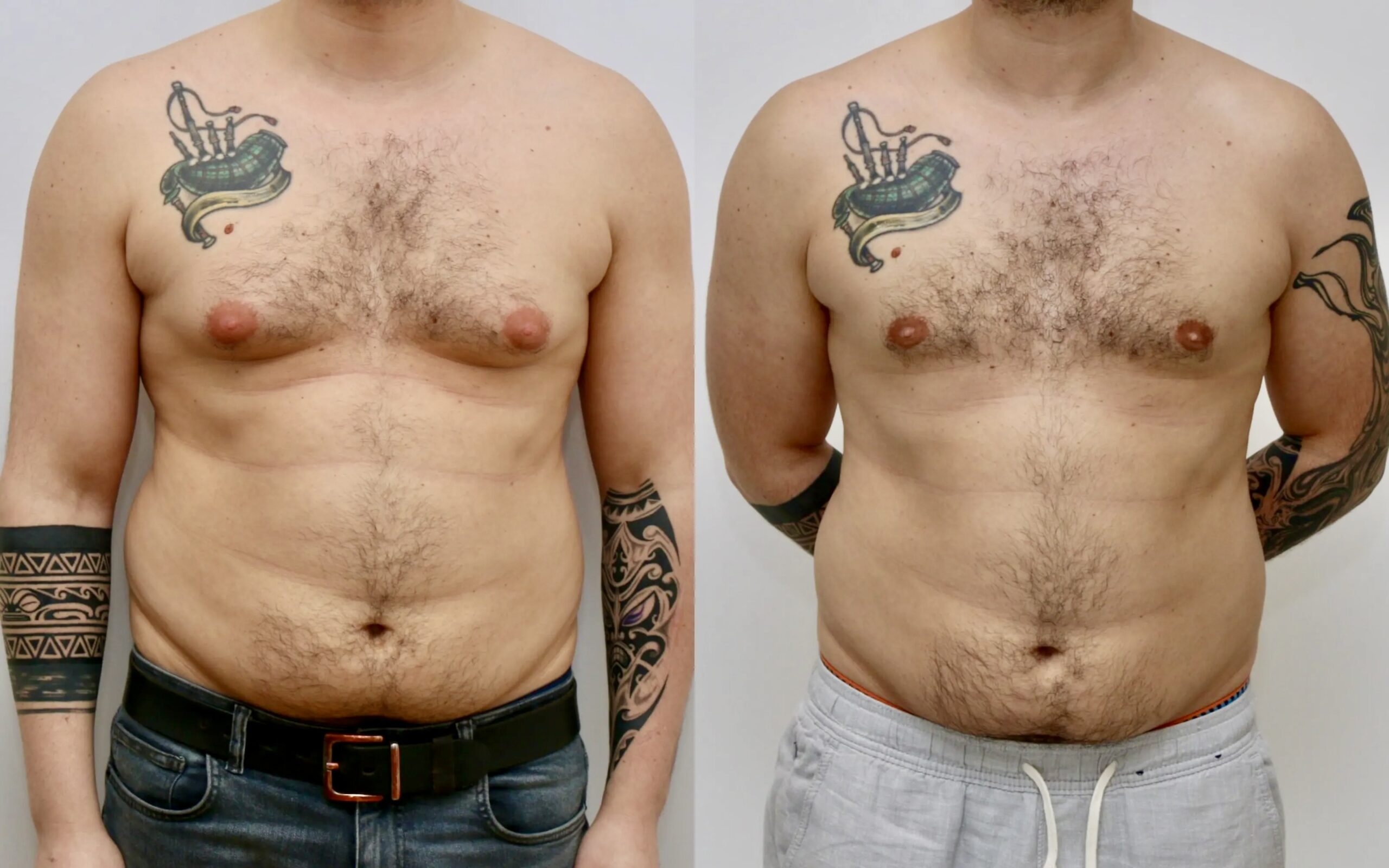
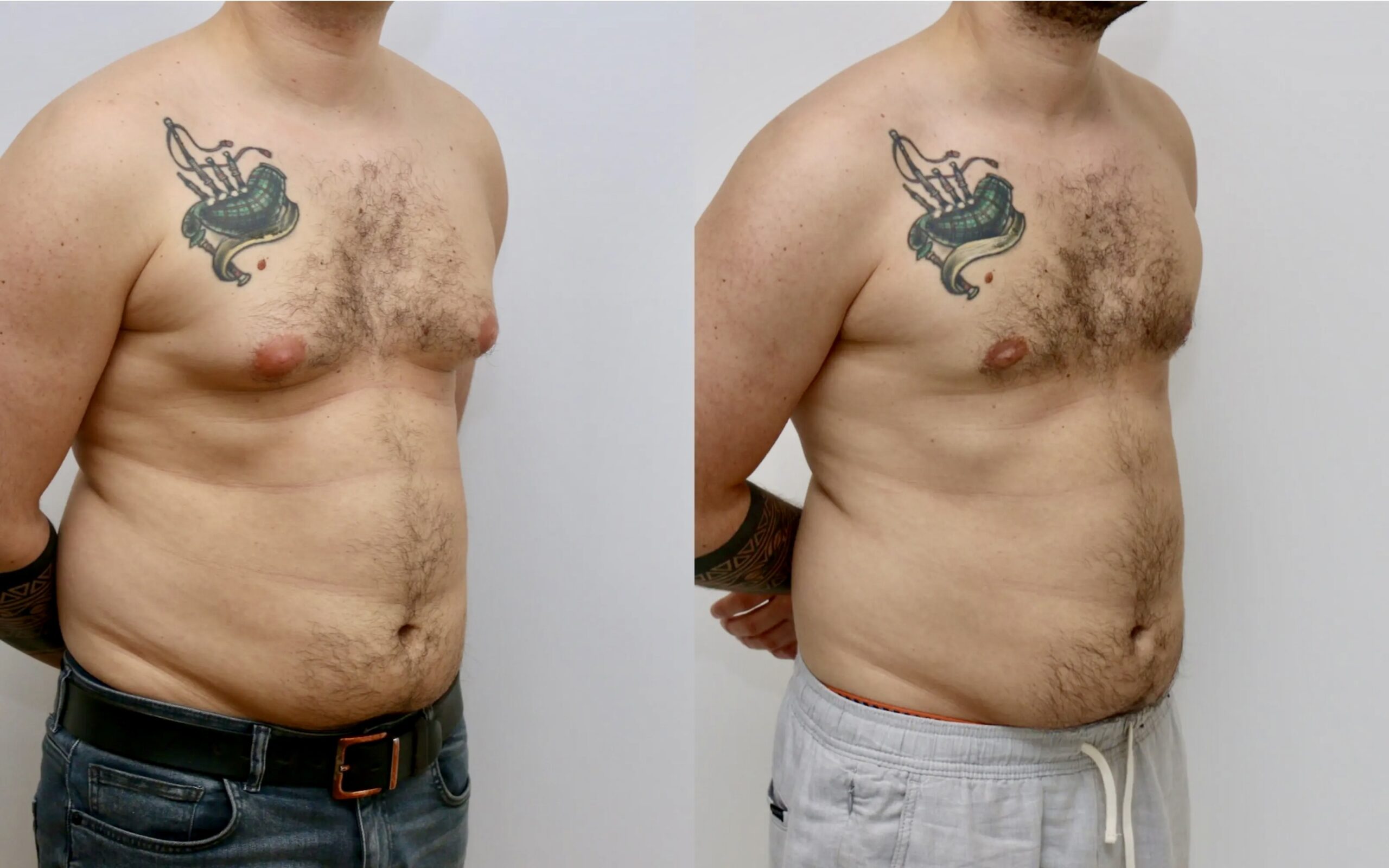
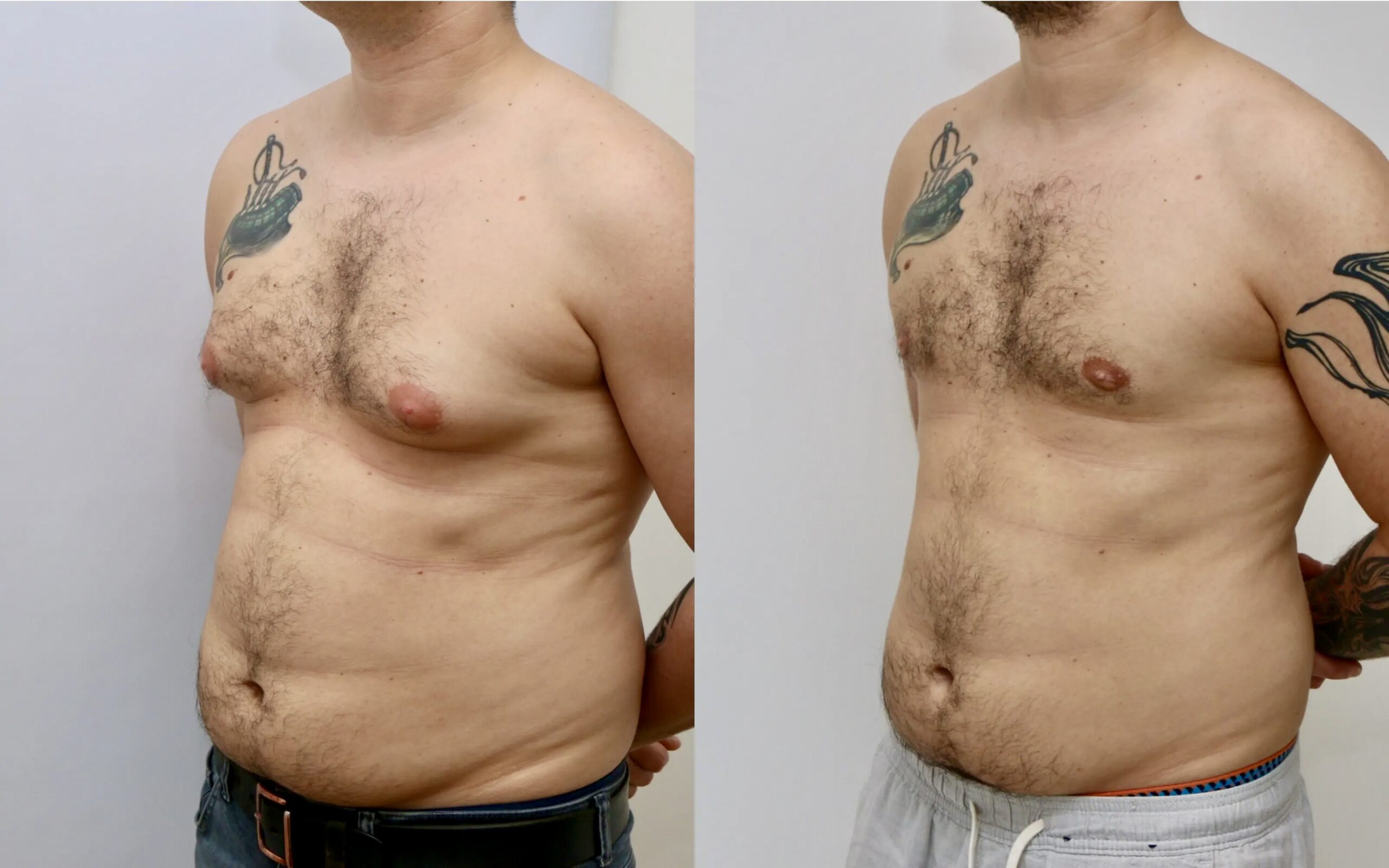
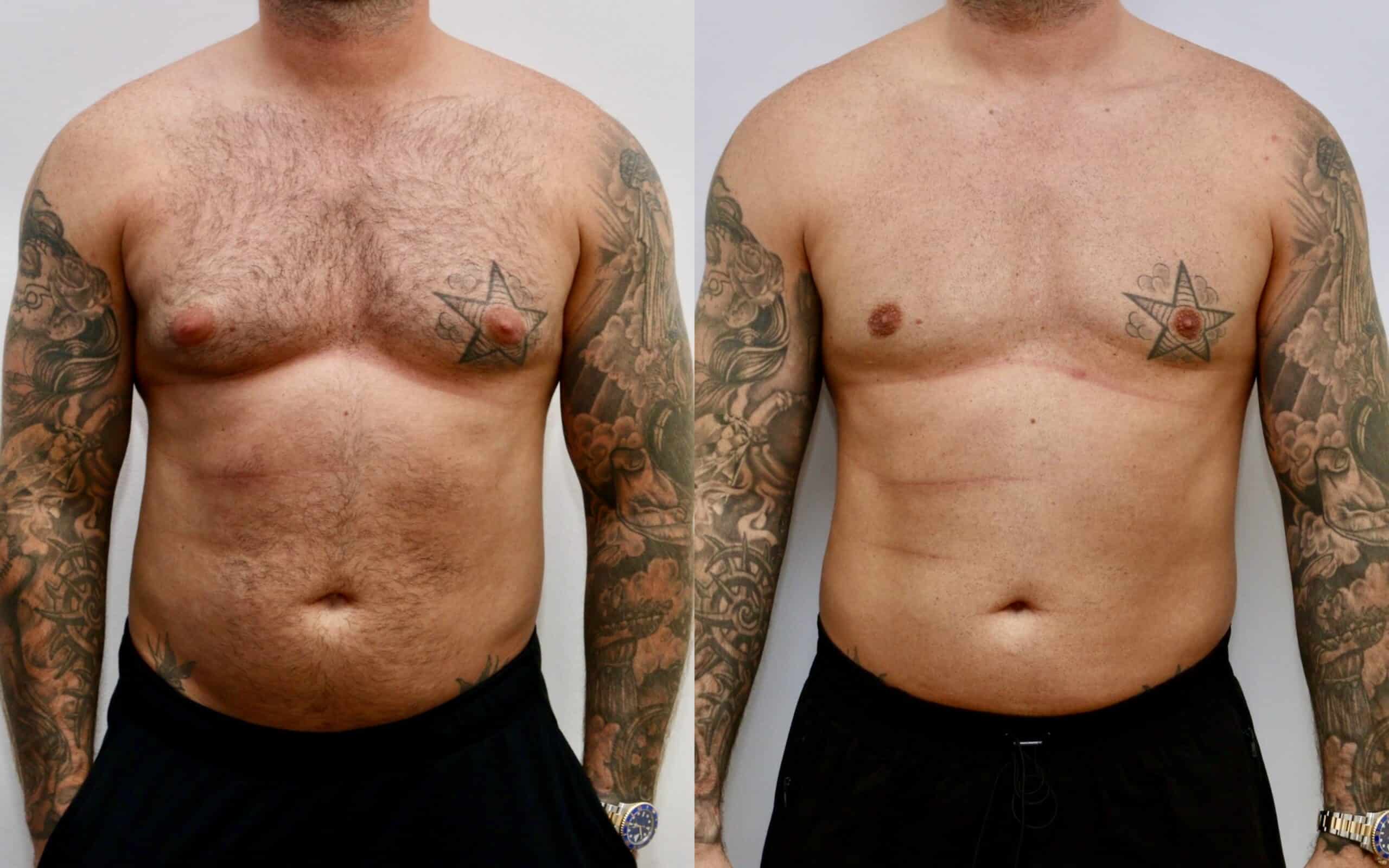
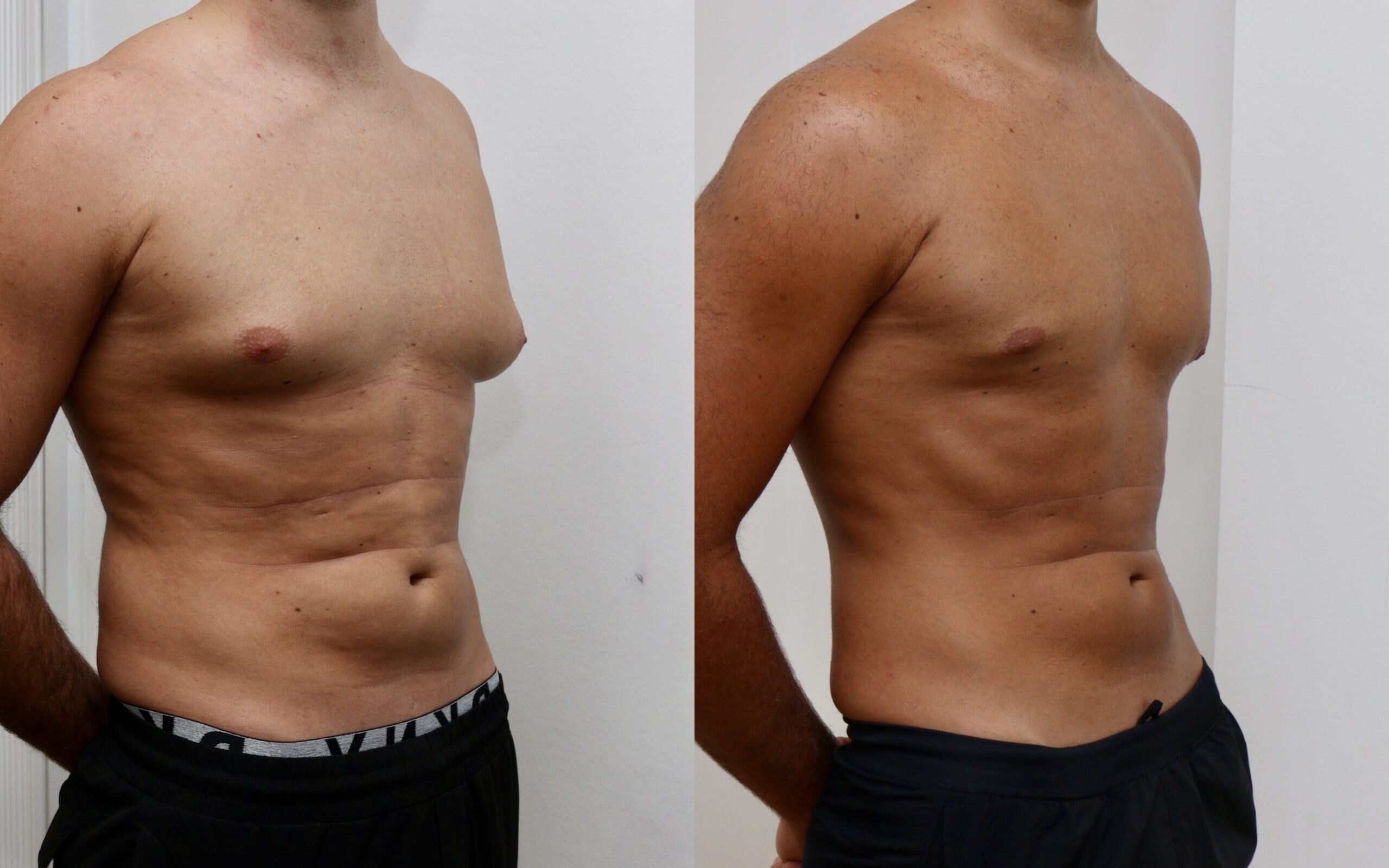
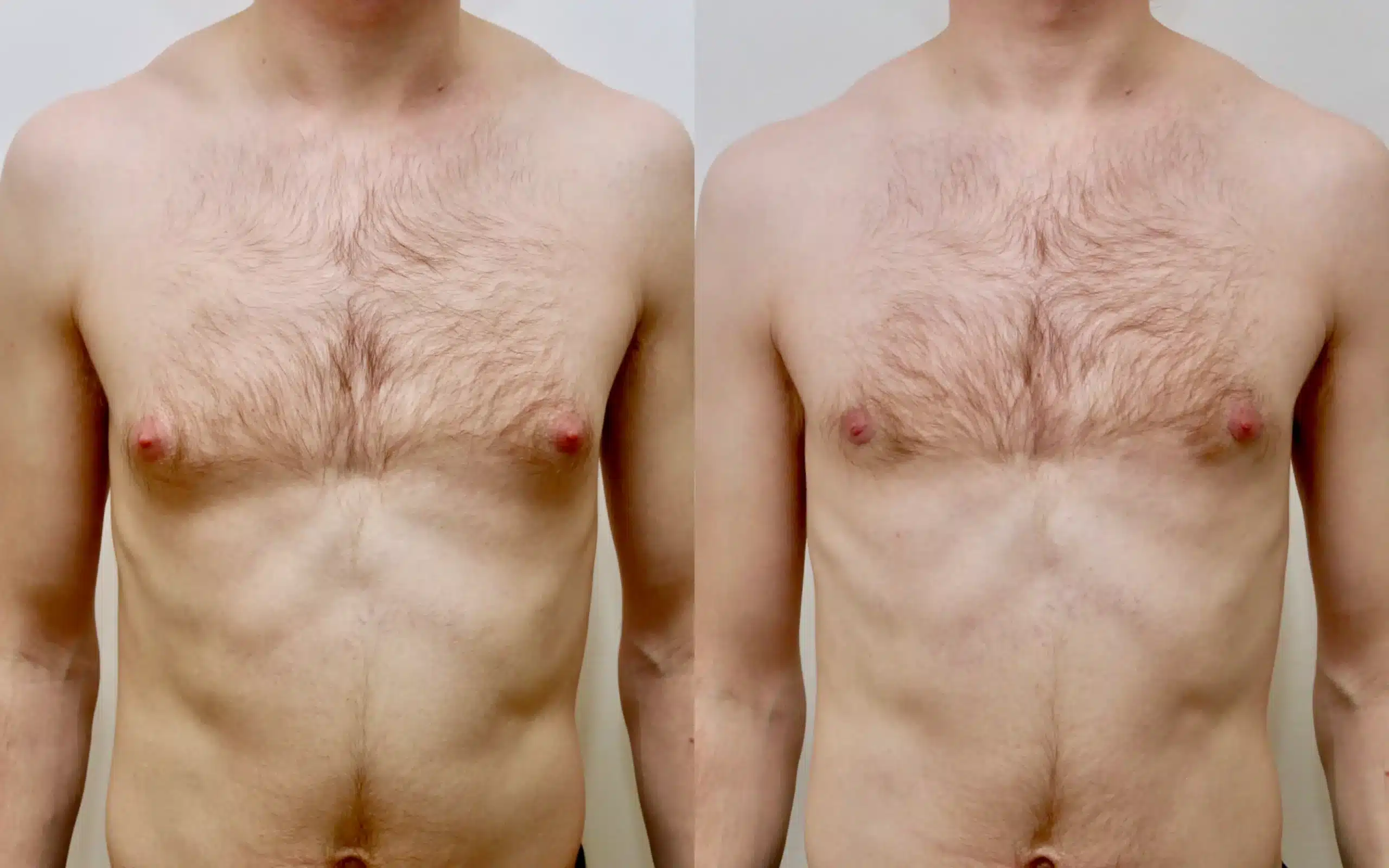
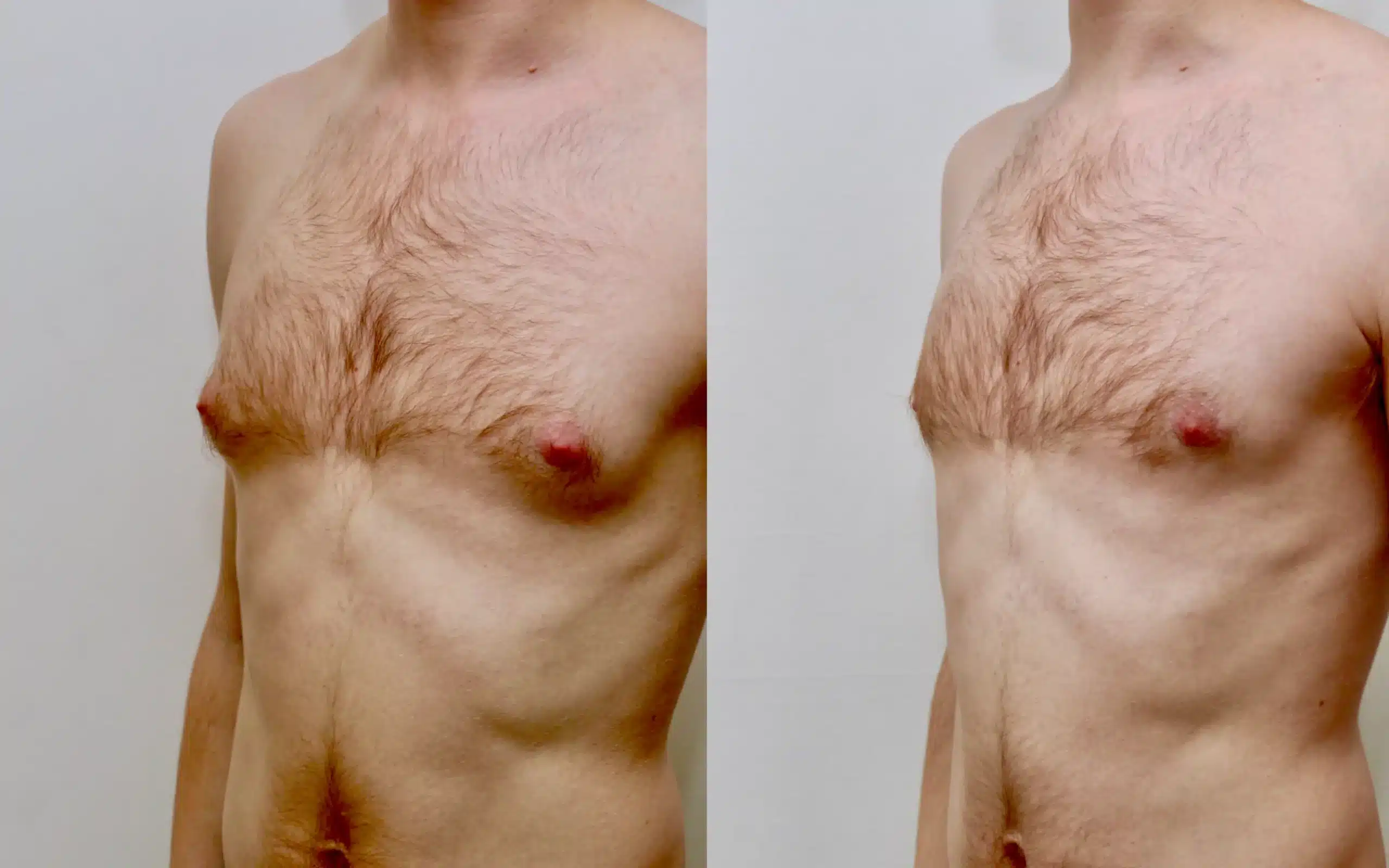
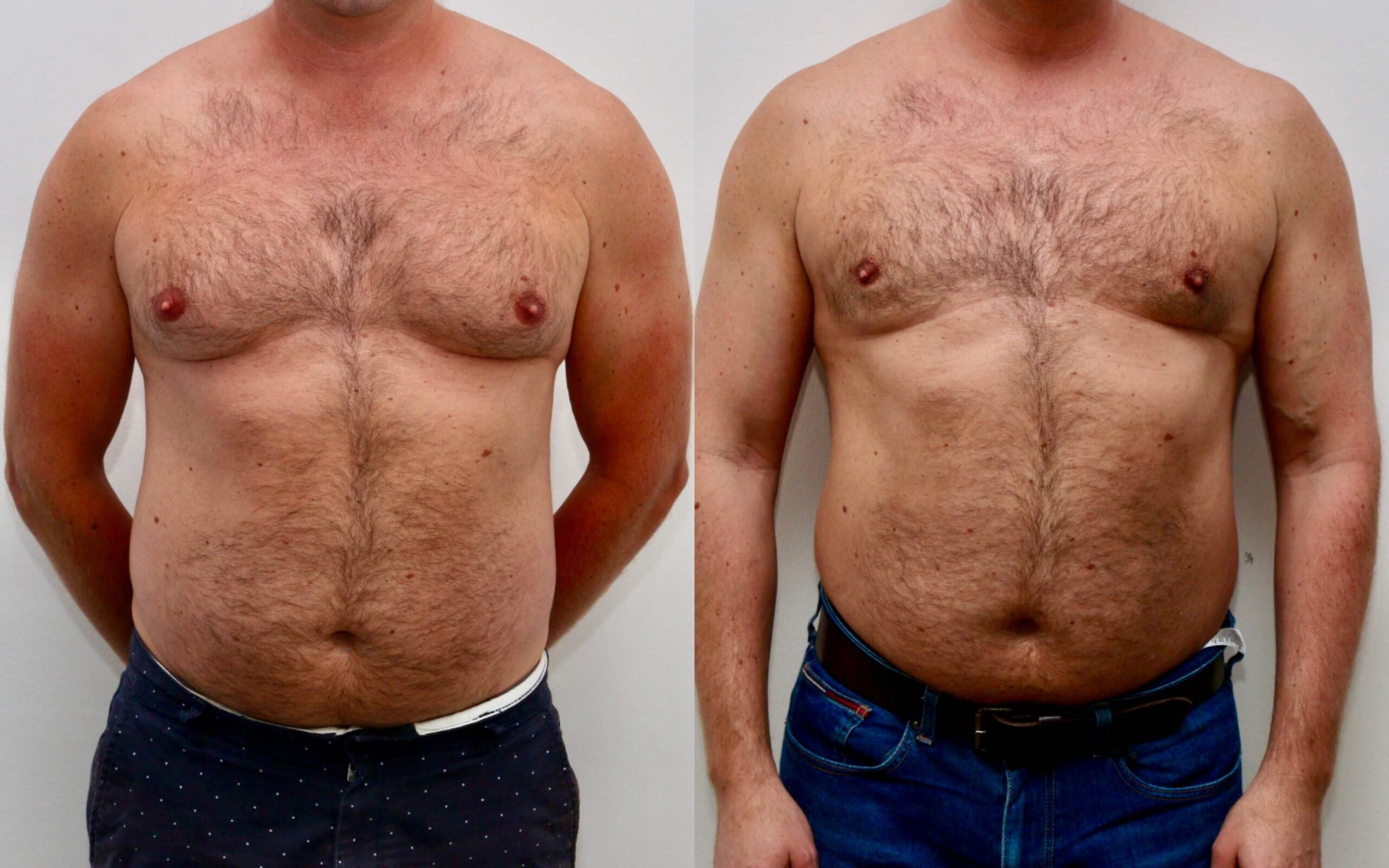
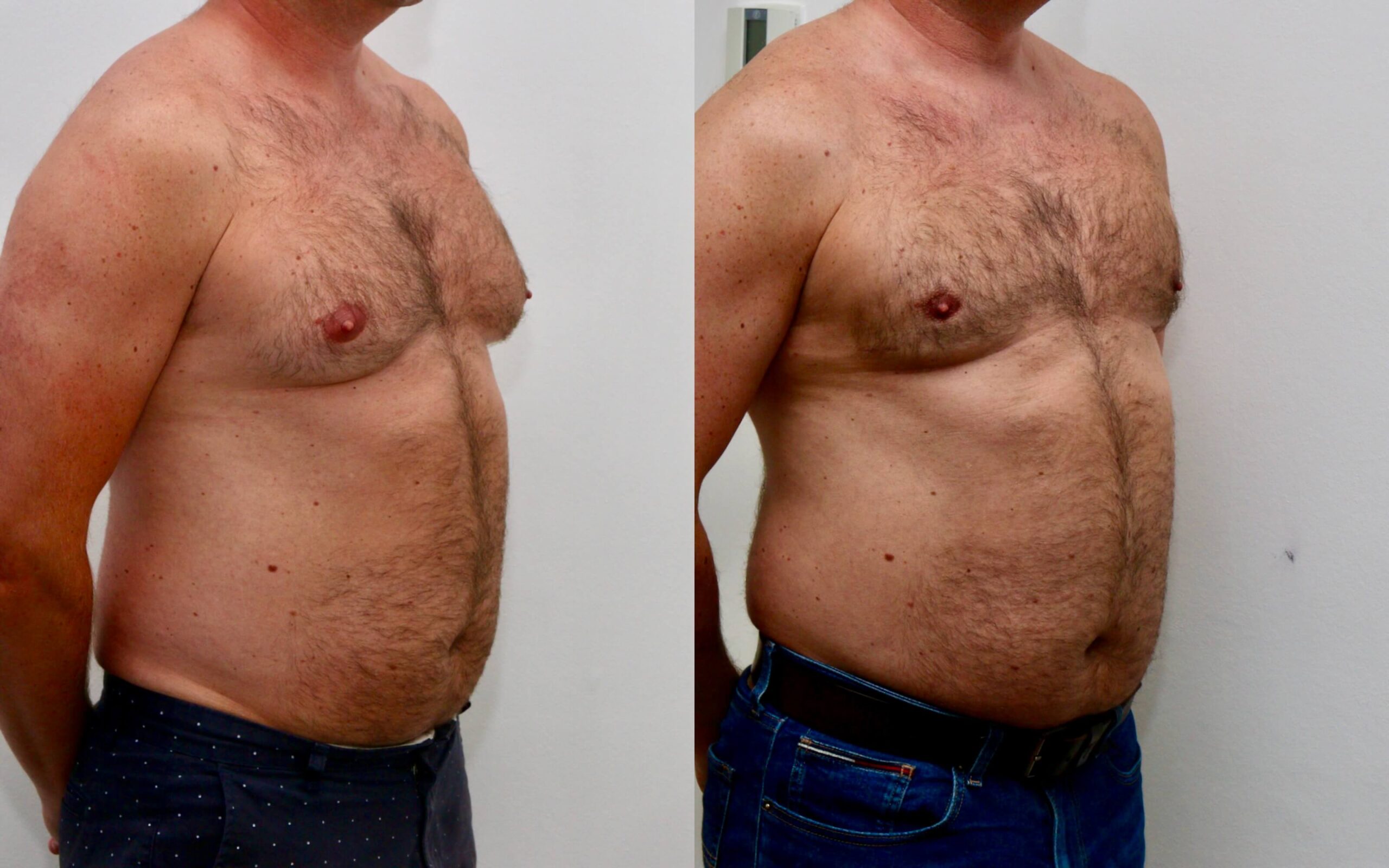
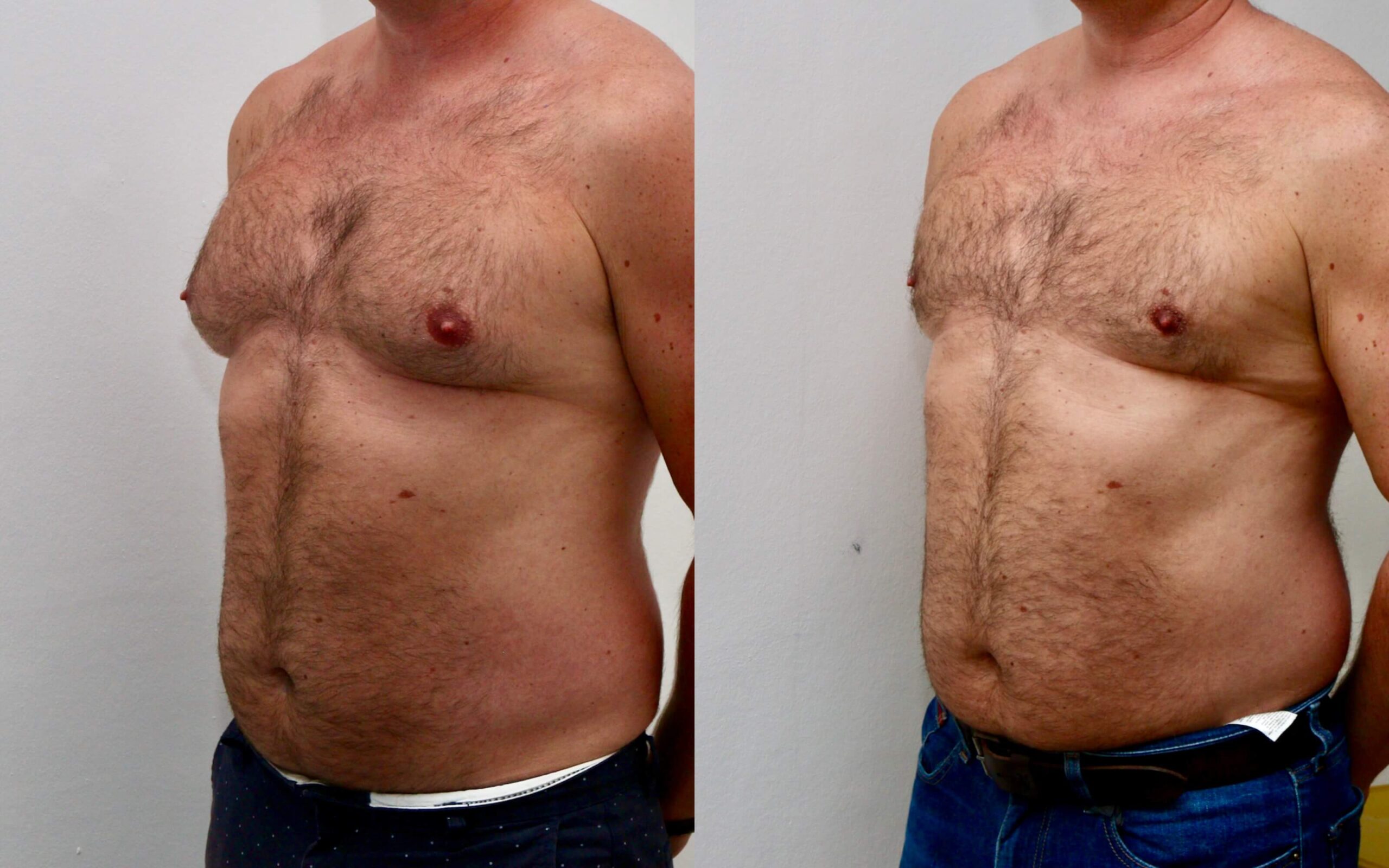
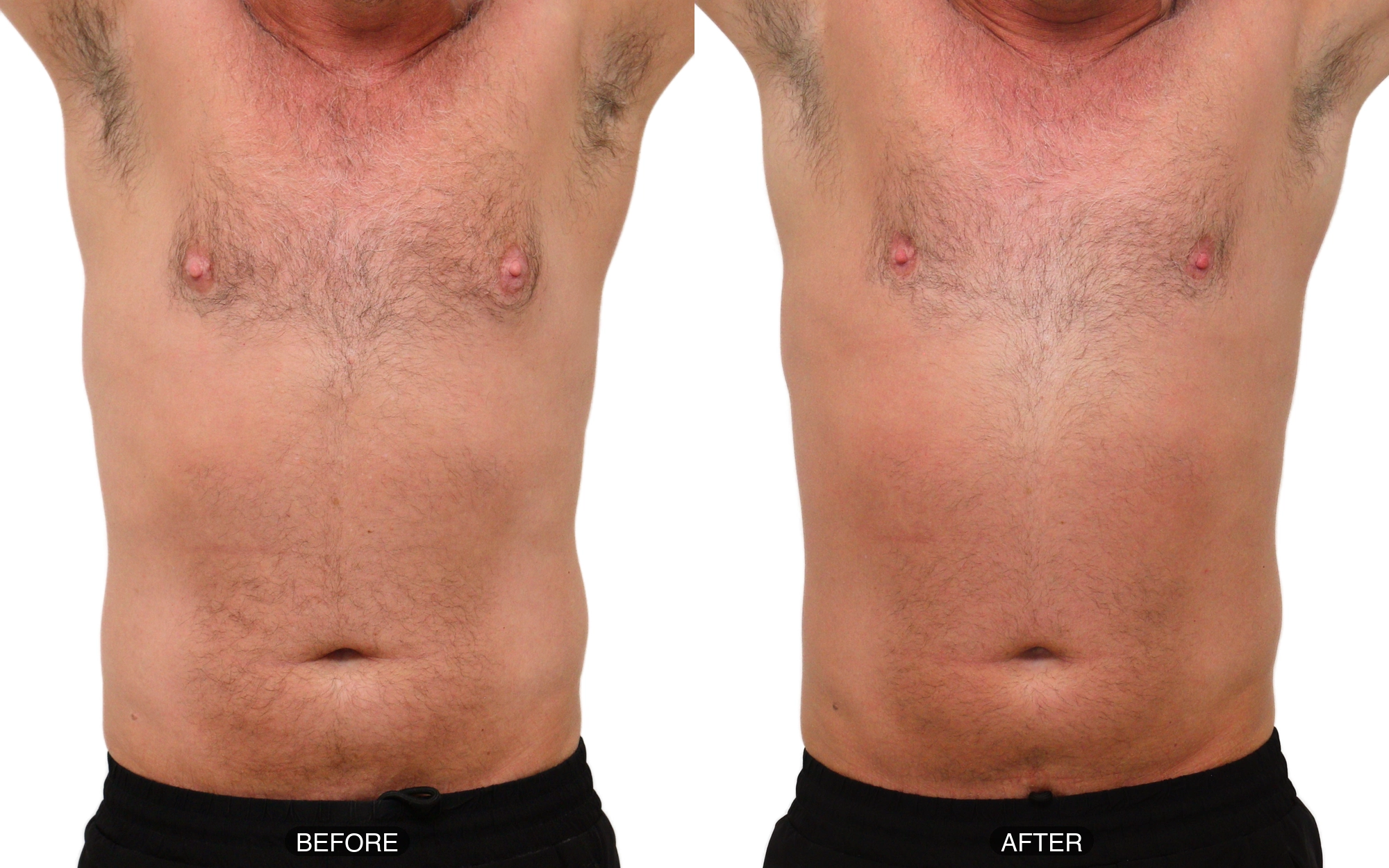
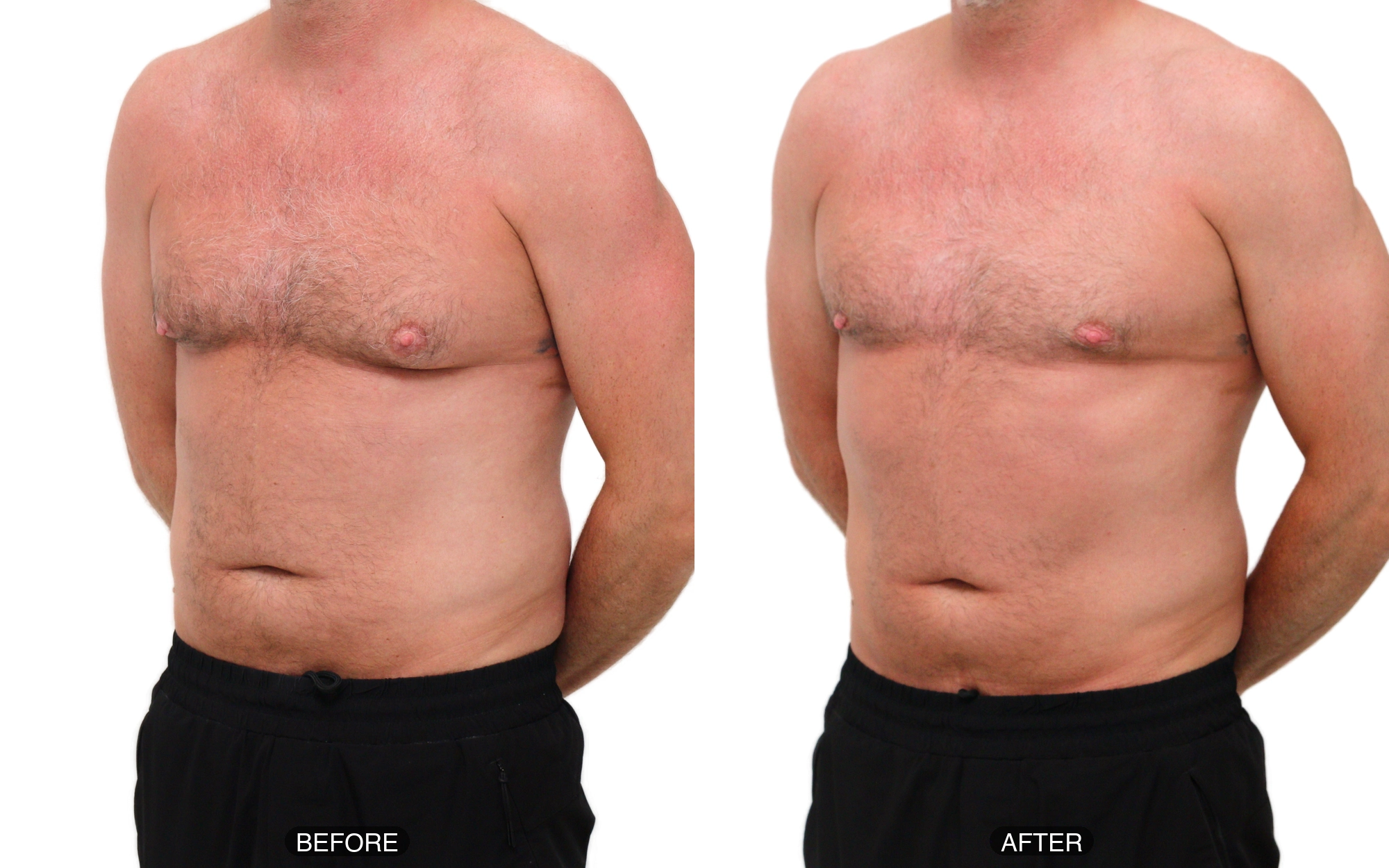
Gynecomastia gallery
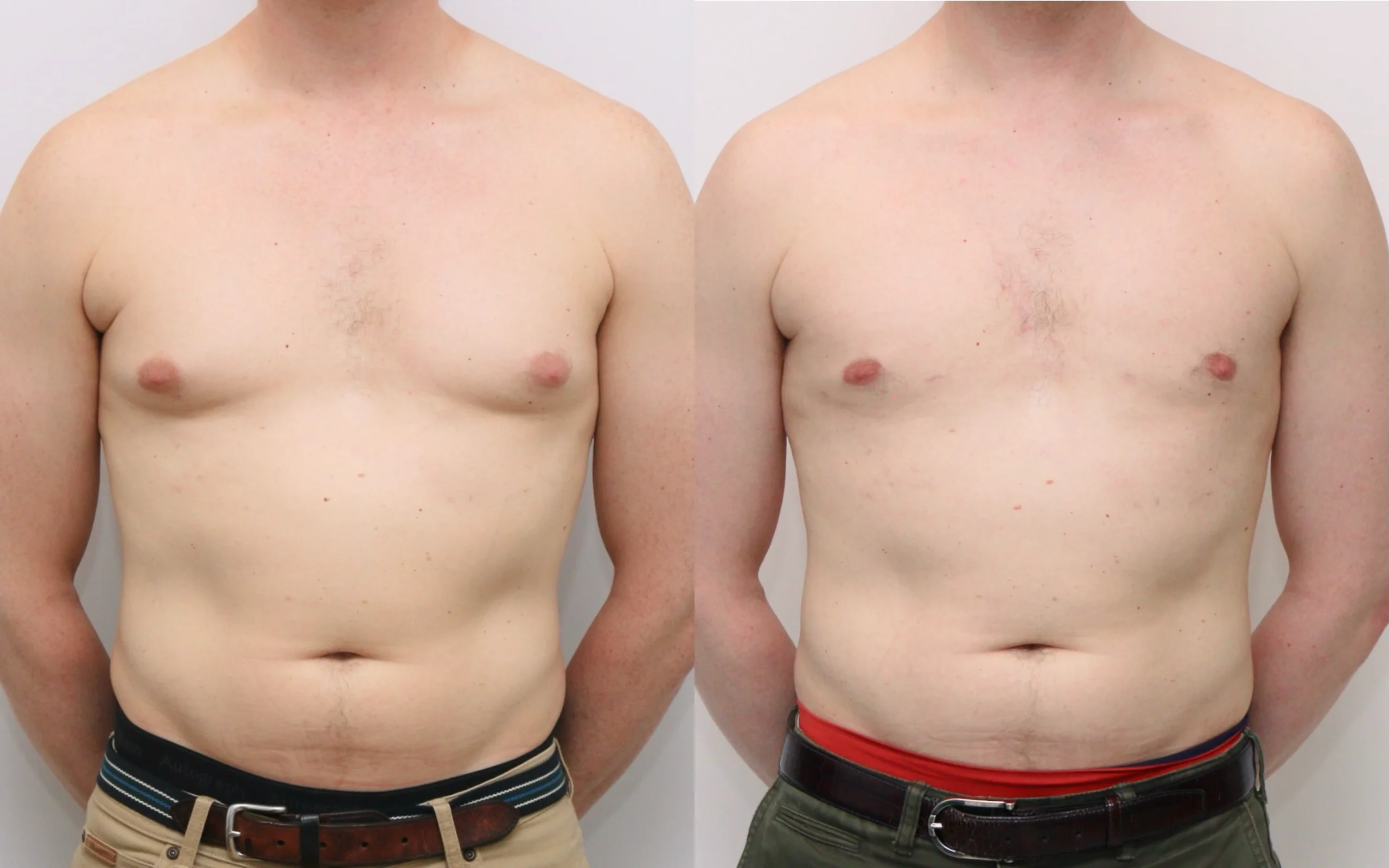
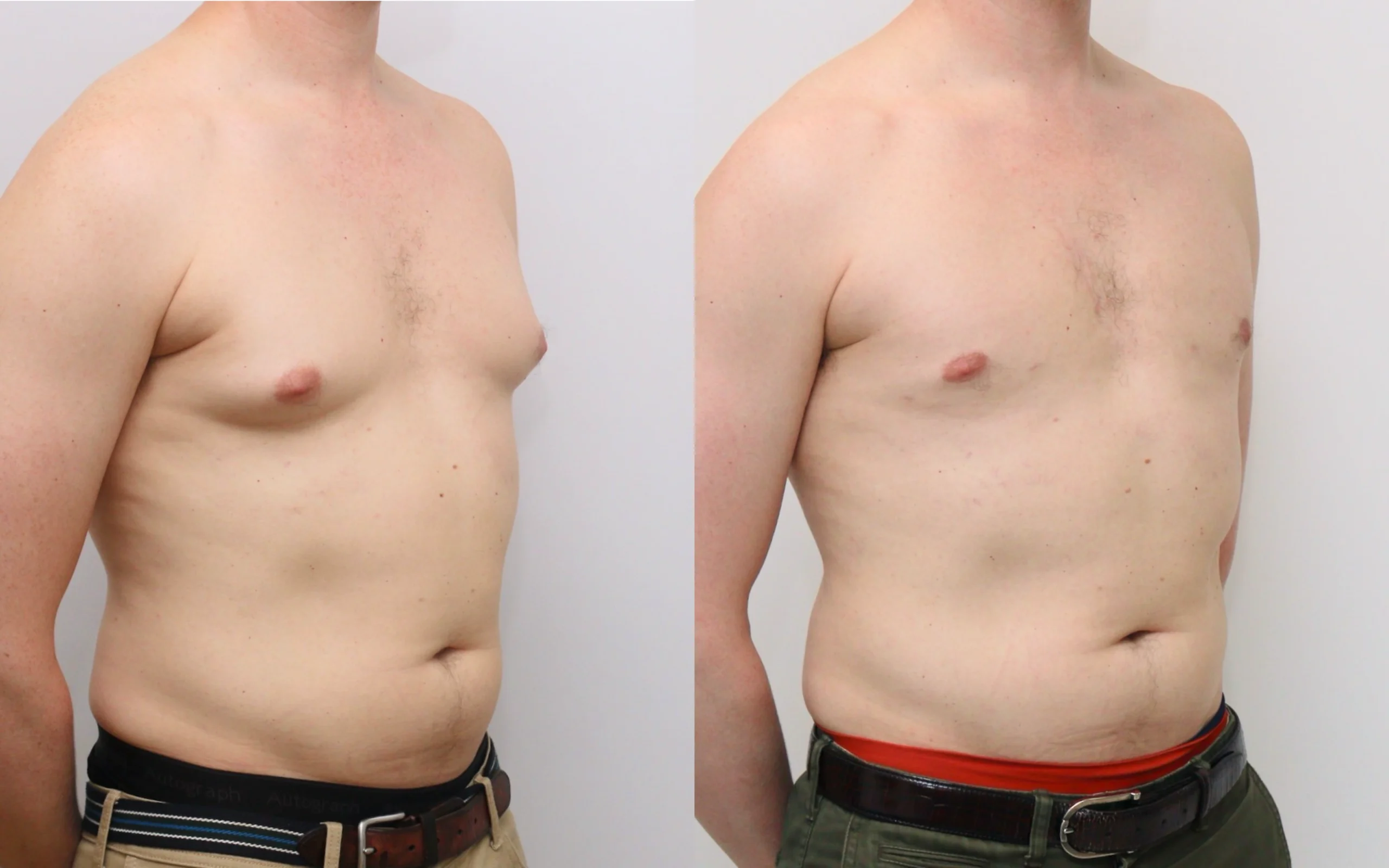
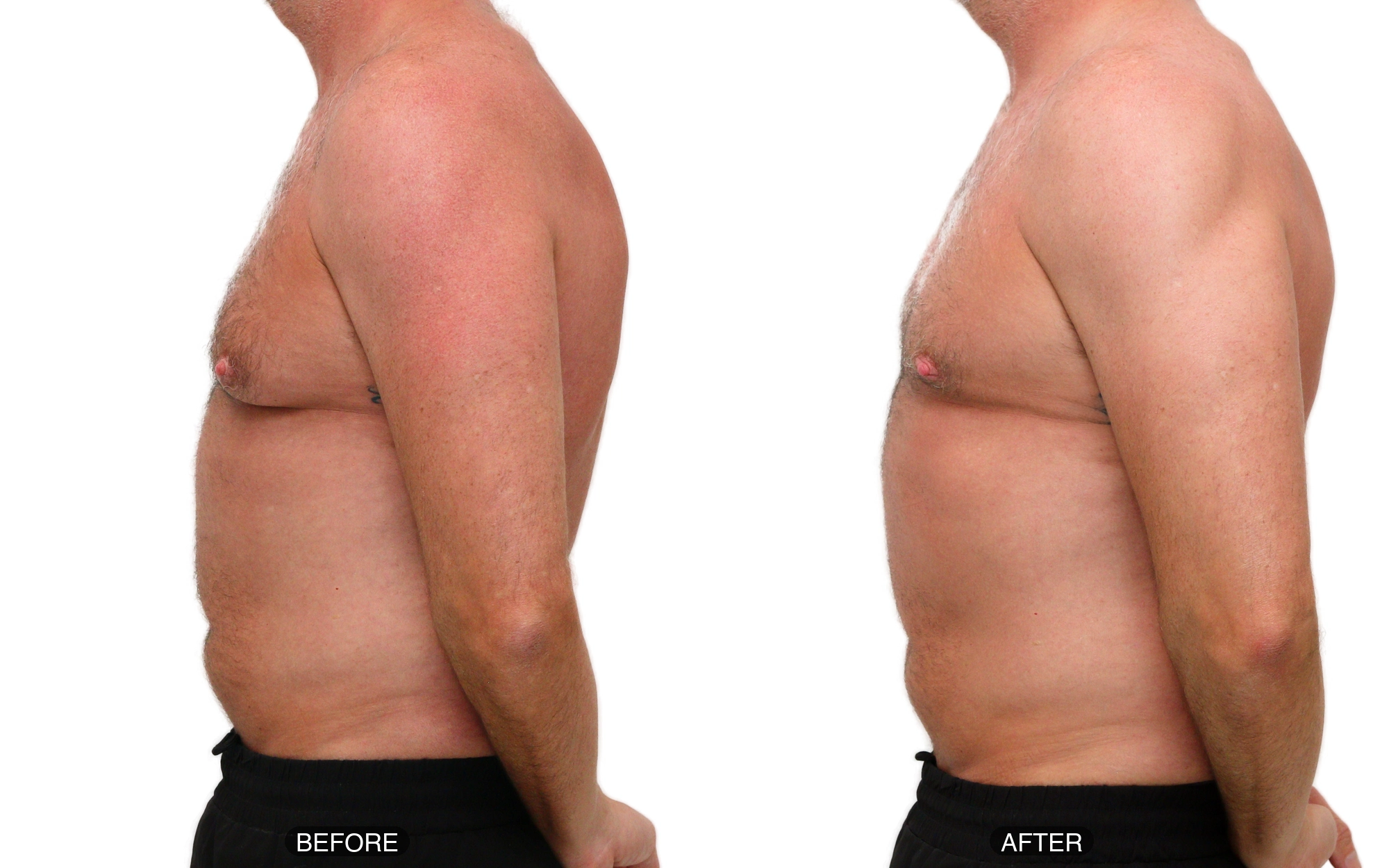
View some examples of our male breast reduction before and after photos
Male breast reduction
Results vary from person to person. Your consultant will show you more examples at consultation and explain what is realistic for you.

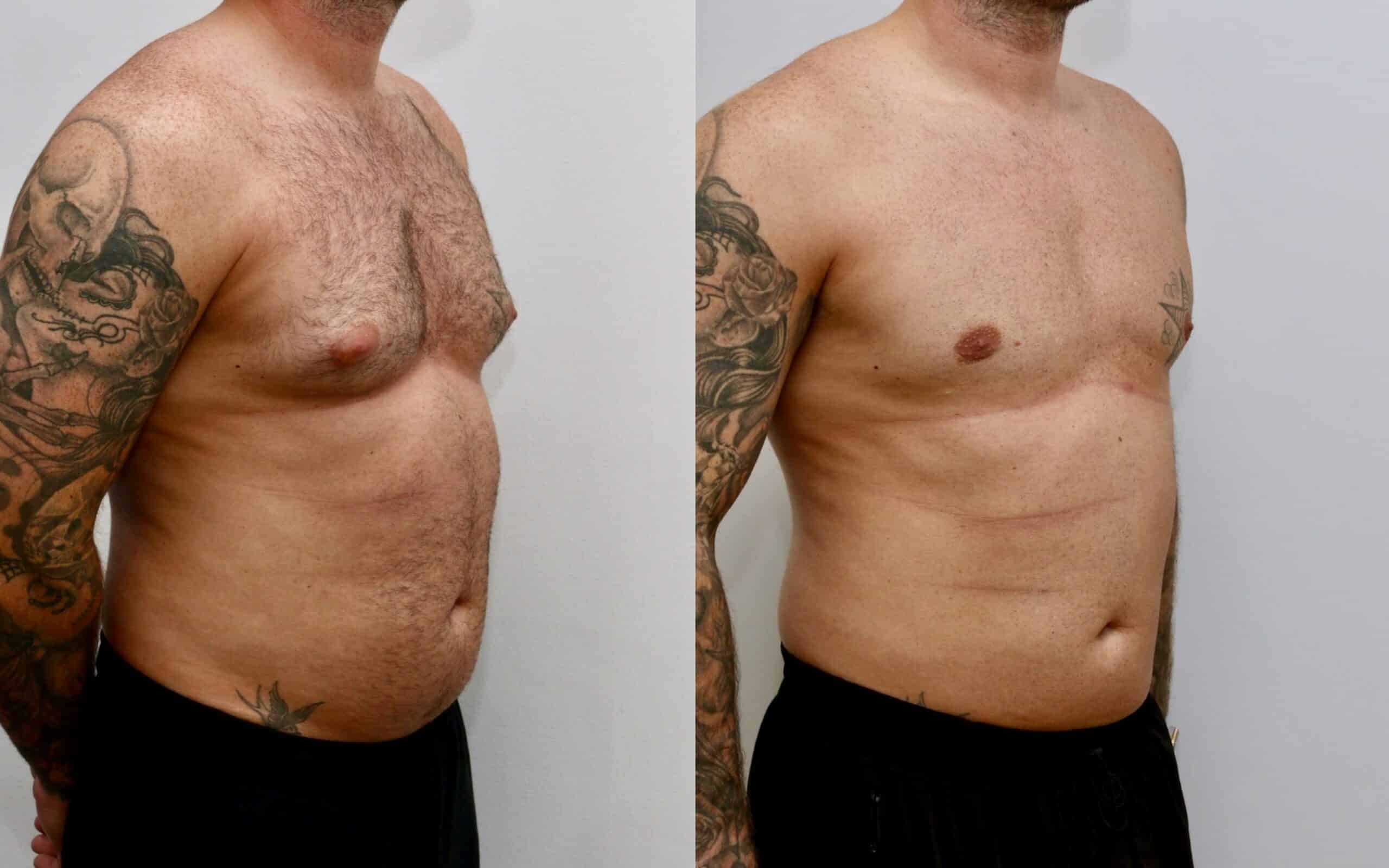
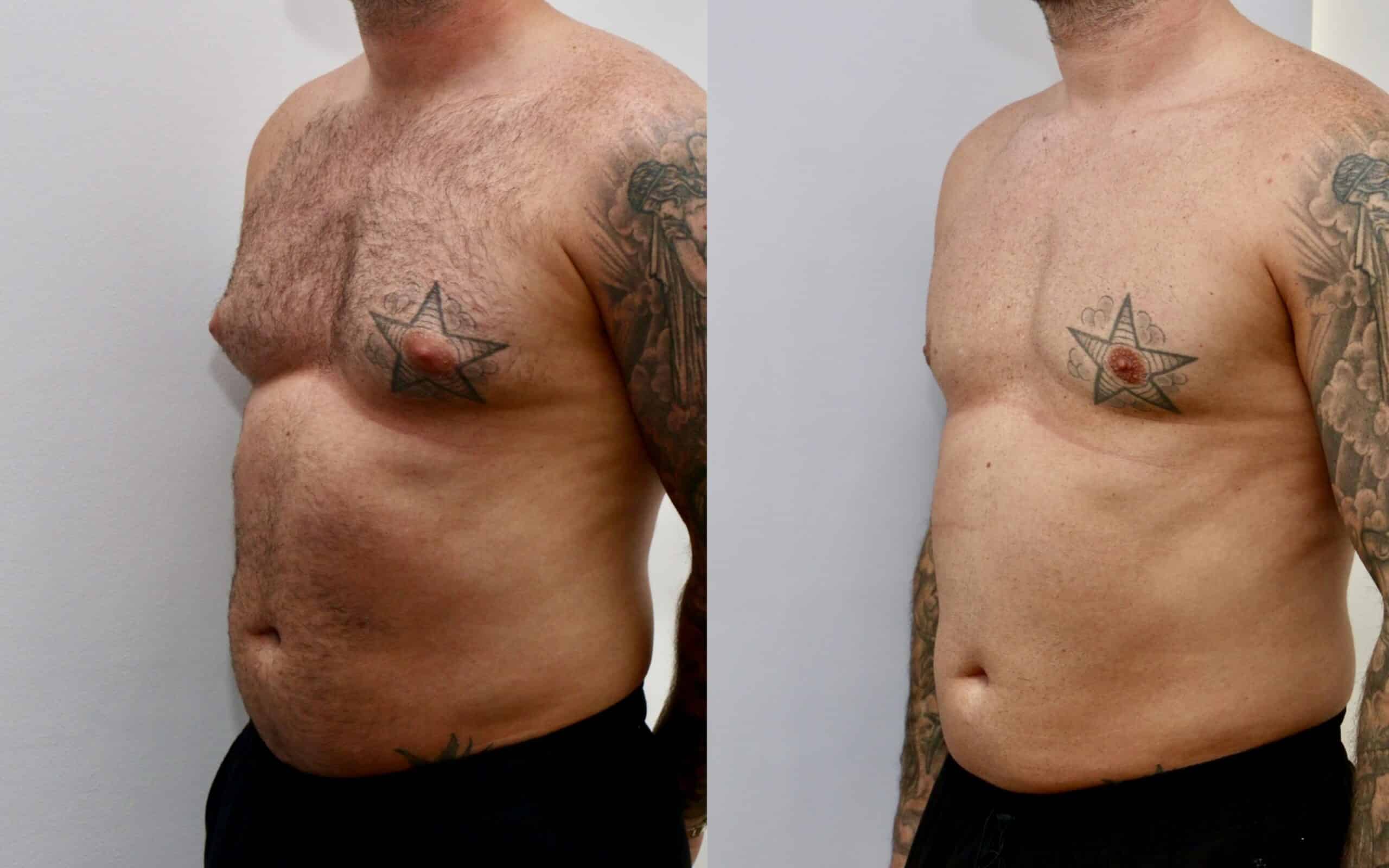
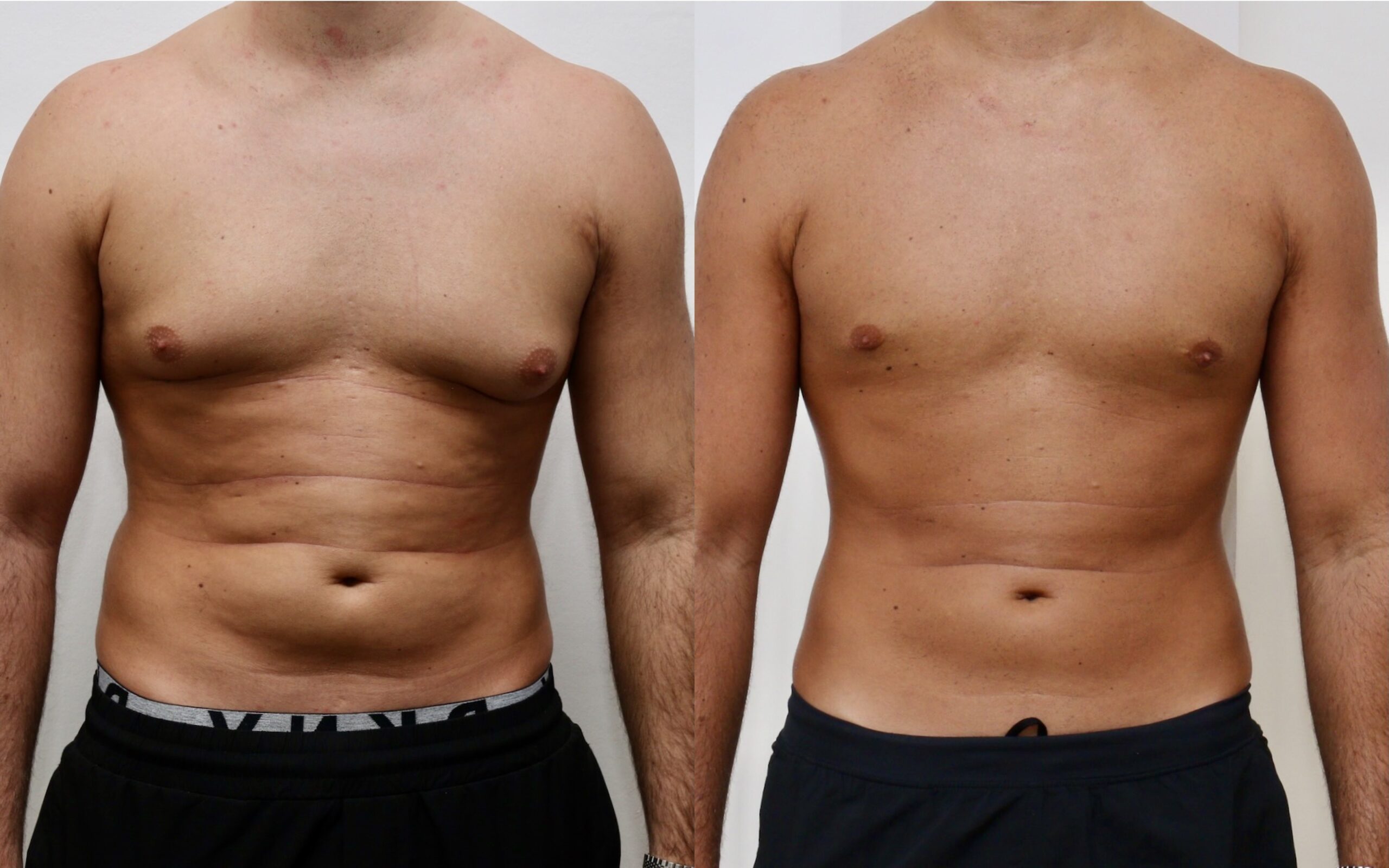
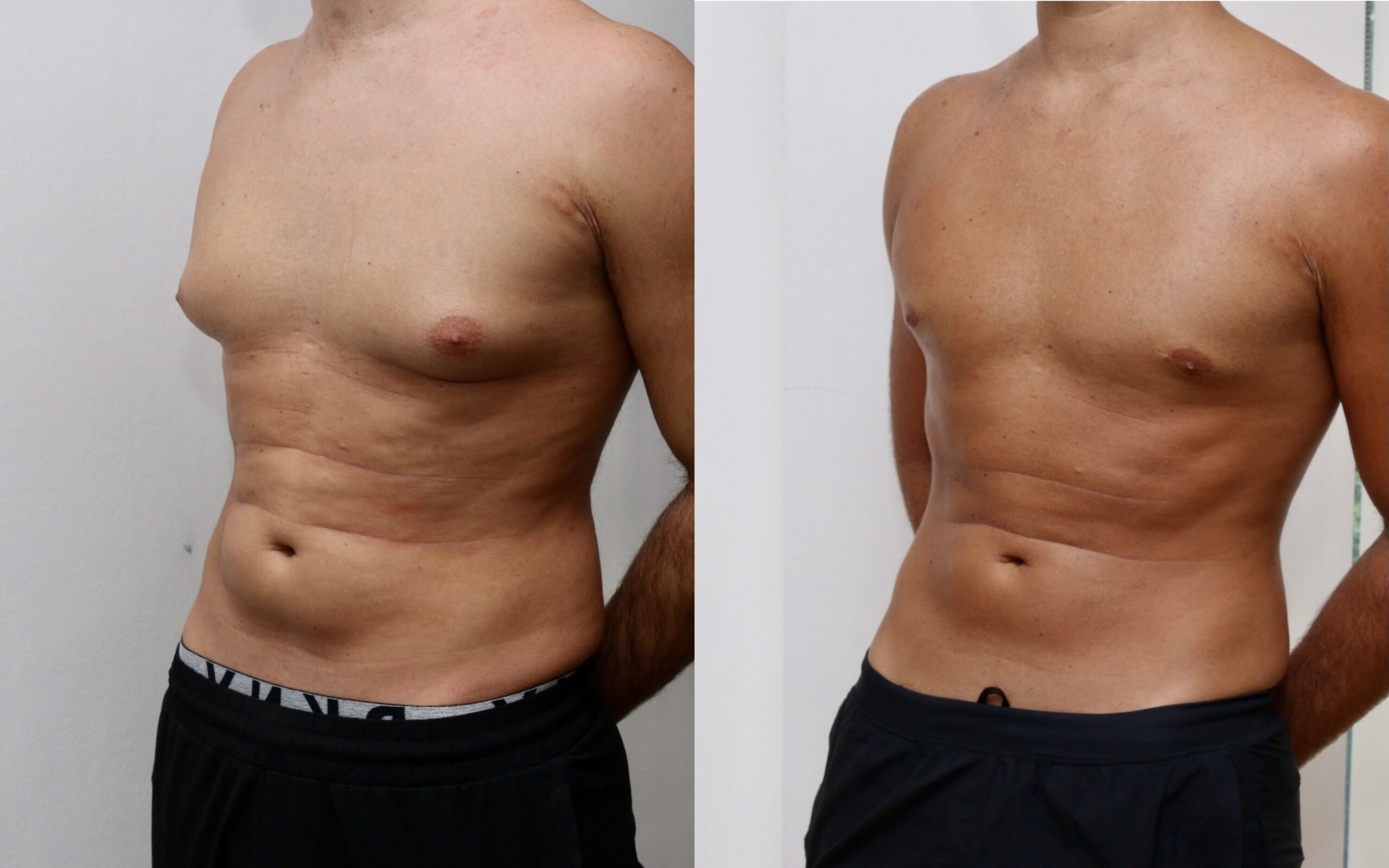

Top service, top result !!!
A very good service from Mr Quaba.
I had a surgery about Gynecomastia, a condition I had for several years.
The process has been easy and straightforward he explain everything step by step regarding the surgery and what to expect.
I had no problem or complications at all post surgery and the result after six month is unreal.
I would highly recommend Mr Quaba and team.
Thank you!
Luca
Oct 2023
Our male breast reduction surgeons
You meet your consultant at your first appointment. The same consultant plans your treatment, carries it out and sees you afterwards.


What is the cost of gynaecomastia surgery?
- Consultation
- £200, with the consultant who would operate. A second consultation is free if you want one before deciding.
- Your quotation
- Written, sent by secure email after your consultation, and valid for 90 days.
- Paying
- Due two weeks before surgery. Interest-free finance over 6 or 10 months is available for treatment at Waterfront.
- Aftercare
- Included for 12 months: nurse reviews, dressing clinics, your consultant's follow-up and the treatment of any complications.
Cost depends on which surgical approach is needed for your case. Guide prices at Waterfront Private Hospital:
- Gynaecomastia under local anaesthesia (suitable for smaller, fat-predominant cases): from £5,800
- Gynaecomastia with liposuction and/or gland excision (the most common approach): from £6,800
- Gynaecomastia with skin removal (for cases involving significant skin laxity): from £9,400
Each price covers the surgeon’s fee, the anaesthetist’s fee where applicable, the hospital and theatre fee, the compression garment, and all post-operative reviews until you are fully discharged.
The full price for your individual case can only be confirmed after a face-to-face consultation with the consultant who will perform your surgery. Our consultation fee with a consultant plastic surgeon is £200.
Free · anonymous
Questions before you book?
Our free AI consultation answers questions about male breast reduction, recovery, risks and cost in plain language, based on how our consultants discuss them. It is not a substitute for seeing a consultant, and at the end you can ask our team to contact you.

Frequently asked questions about male breast reduction
Will the same surgeon plan, perform and review my surgery?
What is gynaecomastia surgery?
What does gynaecomastia surgery involve?
Should my GP investigate the cause first?
Who is an ideal candidate for gynaecomastia surgery?
How is the right approach decided for my case?
Can gynaecomastia return after surgery?
Is gynaecomastia surgery painful?
How long is the recovery after gynaecomastia surgery?
Most patients return to desk-based work within one to two weeks and resume normal activities within a few weeks. Strenuous upper-body exercise should be avoided for around six weeks. A compression garment is worn for the first four to six weeks.
Recovery from gynaecomastia surgery is straightforward for most patients. As a general guide:
- Most patients take one to two weeks off work and avoid strenuous upper-body exercise for around six weeks.
- A compression garment is worn continuously for the first four to six weeks to support healing, reduce swelling and help the skin re-contour.
- Bruising and swelling are at their most noticeable in the first ten days and continue to settle over the following month.
- Final shape takes three to six months to settle as the tissues refine and the skin contracts.
A nurse reviews you at one week, and more often if needed in the early healing period. Your consultant sees you again at around six months once the result has settled. Between then, your consultant is always available — if anything concerns you, they will respond directly and arrange to see you as soon as needed.
What are the risks of gynaecomastia surgery?
How does gynaecomastia surgery impact body image and confidence?
How do I choose the right surgeon for gynaecomastia surgery in Edinburgh?
What happens if I have concerns after my surgery?
How much does gynaecomastia surgery cost?
Written by

Mr Omar Quaba, MBBChir, FRCS (Plast), GMC 4586300, is a Consultant Plastic Surgeon with over 20 years of experience in plastic surgery. Based at Waterfront Private Hospital in Edinburgh, he is fully accredited on the GMC Specialist Register and specialises in advanced cosmetic procedures. Full member of BAAPS.
