Breast augmentation in Edinburgh
Implants that add volume, restore fullness after pregnancy or weight loss, and even out the two sides. Your second consultation is free, so you never have to decide at the first.
- Your consultants


- Anaesthetic
- General
- Surgery time
- 1-2 Hours
- Hospital stay
- Day surgery
- Recovery
- 1-2 weeks off work, 6 weeks before strenuous exercise
- Guide price
- From £6,800
Contents
Who is an ideal candidate?
- Physical health: Women in good health, non-smokers, and at a stable weight.
- Aesthetic goals: Those looking to enhance breast size, improve symmetry, or restore volume.
- Realistic expectations: Understanding the potential outcomes and limitations of breast augmentation.
- Pregnancy: Women who have completed their family or have no plans to have children soon.
What the procedure involves
- Initial consultation:
- Discussion of expectations: A comprehensive discussion about aims and expectations, including concerns, desired breast size, shape, and overall aesthetic goals.
- 3D Crisalix imaging: Some of our consultants use 3D Crisalix imaging during the consultation to assist with implant selection, providing a virtual view of potential results. Your consultant will discuss whether this is appropriate for you.
- Viewing before and after images: Patients can view several before and after images to understand potential outcomes.
- Second consultation:
- Recognising the significance of this decision, we offer a free second consultation if you would like one before proceeding, ensuring you are confident and fully informed.
- Choice of implants:
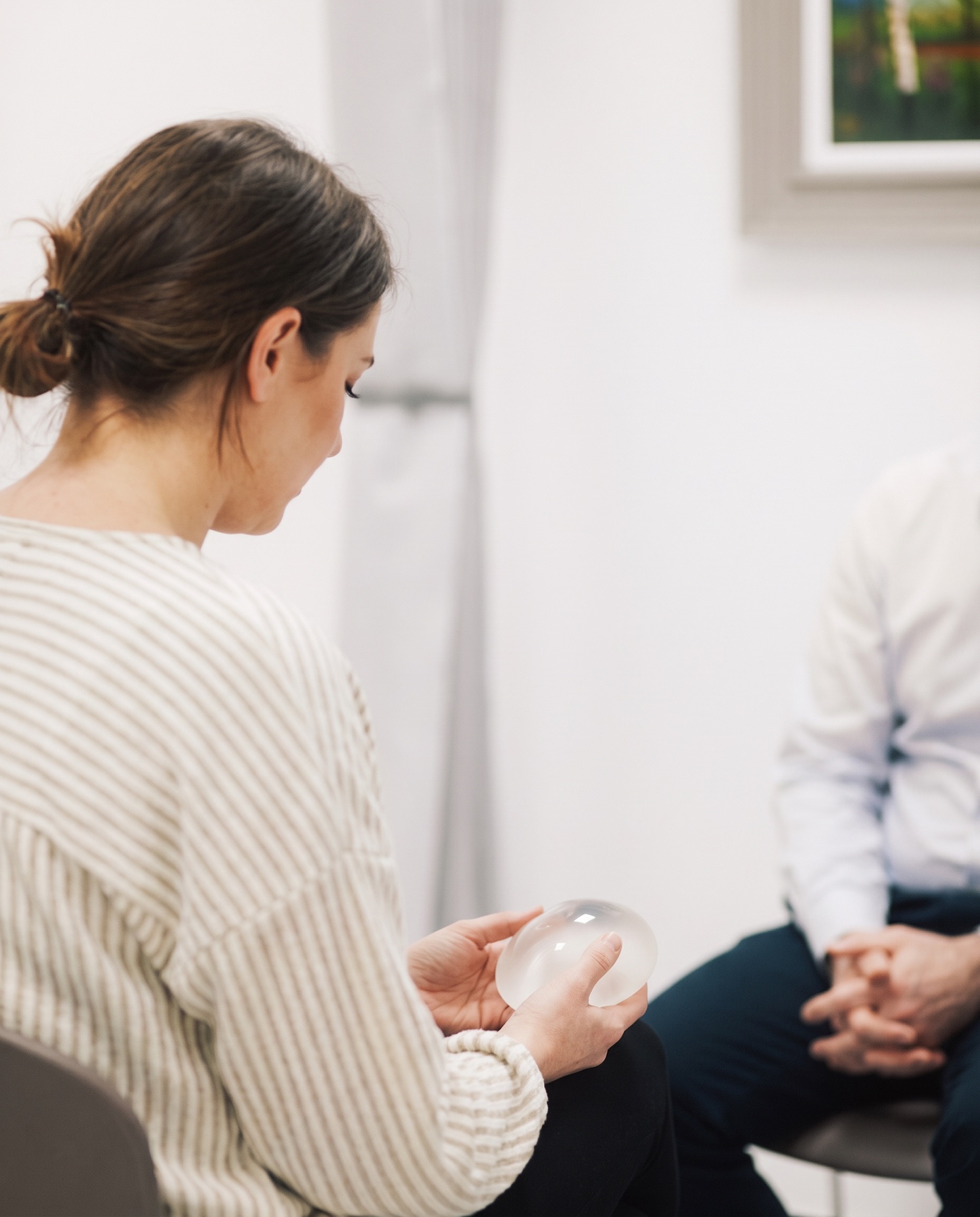
- Modern nanotextured implants: We use highly cohesive silicone gel implants with a nanotextured surface, from GC Aesthetics (Perle) or Motiva, in a range of shapes and sizes to suit you.
- Surgical technique:
- Inframammary incision: We utilise a small, approximately 4cm, inframammary incision under the breast.
- Implant placement: Implants are carefully placed either behind the breast tissue or beneath the chest muscle based on the patient’s anatomy and desired outcome.
- Closing the incisions:
- Dissolvable sutures and glue: The incisions are meticulously closed with dissolvable sutures and medical-grade glue to minimise scarring and promote healing.
See a 3D simulation at your consultation

What breast augmentation can and can’t do
Breast augmentation is a good operation for the right reasons. It is not the answer to everything, and we would rather you heard that from us now than found it out afterwards.
It can
- Add volume and give you a fuller shape, in proportion to your frame.
- Restore fullness lost after pregnancy, breastfeeding or weight loss.
- Reduce a difference in size between the two sides.
- Make clothes and swimwear fit the way you want them to.
It can’t
- Lift breasts that have dropped. If your nipples sit low, an implant alone can make the drop more obvious, and you may need an uplift as well.
- Make the two sides identical. Natural differences in the chest wall and nipple position remain, and your consultant will show you where at your consultation.
- Last for ever. Implants are not lifetime devices, and many people have them replaced or removed after about 10 to 15 years.
- Stop your breasts changing. Pregnancy, weight change and age still affect them, implants or not.
- Be fully undone. If implants are removed later, the scars stay and the breasts may look looser than before.
Your consultant will tell you at your consultation which of these apply to you.
Before and after breast augmentation
Breast augmentation
15 photographs
Patients before and after breast augmentation. The photographs show the breasts without clothing.


Breast augmentation
Results vary from person to person. Your consultant will show you more examples at consultation and explain what is realistic for you.
What does breast augmentation cost?
We do not offer price matching, and our initial consultations are paid as they are clinical assessments with a consultant plastic surgeon. We do, however, offer a free second consultation if you would like one before deciding to proceed.
Free · anonymous
Questions before you book?
Ask anything about breast augmentation, its recovery, risks or cost, any time and in plain language. If you would like, our team can contact you afterwards.
General information, not a substitute for a consultation.
Patients often ask

Quick answers
How much does breast augmentation cost?
Can I spread the cost?
Can breast augmentation be achieved without implants?
How do I choose the right size and type of implants?
Are breast implants safe in the long term?
What happens if I’m not happy with the results?
Can breast augmentation affect my ability to breastfeed?
How long do breast implants last?
How do lifestyle and future plans affect my suitability for breast augmentation?
What are the latest advances in breast implant technology?
How does age impact the results of breast augmentation?
Can I combine breast augmentation with other procedures?
How does breast augmentation impact mammograms and breast cancer screening?
What should I look for in before-and-after photos when researching surgeons?
How is breast augmentation surgery customised for each patient?
Our breast augmentation surgeons
You meet your consultant at your first appointment. The same consultant plans your treatment, carries it out and sees you afterwards.
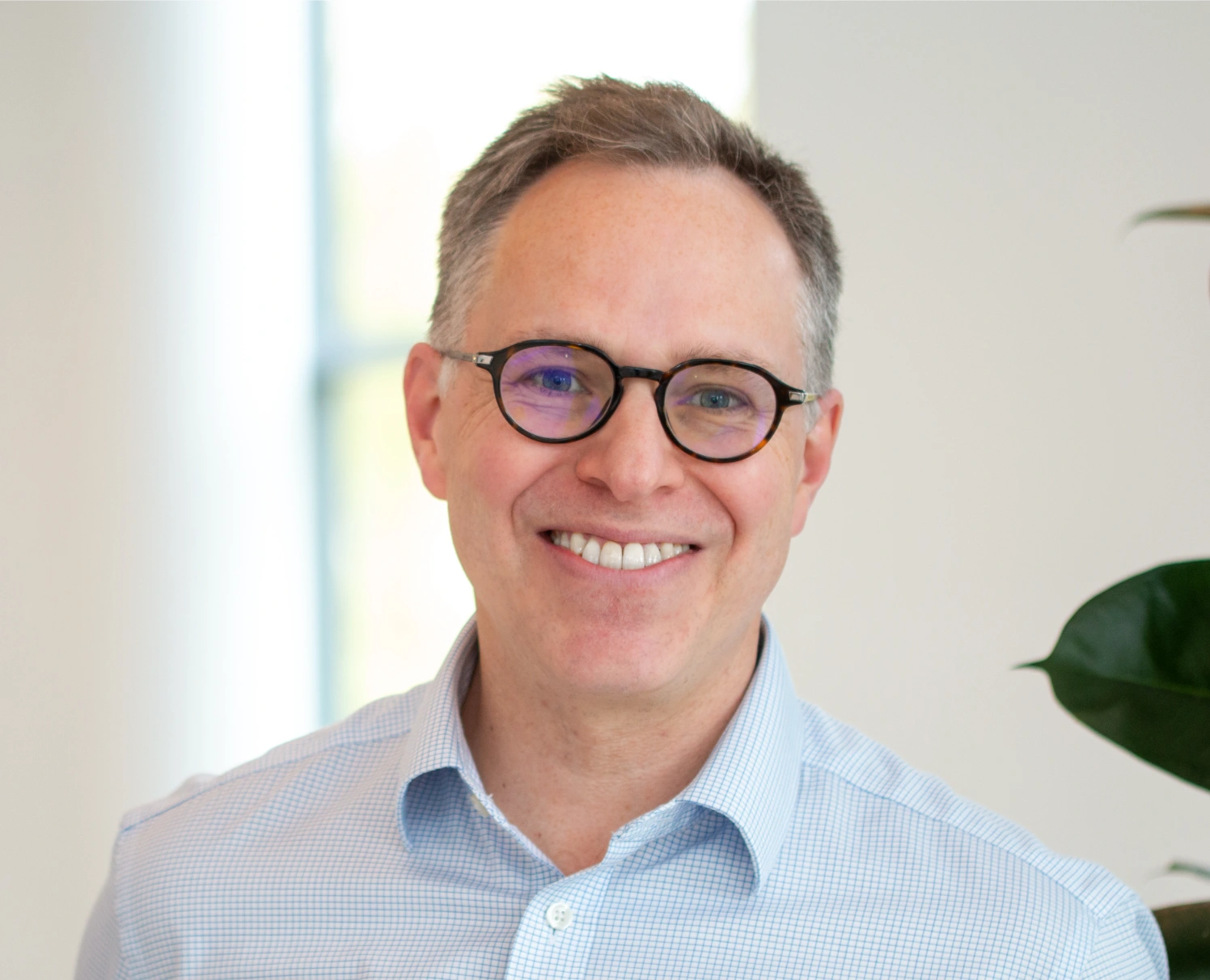
Consultant plastic surgeon
GMC Specialist Register (Plastic Surgery)BAAPS · ISAPS · Board Certified in cosmetic surgery (ICSB)

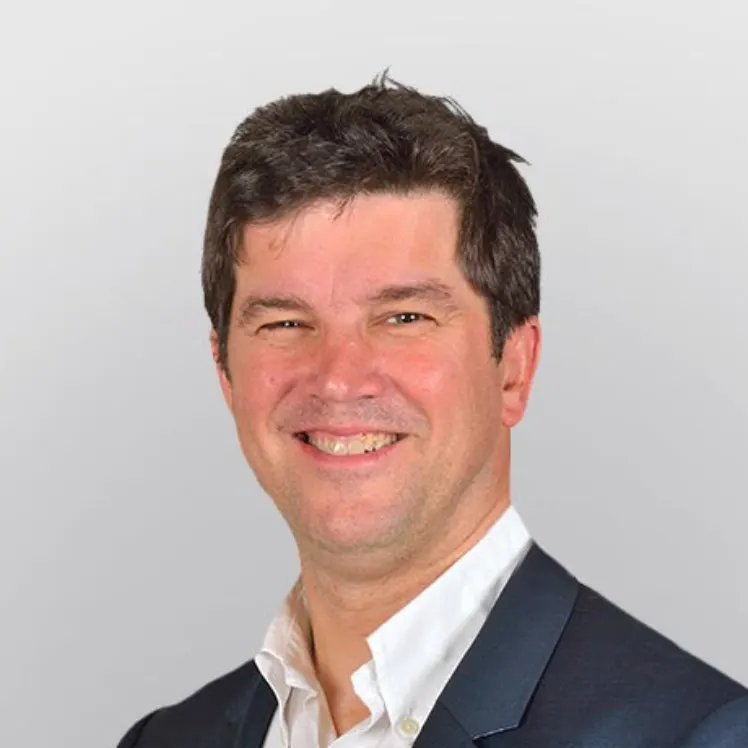
Consultant plastic surgeon
GMC Specialist Register (Plastic Surgery)BAAPS · BAPRAS · Board Certified in cosmetic surgery (ICSB)
Consultant plastic surgeon
GMC Specialist Register (Plastic Surgery)BAAPS · BAPRAS · Board Certified in cosmetic surgery (ICSB)
I am now 10 months post breast augmentation with Dr Quaba, and honestly, I couldn’t be happier with my decision!
After researching for quite some time, I had consultations with a few different surgeons, but Dr Quaba was by far the one I felt most comfortable and at ease with. Having undergone open-heart surgery as a little girl, going under anaesthetic was something I had thought long and hard about, and I had been sitting on the fence about having breast augmentation for years. It was so important for me to find a surgeon I felt I could completely trust, and Dr Quaba gave me that confidence.
After having four children and breastfeeding them all, I felt I had lost so much of my natural breast tissue. My confidence, especially wearing swimwear on holiday, just wasn’t where I wanted it to be anymore.
Looking back now, I honestly wish I had done it years ago! The difference it has made to my confidence has been amazing, and I’m so glad I finally took the step. From my initial consultations to the whole experience, I felt reassured and in safe hands.
I cannot recommend Dr Quaba enough. I genuinely recommend him to everyone I speak to who is considering breast augmentation. If you’re sitting on the fence like I was, I would definitely recommend booking a consultation and having that conversation.
Samantha Laidlaw
October 2026 Read on Trustpilot (opens in a new tab)
Risks, and how often they happen
Every operation carries risk. Here they are in three groups. The figures come from UK national guidance and published studies, averaged across many patients, so your own risk may be higher or lower. Your consultant will go through what applies to you, and every risk is in your written consent.
Expected Almost everyone, and they settle
-
Swelling and bruising for the first two to three weeks.
-
Tightness and discomfort across the chest for the first few days, eased by simple painkillers.
-
Changes in nipple or breast skin sensation, usually temporary.
-
A scar of about 4cm in the fold under each breast, red at first and fading over 12 to 18 months.
Uncommon Some patients, and some need further treatment
-
Capsular contracture. Scar tissue around the implant tightens and the breast feels firm or changes shape. It may be fewer with the nanotextured implants we use, and it may need further surgery.About 1 in 20over ten years
-
Implant rupture or leakage. Modern cohesive-gel implants usually hold their shape if this happens, and we check for it with ultrasound.About 1 in 20over ten years
-
Permanent change in nipple sensation. Feeling may be reduced or, less often, heightened.About 1 in 10
-
Visible rippling of the implant under the skin, more likely if you are slim.About 1 in 15
-
An implant that sits too high, too low or too far to the side. It may need further surgery.About 1 in 30
-
Bleeding that needs a return to theatre (haematoma), usually in the first day.Under 1 in 100
-
Infection. Rarely, an infected implant has to be removed for a time.1 in 100or fewer
Rare but serious
-
BIA-ALCL (breast implant-associated anaplastic large cell lymphoma), a rare lymphoma of the scar tissue around an implant. No UK case has been confirmed in anyone who only ever had smooth implants, and most cases have been with heavily textured implants. We use nanotextured implants from GC Aesthetics (Perle) or Motiva, whose surface is close to smooth. It usually shows as new swelling of one breast years after surgery, and it is treatable when found early, usually by removing the implant and the capsule.About 1 in 12,000implants sold in the UK, all types
-
A blood clot in the leg or lung (DVT or PE). We assess your risk and take steps to prevent it.Under 1 in 1,000
-
A serious reaction to the anaesthetic.Very rare
For the long term
-
Implants need checking and may need replacing. We offer a breast implant health check with ultrasound in one visit.
-
Breast implant illness (BII). Some people report fatigue, memory problems or joint pain they link to their implants. The research has not established a cause, and we will talk about it openly. If you ever want your implants out, we remove them.
-
Mammograms. Tell the radiographer about your implants. Screening is still possible, with adjusted views.
-
The national implant registry. With your consent, your implants are recorded on the Breast and Cosmetic Implant Registry, so you can be contacted if there is ever a safety notice.
More from BAAPS on breast augmentation and the NHS on breast enlargement.
Where these figures come from
- Capsular contracture and implant rupture (about 1 in 20 over ten years): our consultants’ figure for the nanotextured implants we use. The national patient guide gives up to 1 in 10 over ten years across all implant types.
- Your guide to breast augmentation, UK national patient guide (2021). For: Haematoma; Infection; Permanent change in nipple sensation.
- Codner MA et al. A 15-year experience with primary breast augmentation. Plast Reconstr Surg 2011 (812 patients, rippling 7.1%). For: Visible rippling.
- Bengtson BP et al. Style 410 highly cohesive silicone breast implant core study results at 3 years. Plast Reconstr Surg 2007 (malposition 2.6%). For: Implant malposition.
- MHRA, Breast implants and anaplastic large cell lymphoma. For: BIA-ALCL.
- Winocour et al., Aesthet Surg J 2017;37(3):337-349 (CosmetAssure database). For: DVT or PE.
Aftercare and recovery
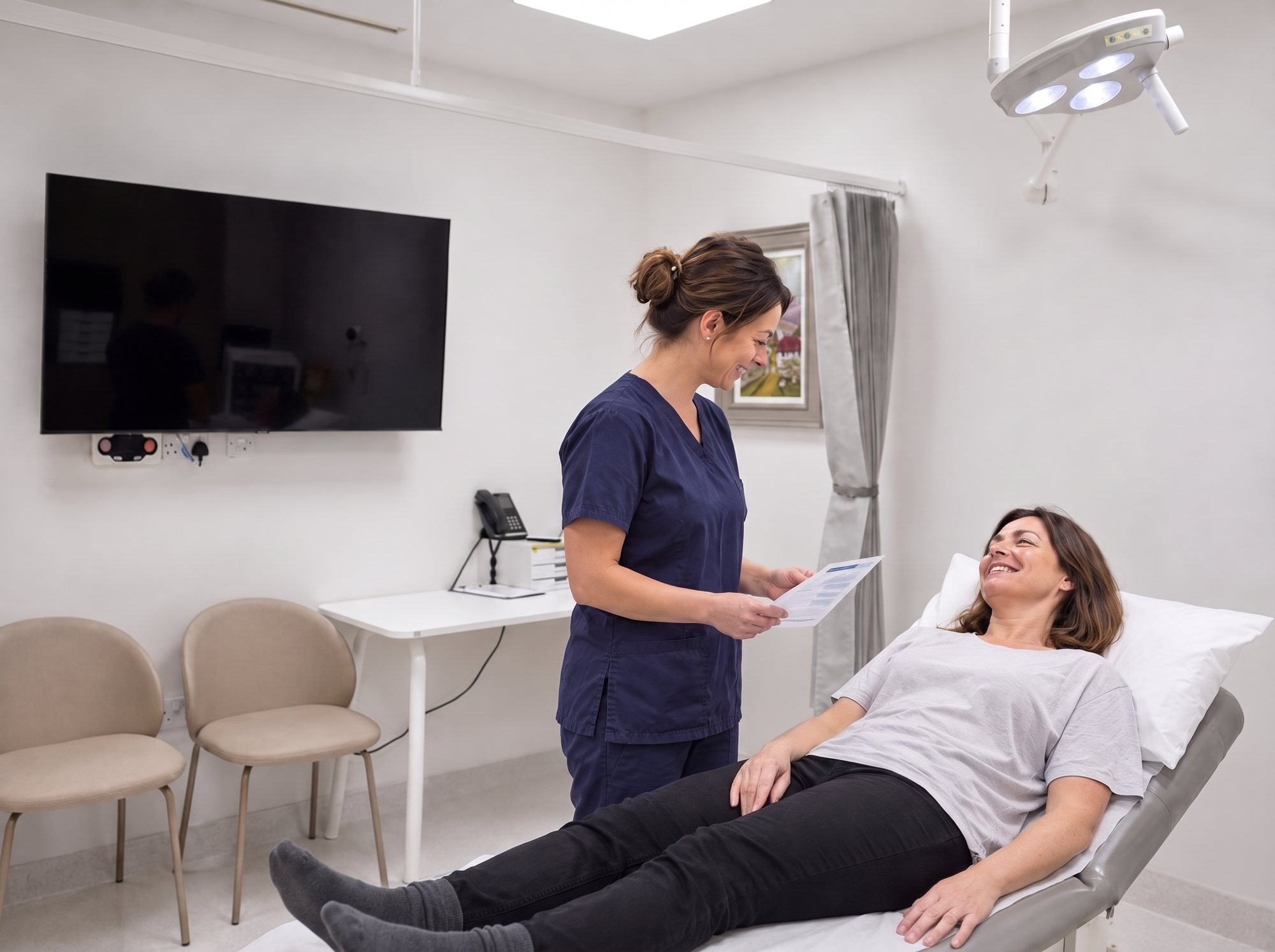
Your recovery is led by the consultant who performed your surgery. A nurse reviews you at one week, and your consultant sees you again once everything has settled. Between appointments, our team are available whenever you have a concern — you do not need to wait for a scheduled review. Practical guidance on dressings, activity and returning to work is in our aftercare guide.
- Day of surgeryHome the same day with your written aftercare guide. Waterfront is a day hospital.
- Week 1Nurse review: wound checked, dressings changed, questions answered.
- Weeks 1–2Back to desk work. Gentle walking only.
- Week 4Light exercise in a supportive bra.
- Week 6Full exercise and heavy lifting, building up slowly.
- 6 monthsYour consultant reviews the settled result. Sooner if you need it.
- 12 monthsNurse reviews, dressing clinics and the treatment of any complications are included.
Typical timings. Your consultant and nurse will tailor them to you.
Written by
Mr Omar Quaba, MBBChir, FRCS (Plast), GMC 4586300, is a Consultant Plastic Surgeon with over 20 years of experience in plastic surgery. Based at Waterfront Private Hospital in Edinburgh, he is fully accredited on the GMC Specialist Register and specialises in advanced cosmetic procedures. Full member of BAAPS.

Ready to talk it through?
Book a consultation online, call the team, or send us a question first.