Facial Fat Transfer in Edinburgh
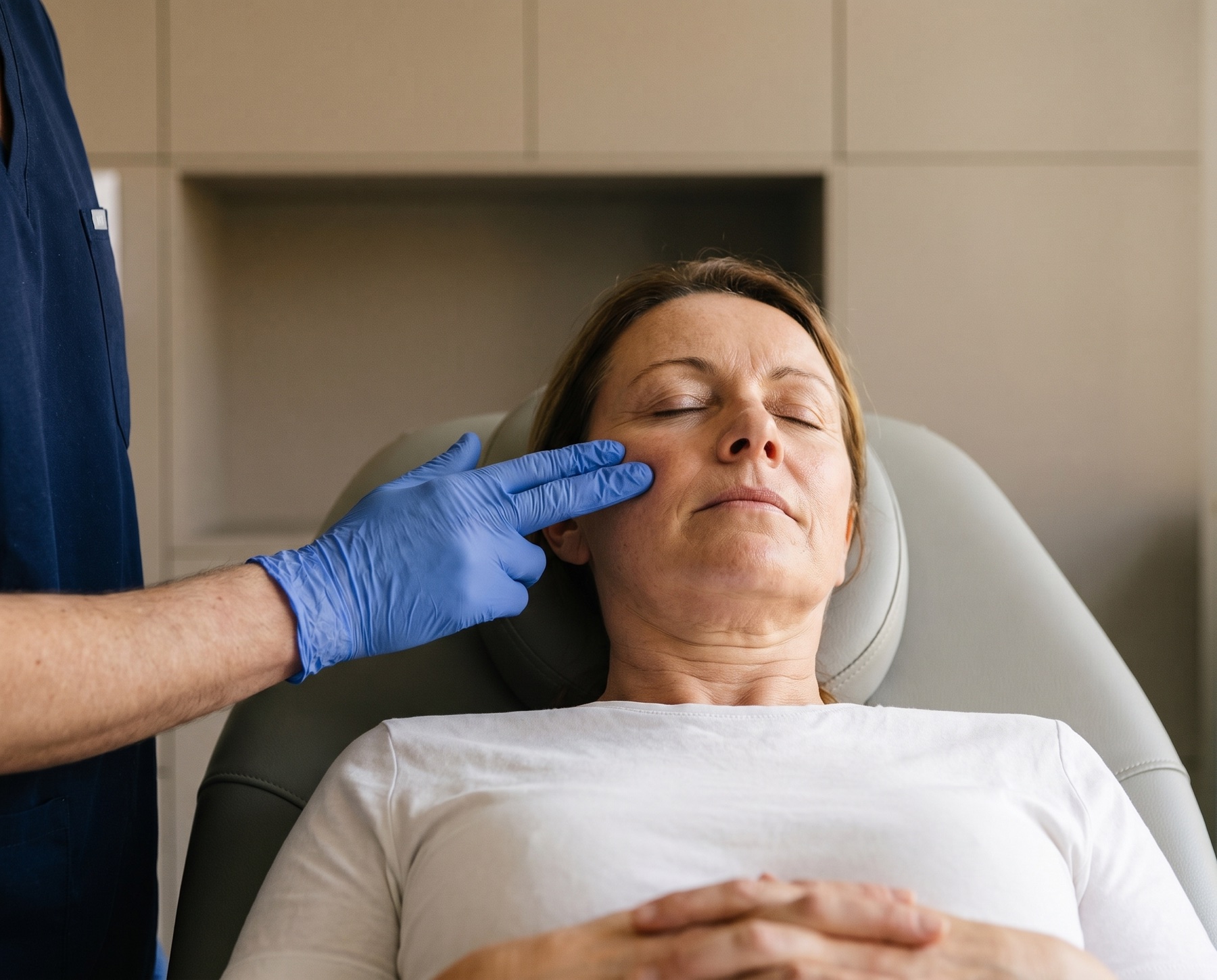
Facial fat transfer adds volume back to the parts of the face that have softened with time, using your own fat rather than synthetic filler. At Waterfront the procedure is performed using the Coleman technique — a refined approach designed for fat that survives and integrates rather than disappearing within months.
- Anaesthetic
- Local or General
- Surgery time
- 1 hour
- Hospital stay
- Walk-in walkout/ day surgery
- Recovery
- Few days to 1 week off work, 4 weeks before strenuous exercise
- Guide price
- From £3,950
Contents
What the procedure involves
Facial fat transfer at Waterfront uses the Coleman technique, developed by Dr Sydney Coleman as a refined method of fat grafting designed to maximise how much of the transferred fat survives long-term. The procedure involves three steps:
- Gentle fat harvesting: fat is taken from a donor area — typically the abdomen, flanks or thighs — using specialised liposuction techniques that minimise damage to the fat cells.
- Centrifugation and purification: the harvested fat is centrifuged, which separates and concentrates the fat cells from blood, oil and tumescent fluid. Only the purified fat is used for grafting.
- Precise injection: the purified fat is injected into the target facial areas in small amounts, at varying depths, in a layered pattern. Distributing the fat this way improves blood supply to each parcel of grafted fat, which is what determines how much survives long-term.
The procedure is typically performed under local anaesthesia (sometimes with sedation) or general anaesthesia, depending on how much fat is being transferred and whether the procedure is combined with other facial surgery.
Benefits and expected outcomes
Facial fat transfer can address:
- Loss of volume in the cheeks, temples and mid-face that has appeared with time, weight change, or as part of natural facial ageing
- Hollowing under the eyes (the tear trough), where filler is often a poor long-term solution because the area swells unpredictably
- Volume loss around the mouth that has deepened the nasolabial folds or marionette lines
- A wish for a longer-lasting alternative to dermal filler, using your own tissue rather than a synthetic product
- Volume restoration combined with another procedure — most commonly a facelift, lower eyelid surgery or brow lift
What it does not always achieve: a fully predictable volume in one go. Some of the transferred fat is reabsorbed by the body in the first three to six months — typically around 30–50%, depending on the area treated and individual factors. Your consultant will plan for this by slightly overcorrecting at the time of surgery, and a top-up procedure may sometimes be recommended once the result has settled. Fat that survives the first six months tends to behave like normal facial fat thereafter and lasts for years.
Who is an Ideal Candidate?
Suitable candidates for facial fat transfer:
- Have noticed loss of volume in the face — typically the cheeks, under eyes, temples or around the mouth — with time or weight change
- Have enough fat in a donor area (abdomen, flanks or thighs) to harvest
- Are in good general health with realistic expectations about how much volume can be restored in one session
- Are non-smokers, or are willing to stop smoking well in advance of surgery to support fat survival
- Want a longer-lasting alternative to dermal fillers, or are combining the procedure with other facial surgery
A consultation is a conversation, not a commitment to surgery. If we feel fat transfer is not the right answer for your case — for example, if filler would serve you better, or if a different procedure altogether is the more appropriate first step — we will say so honestly.
Risks and Considerations
Facial fat transfer is generally a low-risk procedure, but like any surgery it carries a defined set of risks that any patient should understand before deciding to go ahead:
- Swelling and bruising: normal at both the donor area and the face. Settles over days to a week or two, but can take longer in the periorbital area.
- Asymmetry: small differences between the two sides can occur. The Coleman technique aims to minimise this with measured, layered injection.
- Fat absorption: typically 30–50% of the transferred fat is reabsorbed by the body in the first three to six months. Your consultant plans for this by slightly overcorrecting at surgery. A top-up procedure may be recommended once the result has settled.
- Irregularities in skin texture: uncommon, but lumpiness or palpable irregularity can occur, particularly in thin-skinned areas. Skilled injection technique and gentle post-procedure massage reduce the risk.
- Infection: small risk, as with any surgery.
- Nerve disturbance: a small risk of temporary, or rarely permanent, changes in sensation at the donor site or treated areas.
- Scarring: minimal — the harvest is via small liposuction incisions, and the facial injections leave no scars.
- Anaesthesia risks: all anaesthetists involved in surgery at Waterfront are consultants in their own right.
Aftercare and recovery
Your recovery is led by the consultant who performed your surgery. A nurse reviews you at one week, and your consultant sees you again once everything has settled. Between appointments, our team are available whenever you have a concern — you do not need to wait for a scheduled review. Practical guidance on dressings, activity and returning to work is in our aftercare guide.

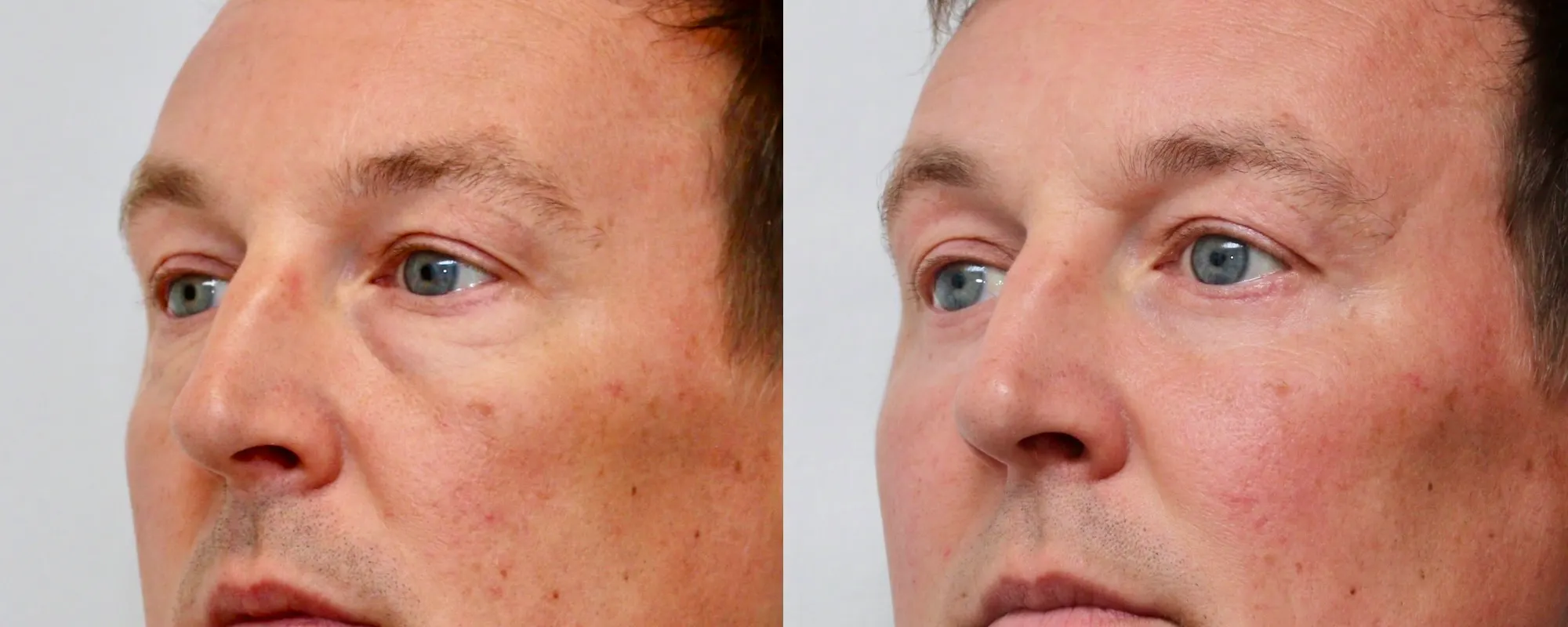
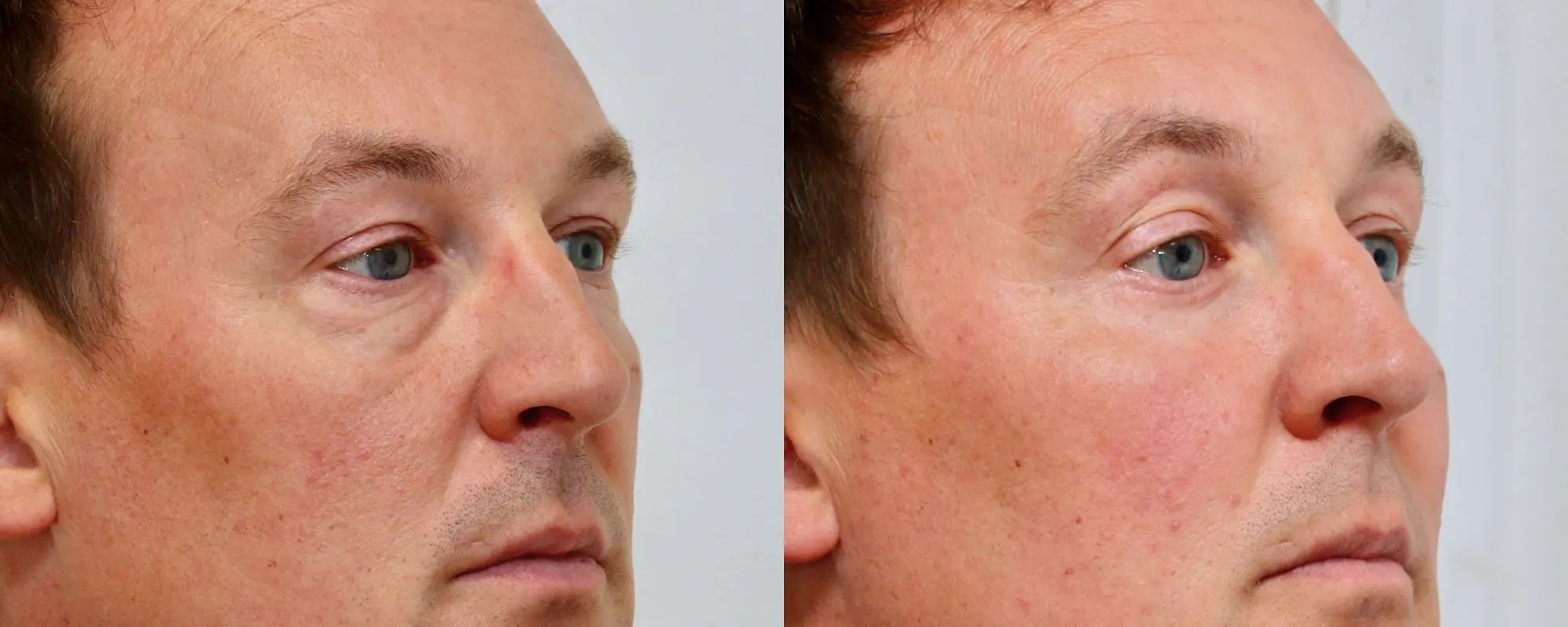
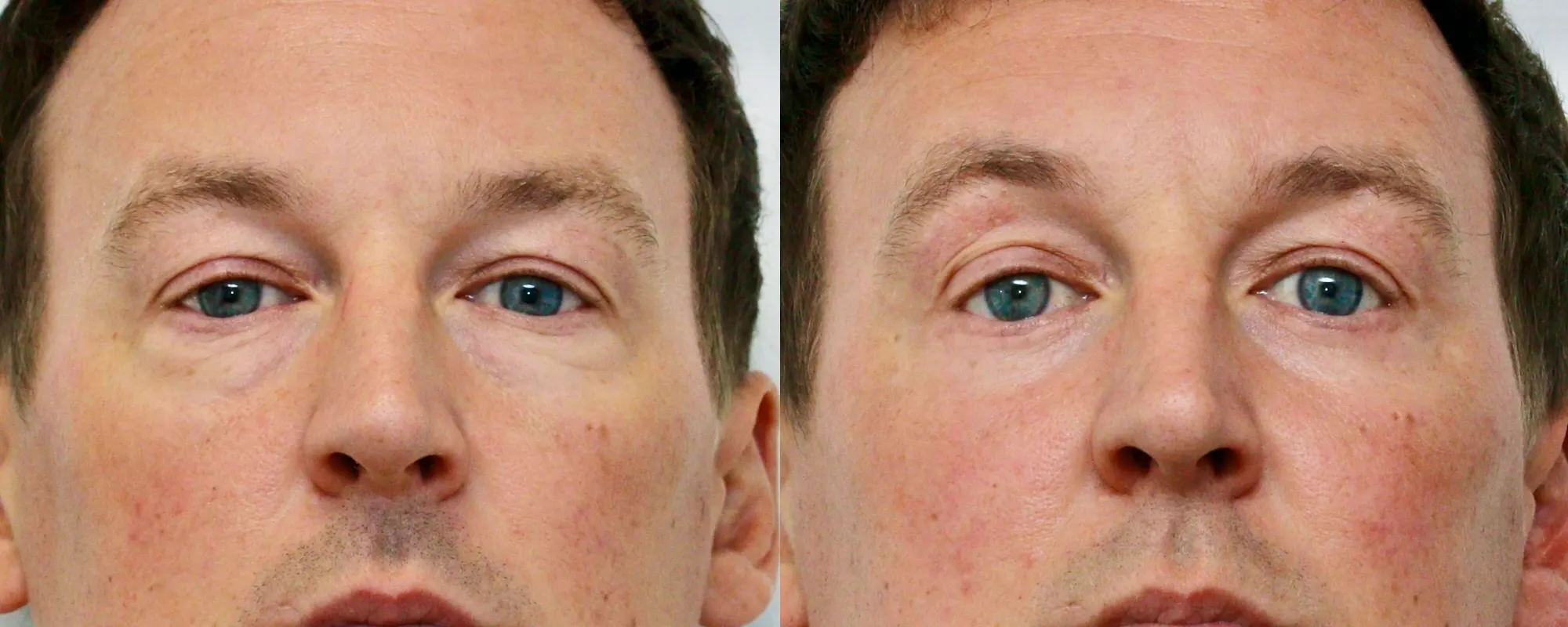
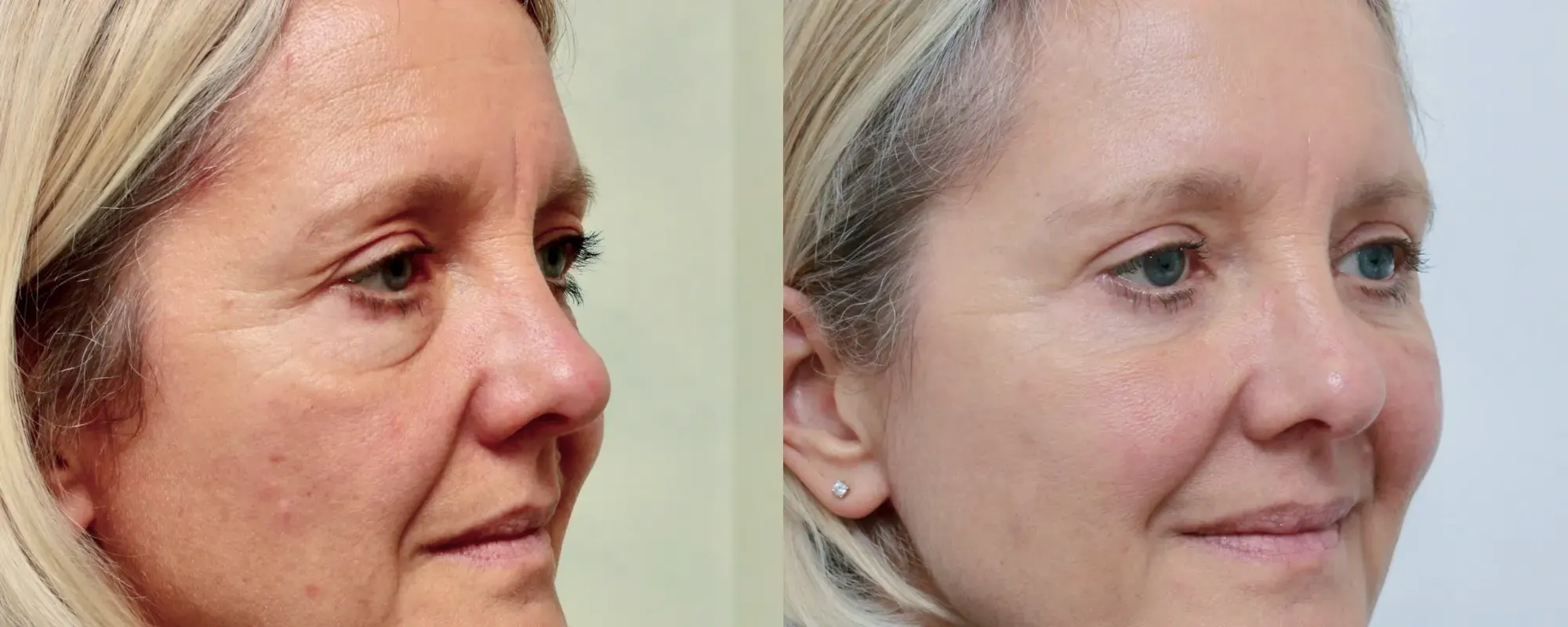
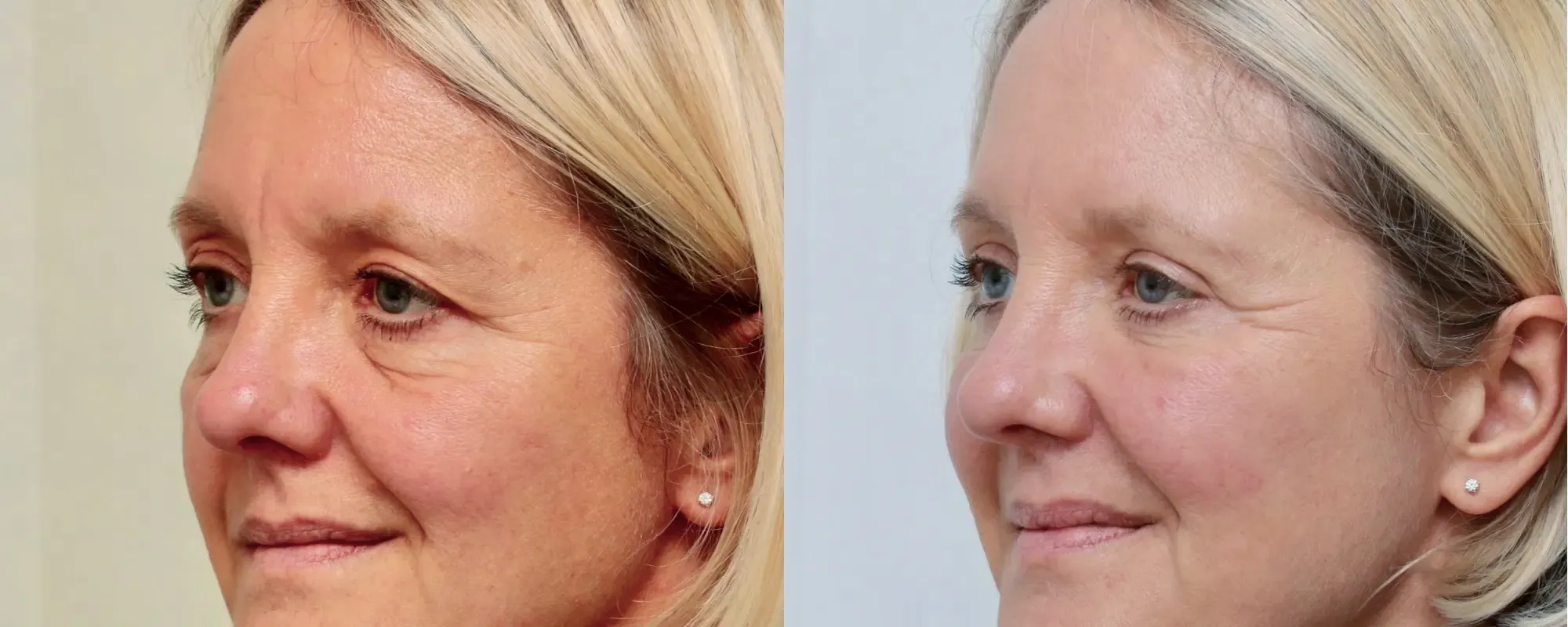
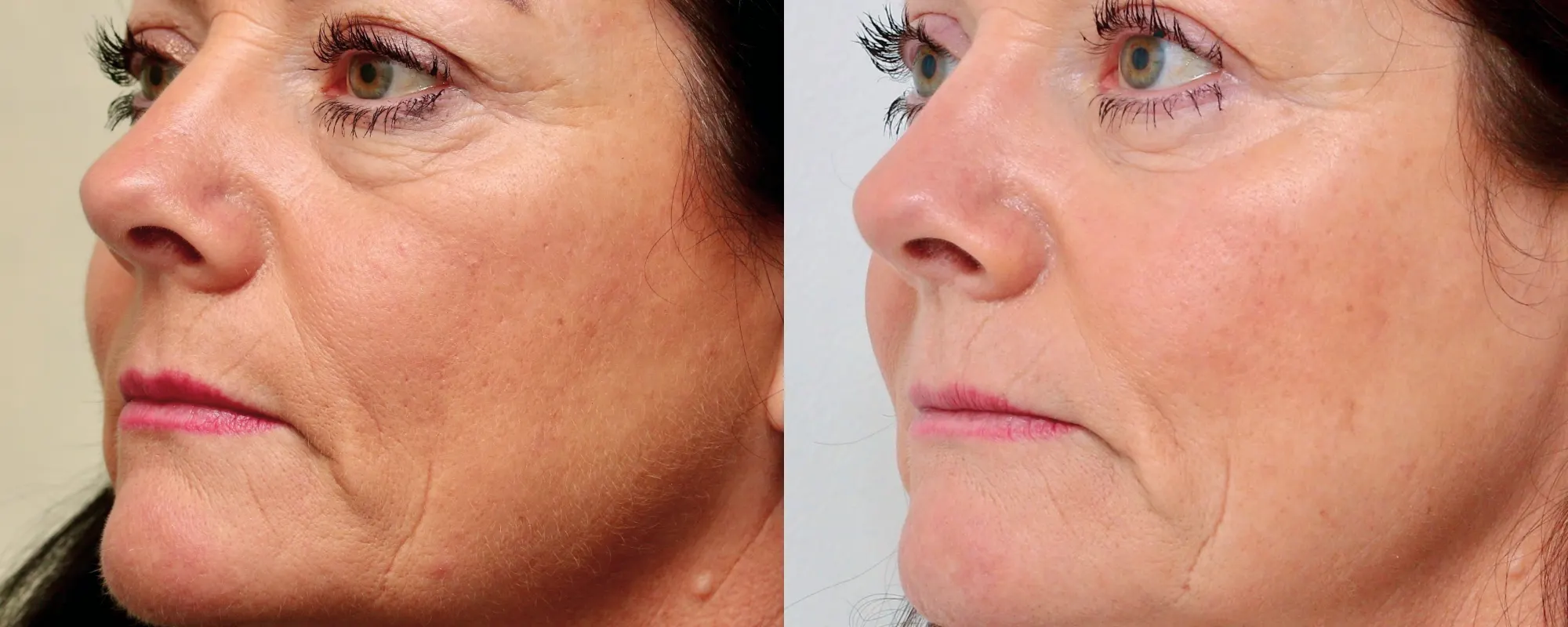
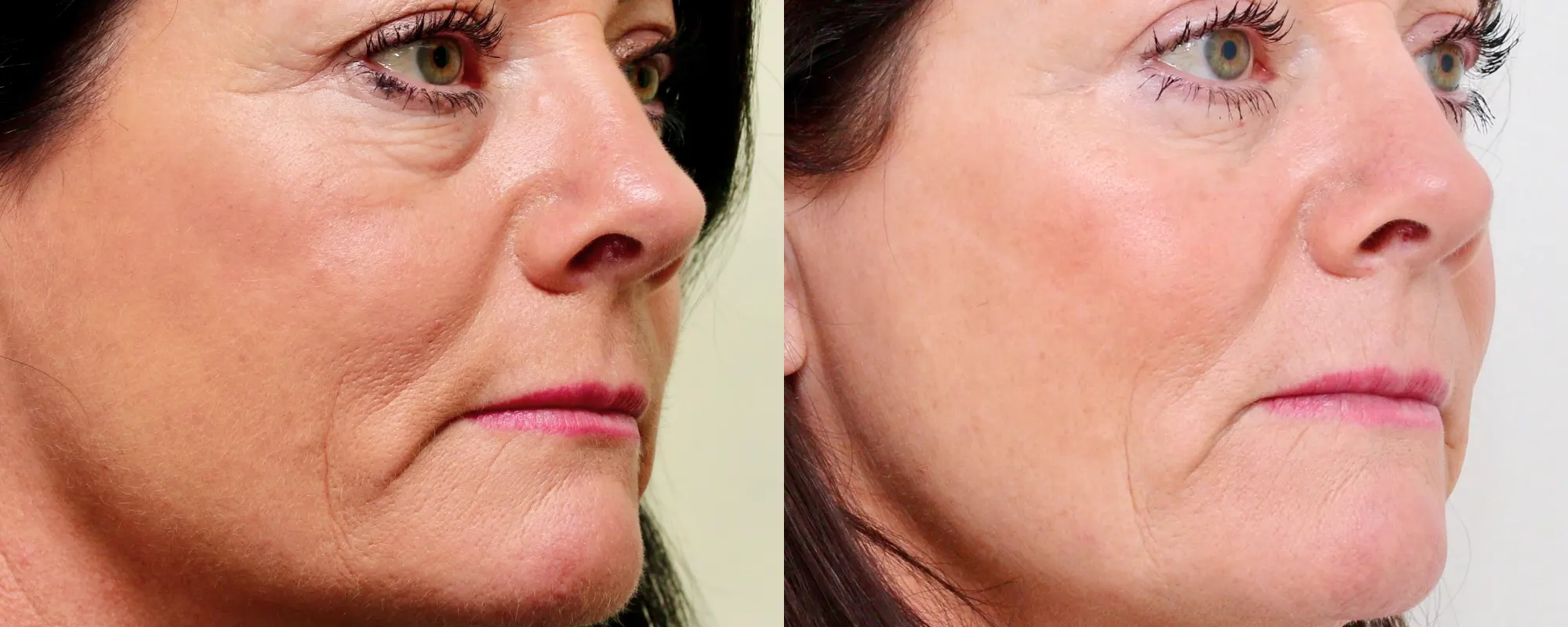
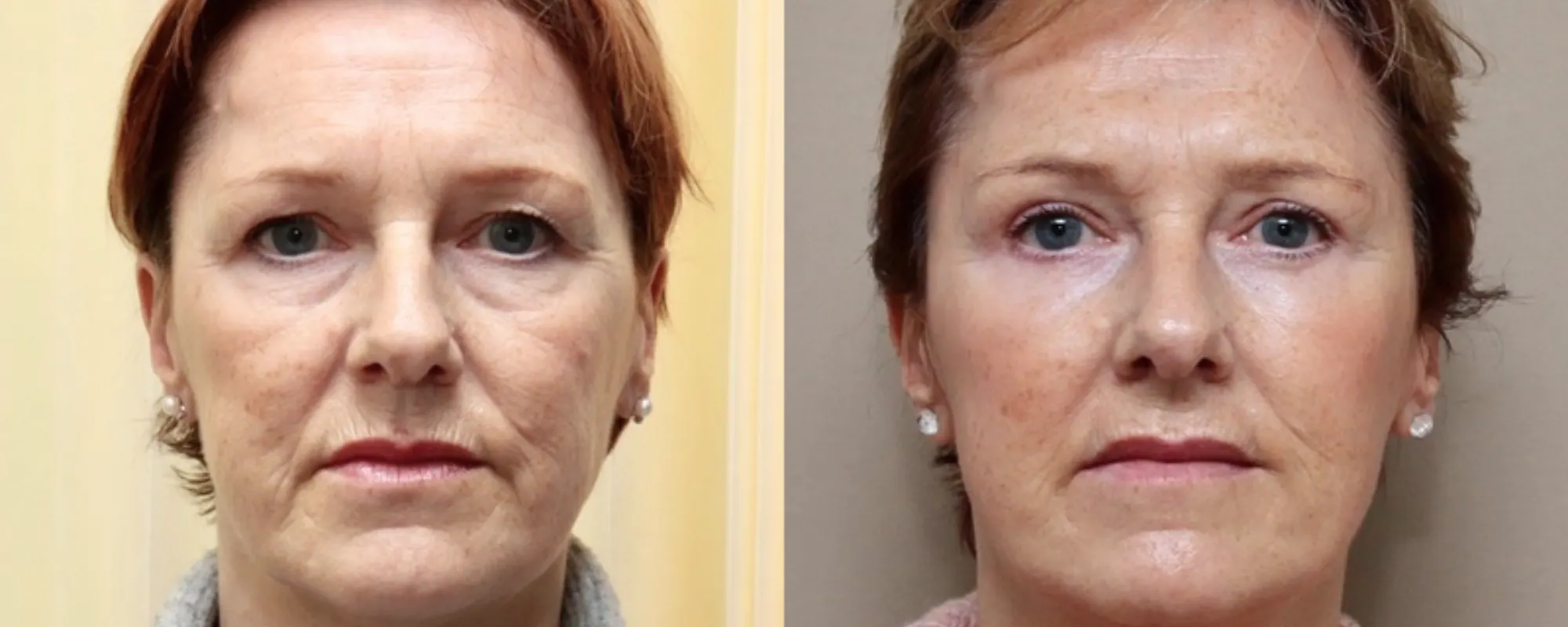
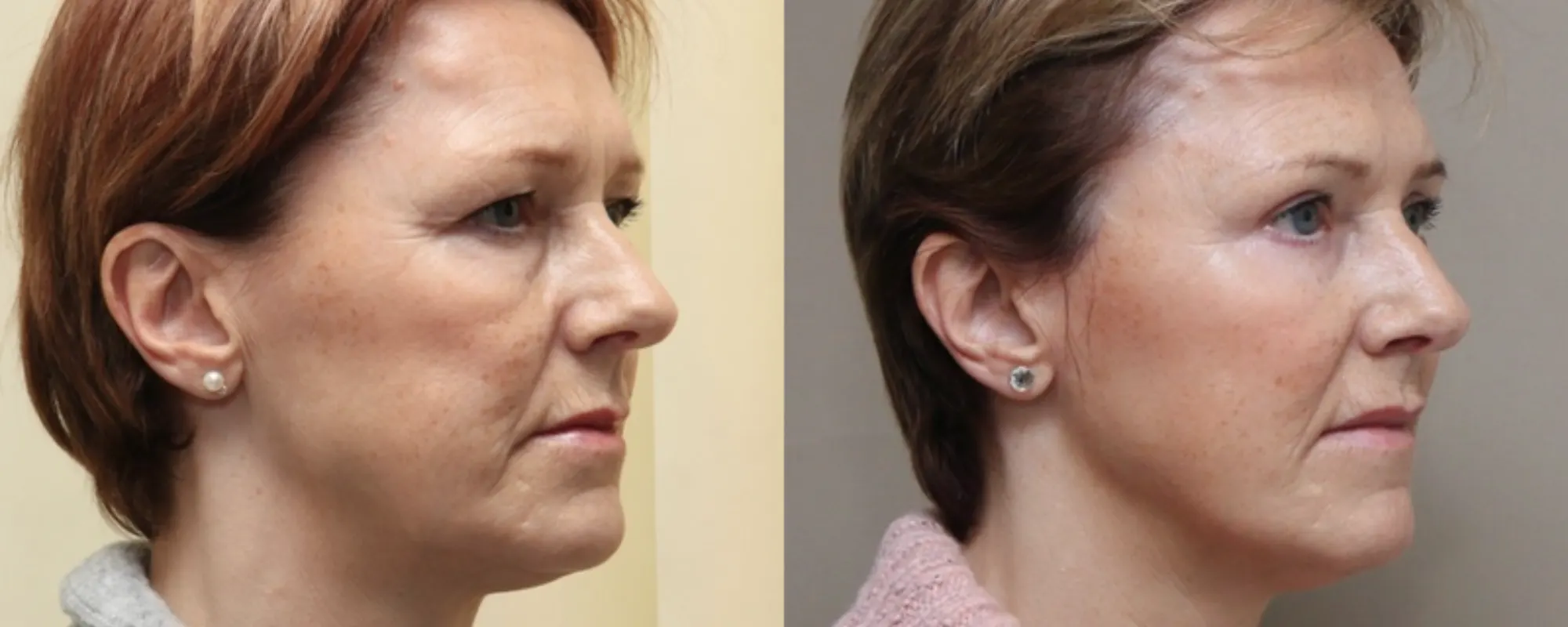
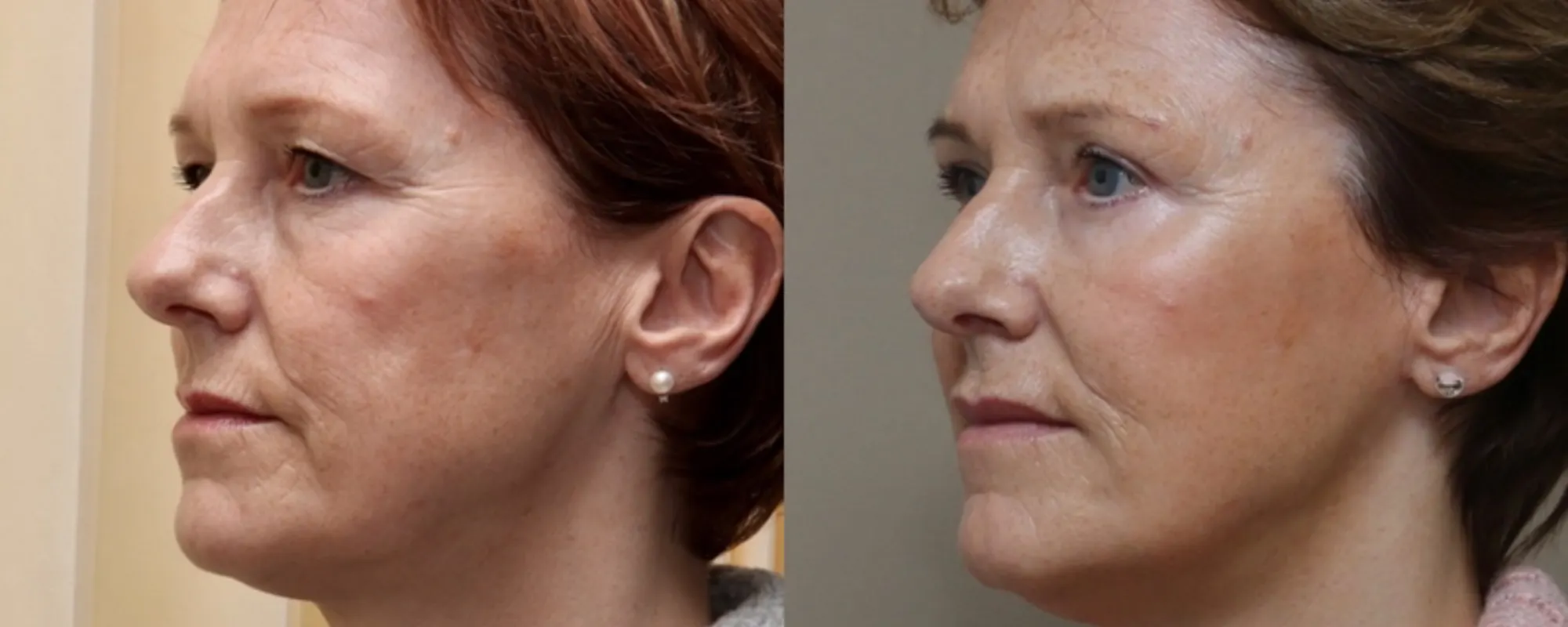
Before and after facial fat transfer photos
Facial fat transfer
Results vary from person to person. Your consultant will show you more examples at consultation and explain what is realistic for you.
Excellent care
Everyone I met at Waterfront Private Hospital was friendly, helpful and thorough, and went the extra mile, including the whole medical and admin teams which were fantastic.
Mr Will Anderson carried out my surgery with great care and professionalism and listened carefully to, and addressed, all of my concerns. Thank you!
I’ve also had excellent communication with Debbie and Janey in emails and phone calls, sometimes over weekends/on days off.
The standard of care has been superb and I would return without hesitation.
My thanks to the whole team.
Mary
Dec 2023
What is the cost of facial fat transfer?
Guide prices for facial fat transfer at Waterfront Private Hospital:
- Facial fat transfer under local anaesthesia: from £3,950
- Facial fat transfer under general anaesthesia: from £4,900
Each price includes the surgeon’s fee, the anaesthetist’s fee where applicable, the procedure room fee, and all post-operative reviews until you are fully discharged. Where fat transfer is combined with another procedure — most commonly facelift or lower eyelid surgery — the combined cost is quoted individually after consultation.
If a top-up procedure is recommended once the initial result has settled, this is quoted at the time. The full price for your individual case can only be confirmed after a face-to-face consultation with the consultant who will perform your surgery. Our consultation fee with a consultant plastic surgeon is £200.
Free · anonymous
Questions before you book?
Our free AI consultation answers questions about facial fat transfer, recovery, risks and cost in plain language, based on how our consultants discuss them. It is not a substitute for seeing a consultant, and at the end you can ask our team to contact you.

Frequently asked questions about facial fat transfer
Will the same surgeon plan, perform and review my fat transfer?
How is facial fat transfer different from synthetic fillers?
What is the Coleman technique and why does Waterfront use it?
How long do the results of facial fat transfer last?
How is the fat harvested?
Can facial fat transfer help with acne scars?
Can facial fat transfer be combined with other procedures?
Who is an ideal candidate for facial fat transfer?
How do I prepare for a facial fat transfer?
What is the recovery time for facial fat transfer?
Recovery from facial fat transfer is relatively quick because the procedure is largely injection-based rather than incision-based.
Bruising and swelling at the donor area and the face are normal in the first few days and continue to settle over two to three weeks. Most patients take a few days to a week off work, depending on how visible the bruising is. Strenuous exercise should be avoided for around four weeks. The early result will look fuller than the final result, because some of the transferred fat is reabsorbed in the first three to six months. The final volume should be judged at around six months.
A nurse reviews you at one week, and more often if needed, in the early healing period. Your consultant sees you again at around six months once the result has settled. Between then, your consultant is always available — if anything concerns you, they will respond directly and arrange to see you as soon as needed.
What are the risks of facial fat transfer?
What happens if I have concerns after my surgery?
How much does facial fat transfer cost?
Author

Mr Omar Quaba, MBBChir, FRCS (Plast), GMC 4586300, is a Consultant Plastic Surgeon with over 20 years of experience in plastic surgery. Based at Waterfront Private Hospital in Edinburgh, he is fully accredited on the GMC Specialist Register and specialises in advanced cosmetic procedures. Full member of BAAPS.
