Surgery under local anaesthetic: what it is like, and can I drive home?
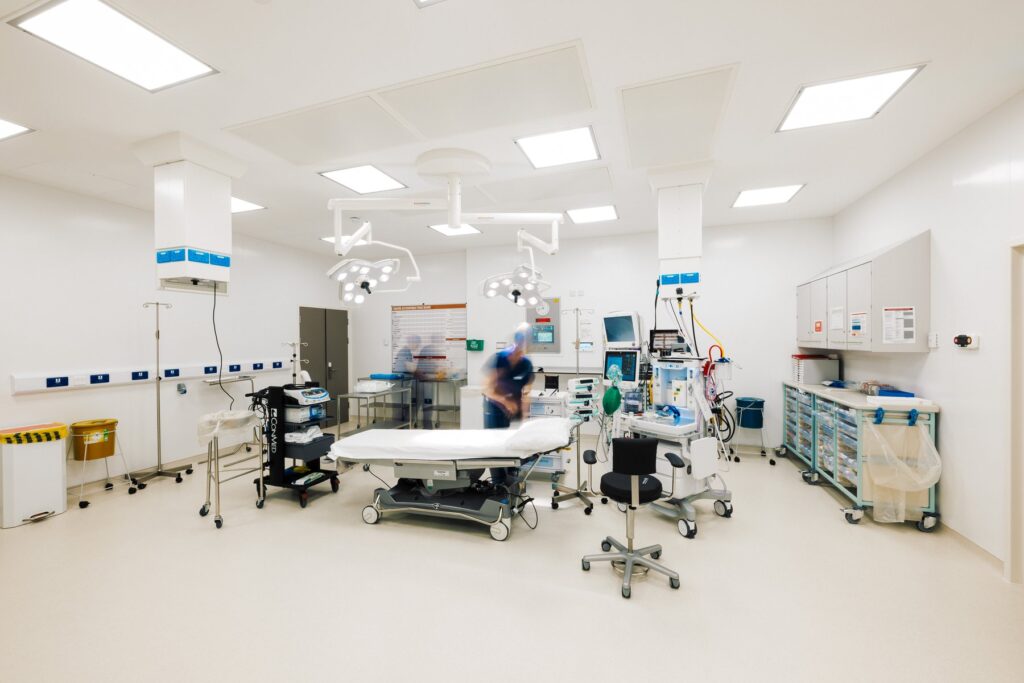
Under local anaesthetic you are awake, and only the area being treated is numbed. You feel a brief sting as it goes in, then pressure but no pain. You can eat and drink normally beforehand. The numbness usually wears off within two to three hours. A local anaesthetic on its own does not stop you driving once the numbness has gone and you feel normal. Many operations do. After eyelid or brow surgery, labiaplasty, surgery on the face, head, neck or hands, or a sedative tablet, someone must take you home.
Many operations at Waterfront are done under local anaesthetic, including most skin surgery, upper eyelid surgery, a direct brow lift, labiaplasty and neck liposuction. This guide explains what the day is like, how it compares with sedation and a general anaesthetic, and what you can and cannot do afterwards.
What does a local anaesthetic feel like?
Your surgeon injects the local anaesthetic into the skin around the area being treated. You feel a brief sting as it goes in, and the area goes numb within about five to ten minutes. During the operation you may feel pressure, pulling or movement, but you should not feel pain. If you do, tell your surgeon straight away, and they will give more local anaesthetic.
You stay awake throughout and can talk to your surgeon and the nurse with you. Some local anaesthetics contain a little adrenaline to reduce bleeding. It can make your heart race briefly or make you feel slightly shaky, and this settles quickly.
If the idea of being awake worries you, say so at the consultation. Your surgeon can talk you through what happens, and for some operations a sedative tablet or a general anaesthetic is an option.
What happens on the day?
Before you come
Eat and drink normally
No fasting. Wear loose, comfortable clothes, remove make-up from the area and leave jewellery at home. Bring a list of your medicines and allergies.
Arrival
Checks with our nurses
Arrive at the time in your admission letter, usually 15 to 30 minutes before. A nurse checks your blood pressure, pulse and temperature.
Before the operation
Your surgeon goes over the plan
Your surgeon answers any last questions, then numbs the area. It goes numb within about five to ten minutes.
The operation
Awake, with the area numb
You feel pressure or movement but no pain. A small skin removal takes 30 to 45 minutes including preparation and dressing; upper eyelid surgery or a direct brow lift takes about an hour.
Afterwards
Rest, then home
You rest in the recovery area for about 15 to 30 minutes and go home the same day with your aftercare instructions and the painkillers our nurses give you.
Local, a sedative tablet, or a general anaesthetic?
Which one you have depends on the operation, its size and how you feel about being awake. Your surgeon recommends one at the consultation.
Local anaesthetic
- Are you awake?
- Yes, with the area numbed
- Eating beforehand
- Eat and drink normally
- Pre-assessment
- No separate pre-assessment appointment
- Going home
- After many operations someone must take you home. See the driving section below
Local with a sedative tablet
- Are you awake?
- Yes, with the area numbed and a tablet to help you relax
- Eating beforehand
- Follow the instructions in your letter
- Pre-assessment
- No separate pre-assessment appointment
- Going home
- You must not drive. An adult must take you home and stay with you
Sedation through a drip, or general
- Are you awake?
- Drowsy with sedation, asleep with a general anaesthetic. An anaesthetist is with you
- Eating beforehand
- Fasting times are in your admission letter
- Pre-assessment
- Yes, mostly by phone
- Going home
- A responsible adult must take you home by car or taxi, not public transport, and stay with you overnight
Local anaesthetic
Awake, with the area numbed
Local with a sedative tablet
Awake and more relaxed
Drip sedation or general
Drowsy with sedation, asleep with a general anaesthetic
Which operations can be done under local anaesthetic?
At Waterfront these are usually done under local anaesthetic:
- removal of moles, cysts, skin tags and other skin lesions. Our skin removal prices guide lists the costs, and our guide to a cyst on the face covers that operation
- upper eyelid surgery and a direct brow lift, alone or together
- labiaplasty, which most women choose to have under local
- neck liposuction, and liposuction of a single smaller area
- ear correction and split earlobe repair
- gynaecomastia surgery where the tissue is well localised
- facial fat transfer, depending on how much fat is being transferred
- hand surgery such as carpal tunnel release
Some operations can be done under local anaesthetic with sedation instead of a general anaesthetic, depending on the extent of surgery. These include lower eyelid surgery and a mini facelift. A cyst close to the eyelid, lip or nostril, or a large or deep one, may also be planned under sedation or a general anaesthetic.
Is it cheaper under local anaesthetic?
Yes, for the same operation. A general anaesthetic adds a consultant anaesthetist and the time and monitoring that go with them. For example:
- upper eyelid surgery is £4,200 under local anaesthetic and £5,250 under general
- labiaplasty is £4,450 under local anaesthetic and £5,300 under general
- facial fat transfer is £3,950 under local anaesthetic and £4,900 under general
Do not choose your anaesthetic on price. Your surgeon recommends the anaesthetic that suits the operation and you, and you get your own price in writing after the consultation.
Can I drive after a local anaesthetic?
A local anaesthetic on its own does not stop you driving once the numbness has completely gone and you feel normal, which can take two to three hours. Many operations do stop you, and so do a sedative tablet and some dressings.
- A small skin removal on the body, arms or legs. Usually yes, once the numbness has completely gone and you feel normal, which can take two to three hours.
- Skin surgery on the face, head, neck or hands. Bring someone with you. You may not be able to drive home, and a dressing near the eye can block your vision.
- Eyelid surgery or a brow lift. No. Someone must take you home. After eyelid surgery you drive again once your vision is clear and comfortable: about a week after upper eyelid surgery, and about two weeks after lower or combined surgery. Our eyelid recovery guide has the detail.
- Labiaplasty. Someone must take you home. Most people drive from week two, once they can do an emergency stop comfortably.
- A sedative tablet. You must not drive. An adult must take you home and stay with you.
- Any other operation. Arrange a lift home unless your surgeon has told you that you can drive.
Whatever you have had done, only drive when you could do an emergency stop without hesitating, and check with your insurer before you drive again after surgery.
Driving home at a glance
A small skin removal on the body, arms or legs. Once the numbness has completely gone and you feel normal, which can take two to three hours.
Skin surgery on the face, head, neck or hands. You may not be able to drive home.
Eyelid surgery or a brow lift. Someone must take you home.
Labiaplasty. Someone must take you home.
A sedative tablet. An adult must take you home and stay with you.
Any other operation. Unless your surgeon has told you that you can drive.
How do I prepare?
- Keep taking your prescribed medicines as normal unless we tell you otherwise.
- If you take a medicine that thins your blood, tell us in advance and do not stop it yourself. Your surgeon will advise you.
- Tell us about any painkillers, anti-inflammatory medicines or supplements you buy yourself, and we will tell you whether to pause any of them before your operation. Ask us before you take any painkiller on the day.
- Stop smoking, vaping and all other nicotine for at least four weeks before and after surgery. Nicotine slows healing, even after a small operation.
- Tell us before the day if you are unwell, or if anything about your health has changed.
What happens afterwards?
The numbness usually wears off within two to three hours. Tingling as the feeling comes back is normal. Most discomfort is mild and short-lived. Take the painkillers our nurses give you, as your discharge instructions say.
After a small skin removal most people go back to work the same day or the next. After bigger operations, such as eyelid surgery or labiaplasty, your aftercare guide gives the timings for that operation. Mild swelling, redness, bruising and tenderness at the site are expected and settle day by day.
When should I get help?
Call 999 or go to your nearest emergency department now if you have:
- difficulty breathing, or swelling of the face, lips, mouth or throat, which are signs of a severe allergic reaction
- a widespread rash together with feeling faint or unwell
- heavy bleeding from the wound that does not stop after 10 minutes of firm, constant pressure
- chest pain, or you suddenly feel very unwell
Contact us, on the number on the card you were given, if you have:
- spreading redness, heat or swelling around the wound after the first two to three days
- pus, or an offensive smell, from the wound
- a temperature, or you feel hot, shivery and unwell
- pain that is getting worse rather than better, or is not eased by simple pain relief
If you cannot reach us, call NHS 24 on 111.
After eyelid surgery, sudden loss of vision, or severe eye pain that painkillers do not help, is an emergency. Call us straight away, and if you do not get through at once, call 999 or go to your nearest emergency department.
A little bleeding in the first few hours after skin surgery is common. Your aftercare leaflet explains how to press on the wound and when to ring us.
When is a local anaesthetic not the right choice?
A local anaesthetic may not suit you, or your operation, if:
- the operation is long or covers a large area, for example liposuction of several areas, which is done under general anaesthetic
- being awake would make you so anxious that you could not keep still
- you have had a true allergic reaction to a local anaesthetic before, which is very rare
- a cyst or lesion is deep, large, or close to the eyelid, lip or nostril, where sedation or a general anaesthetic may be planned
Tell your surgeon about any allergies, especially to local anaesthetics or other medicines, at the consultation.
What happens at the consultation?
The consultation costs £200 and is face to face with the consultant who would operate. Your surgeon examines you, recommends an operation, tells you which kind of anaesthetic suits it and you, and explains what that means for your day and your recovery. You then get one written price, and a second consultation before you decide is free.
You can book online or call the team on 0131 376 3785.
Questions patients ask
Can you drive after a local anaesthetic? A local anaesthetic on its own does not stop you driving once the numbness has completely gone and you feel normal, which can take two to three hours. Some operations do. After eyelid or brow surgery, labiaplasty, skin surgery on the face, head, neck or hands, or a sedative tablet, someone must take you home.
Can you eat before a local anaesthetic? Yes. You do not need to fast for a local anaesthetic, so eat and drink normally. If you are also having a sedative tablet, follow the instructions in your letter.
How long does a local anaesthetic take to wear off? Usually two to three hours. You may feel tingling as the feeling returns, which is normal.
Are you awake during surgery under local anaesthetic? Yes. You are awake and can talk to your surgeon and the nurse with you. The area being treated is numb, so you feel pressure or movement but no pain.
Can I take painkillers before a local anaesthetic? Ask us before you take any painkiller on the day of your operation. Tell us about any painkillers or supplements you buy yourself, and we will tell you whether to pause them. Never stop a prescribed blood thinner without advice.
Do I need someone with me after a local anaesthetic? Not usually after a local anaesthetic alone, although many people find it reassuring. An adult must take you home if the operation stops you driving or your surgeon has asked for it. After a sedative tablet an adult must take you home and stay with you.
How soon can I go home after a local anaesthetic? Usually after 15 to 30 minutes in the recovery area, once you feel well.
Is surgery cheaper under local anaesthetic? Yes, for the same operation, because a general anaesthetic adds a consultant anaesthetist. Upper eyelid surgery, for example, is £4,200 under local anaesthetic and £5,250 under general.

Ready to talk it through?
Book a consultation online, call the team, or send us a question first.