Breast uplift with implants: recovery week by week
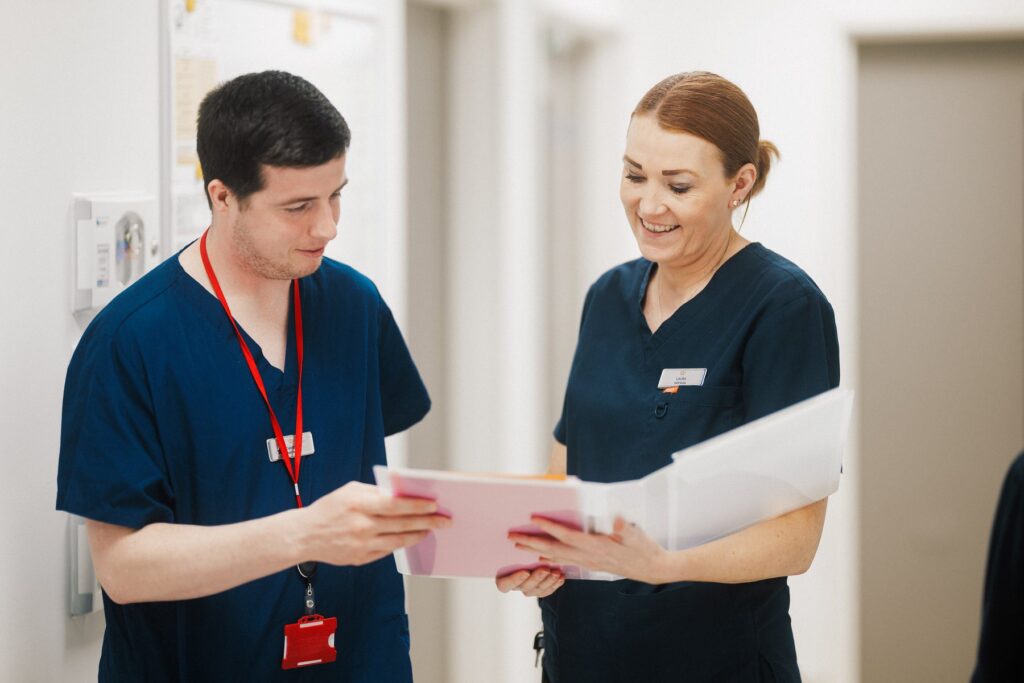
After a breast uplift with implants, most people with a desk job take one to two weeks off work. Driving waits until after the first week, gentle exercise until about four to five weeks, and full exercise and lifting over 5kg until week six. You wear the support bra we fit for you day and night for the first three months, and longer if you find it comfortable. The breasts look high, firm and a little square at first. The shape settles over three to six months, and the scars fade over about a year.
A breast uplift with implants is two operations done together. Your surgeon lifts and reshapes the breast, then adds an implant for volume. You recover from both at once, so you have the scars of an uplift to look after and an implant that takes months to settle.
The timings here are what most of our patients find. Your surgeon may adjust them for you, and their instructions come first. This guide covers the combined operation. If your surgeon recommends two stages, with the uplift first and the implants later, you have two recoveries, months apart.
What does recovery from a breast uplift with implants look like at a glance?
Day of surgery
Home the same day, in your support bra
Days 1 to 3
Tight and swollen
Days 4 to 7
More energy each day
Days 7 to 10
Your first nurse appointment
Week 2
Back at a desk
Weeks 3 to 4
Most of the swelling has gone
Weeks 5 to 6
Scar care and exercise
3 to 6 months
The shape settles
What happens week by week?
The day of surgery
A breast uplift with implants takes two to three hours under general anaesthetic. At Waterfront it is day surgery, so you go home the same day. If a higher BMI, or having another procedure at the same time, means you should stay overnight, the operation is done at our partner hospital, and your surgeon tells you that at the consultation.
Our nurses fit your support bra before you leave, so you do not need to bring one. You go home with your painkillers, each labelled with its dose and how often to take it, and your nurse goes through them with you first. You also get a card with your first nurse appointment and our contact numbers, which are worth saving to your phone. Someone needs to take you home, and a responsible adult must stay with you for the first night.
Days 1 to 3
Expect pain, swelling and a very tight feeling from the implants. Many people find the pain is less than they expected. Bruising and a few spots of blood on the dressings are normal, and so is numbness around the nipples.
Take your painkillers regularly, as the labels say, without waiting for the pain to build. If you were given antibiotics, finish the course. Sleep in any position that is comfortable, on your back or your side. Most people find lying on their front uncomfortable for the first few weeks, and once it feels comfortable it will not harm the result.
You can shower from day one unless your surgeon tells you otherwise. It is fine if the outer dressings get wet. Pat them dry gently afterwards.
Days 4 to 7
The pain eases noticeably, the swelling starts to go down and you have more energy. Most people need fewer strong painkillers by the end of the week.
Between day 7 and day 10 you see our nurses. They remove the outer dressings and check your wounds and the position of the implants. The paper tape over the scars stays on.
Week 2
The bruising fades to yellow and green, and the implants start to feel less tight. Some people stop painkillers completely this week. You can drive once you are off strong painkillers and could do an emergency stop.
Take the paper tape off by the end of week two. If it sticks, a little petroleum jelly loosens it.
Weeks 3 and 4
Most of the swelling has gone by weeks three to four, and the implants keep settling. Shooting pains in the breast are common now, as the nerves heal.
Small areas of slow healing where the scars meet are common after an uplift and usually settle with simple dressings. Tell your nurse if you see one.
Weeks 5 and 6
Most people feel nearly normal by now. Gentle exercise can start at about four to five weeks, in your support bra. Check with us before you start. From week six, once you have checked with us, you can return to full exercise and lift more than 5kg again.
Three to six months
The implants drop into position and soften a lot over months two and three. The final shape shows at about six months, when your surgeon reviews you.
How the implants settle
Each side settles at its own pace. A difference between the two usually evens out by month three.
When can I go back to work, drive, exercise and fly?
Everyday life
- Showering
- From day 1, unless your surgeon says otherwise
- Driving
- After the first week, once off strong painkillers
- Office work
- After 1 to 2 weeks
- Short-haul flights
- 1 to 2 weeks
- Long-haul flights
- 3 to 4 weeks
- Alcohol
- After 3 weeks
- Baths and hot tubs
- At least 2 weeks, and not until the wounds have healed
- Swimming
- 4 to 6 weeks, once fully healed
Exercise and lifting
- Walking
- From day 1, around the house
- Light household tasks
- Week 2
- Gentle exercise
- About 4 to 5 weeks, in your support bra; check with us first
- Full exercise
- Week 6; check with us first
- Lifting over 5kg
- 6 weeks
- Underwired bras
- Not while you still wear the support bra
If your work involves lifting, anything over 5kg waits six weeks, so talk to your surgeon about your job at the consultation.
Back to normal life after a breast uplift with implants
Typical timings, as a guide. Everyone is different, and your surgeon may adjust them for you.
Breast uplift with implants aftercare: how do I look after myself at home?
How long do I wear the support bra?
Wear the support bra day and night for the first three months, and longer if you find it comfortable. After that, keep wearing it during the day for up to about six months if you can. Everyone is different, so treat these timings as a guide rather than rules. Do not wear an underwired bra while you are still wearing the support bra.
How long you wear the support bra after an uplift with implants
Everyone is different. No underwired bras while you are still wearing the support bra.
In the longer term we advise wearing a supportive bra whenever you are upright. We use nanotextured implants, which stay mobile in their pocket, and an implant adds weight to the lifted breast. A stable weight and a well-fitting bra help the result last.
What happens to the dressings and tape?
Dressings, tape and scar care
Once the wounds have completely healed, you can wash the scars gently with mild soap and water and moisturise them. Baths and hot tubs wait at least two weeks, and until the wounds have healed.
What should I not do after a breast uplift with implants?
- Do not use nicotine in any form for at least four weeks before and after surgery: no smoking, vaping, patches or gum. We do not operate on smokers for an uplift, with or without implants, because nicotine raises the risk of losing part of the nipple.
- Do not drive in the first week, or while you are taking strong painkillers.
- Do not drink alcohol for three weeks.
- Do not lift anything over 5kg or do strenuous exercise for six weeks.
- Do not have a bath or use a hot tub for at least two weeks or before the wounds have healed, and do not swim until you are fully healed.
- Do not wear an underwired bra while you are still wearing the support bra.
- Do not leave your scars uncovered in the sun. Cover them with clothing or use sunscreen.
What is normal, and when should I call?
Normal
These are expected, and most settle:
- swelling, bruising and a very tight feeling from the implants
- breasts that look square or sit high in the first weeks
- one side more swollen, bruised or sore than the other (one breast suddenly much larger than the other is different: see below)
- numbness around the nipples, usually temporary
- mood changes after the anaesthetic
- shooting pains at three to four weeks as the nerves heal
- scars that are still pink at three months
Emergency
Call 999 or go to A&E now if you have:
- sudden shortness of breath or chest pain
- leg swelling with breathing problems, which can be signs of a blood clot
- heavy bleeding that does not stop after 10 minutes of firm pressure
- a high temperature, over 38°C, with confusion or unusual drowsiness
These can be life-threatening. Do not wait to call us first.
Contact us now
Contact us now, without waiting, if you have:
- a high fever, over 38°C
- one breast suddenly much larger than the other
- severe implant pain or a sudden change in shape
Use the numbers on the card you were given. If you cannot reach us, call NHS 24 on 111.
Tell us immediately if your painkillers are not controlling the pain. Contact us too if you see signs of infection: redness, warmth, swelling or discharge. A fever over 38°C is on the list above, so contact us now.
Bleeding that needs a return to theatre affects under 1 in 50 people, usually in the first day. Loss of part or all of the nipple, if its blood supply fails, affects under 1 in 100, and smoking raises that risk. A blood clot in the leg or lung affects under 1 in 1,000. About 1 in 10 people, and up to 1 in 5 in some studies, go on to have a further operation to adjust the shape, the scars or the implant. That is more than after an uplift or an augmentation on its own. Our breast uplift with implants page has the full list of risks and where the figures come from.
How do I look after the scars?
Most people have an anchor-shaped scar, which runs around the areola, down the breast and along the fold. We advise scar taping from week five, and only once the wounds have completely healed. Put paper tape along each scar and leave it on for three to five days. You can shower with it on. Then take it off, moisturise the scar and leave it uncovered for a day or two before taping again. Keep going for four months or more, and stop if the tape makes your skin red or sore.
The scars are still pink at three months and fading by six. They are close to their final appearance at a year and can keep improving for up to 18 months. They are permanent, though everyday clothing covers most of them. Protect them from the sun with clothing or sunscreen.
Who should plan the timing differently?
It may be better to wait, or to plan around your operation, if:
- you use nicotine in any form and cannot stop for at least four weeks before and after surgery
- you are planning more children soon, or finished breastfeeding less than six months ago
- your weight is still changing, including on weight-loss injections
- you had breast surgery somewhere else in the last six to nine months
- nobody can take you home and stay with you on the first night
- your job involves lifting and you cannot avoid it for six weeks
- you look after young children you would need to lift, with no one to take that on for six weeks
- you have a long-haul flight booked in the first three to four weeks, or a holiday with swimming in the first six
If you are still deciding between an uplift, implants or the two together, our guide to whether you need an uplift, implants or both explains how to tell.
What follow-up do I get?
Our nurses see you between day 7 and day 10, and again as often as your wounds need. Your surgeon reviews you at about six months, once the shape has settled, and sees you earlier whenever you need it.
Follow-up for the first 12 months is part of the price, along with treatment of complications caused directly by your surgery in that year. Our breast uplift cost guide sets out what is included, with and without implants. Ask any clinic who looks after you once you are home. Our guide to red flags in cosmetic surgery covers what else to ask.
Tell the radiographer about your implants whenever you have a mammogram. Implants also need checking over the years, and our breast implant health check combines an ultrasound scan with a consultant review in one visit.
What happens at the consultation?
The consultation costs £200 and is face to face with the consultant plastic surgeon who would operate. All our plastic surgeons are on the GMC Specialist Register for plastic surgery, and our guide to the letters after a surgeon’s name explains what that means. Your surgeon examines and measures you, and tells you whether a combined operation, two stages or an uplift on its own would suit you. They show you where your scars would sit and explain what the recovery would mean for your job, your family and your plans. A second consultation before you decide is free.
You can book online or call the team on 0131 376 3785.
Questions patients ask
How long is recovery after a breast uplift with implants? Most people with a desk job take one to two weeks off work. Gentle exercise starts at about four to five weeks, and full exercise and lifting over 5kg at week six. The shape settles over three to six months as the implants drop and soften, and the scars fade over about a year.
What should I expect three weeks after a breast lift with implants? By three to four weeks most of the swelling has gone and the implants are starting to soften, though they still sit higher than they will end up. Shooting pains are common at this stage as the nerves heal. The paper tape is off, and gentle exercise can start at about four to five weeks, once you have checked with us.
How long does the tape stay on after a breast uplift? Our nurses remove the outer dressings at your first appointment, between day 7 and day 10, and leave the paper tape on. Take the paper tape off by the end of week two. If it sticks, a little petroleum jelly loosens it. Scar taping with fresh paper tape starts at week five, once the wounds have fully healed.
How long do I wear the support bra after an uplift with implants? Day and night for the first three months, and longer if you find it comfortable, then during the day for up to about six months if you can. Underwired bras wait until you stop wearing the support bra. We provide the bra and fit it before you go home.
Why do my breasts look square and sit high after surgery? That is normal. Implants sit high and can look square when they are first placed. They start to soften at three to four weeks, drop into position over months two and three, and reach their final shape at about six months. Contact us now, without waiting, if one breast suddenly becomes much larger than the other or the shape changes suddenly.
When can I drive, exercise and fly after a breast uplift with implants? Do not drive in the first week. After that you can drive once you are off strong painkillers and could do an emergency stop. Gentle exercise starts at about four to five weeks in your support bra, and full exercise at week six. Check with us before each. Lifting over 5kg waits six weeks. Short-haul flights are usually fine after one to two weeks and long-haul flights after three to four.
Can I smoke or vape before or after a breast uplift with implants? No. We do not operate on smokers for an uplift in any form, with or without implants. You need to stop all nicotine, including vaping, patches and gum, for at least four weeks before and after surgery, because nicotine raises the risk of losing part of the nipple.
Book a consultationBreast uplift with implants at Waterfront

Ready to talk it through?
Book a consultation online, call the team, or send us a question first.